Innovation

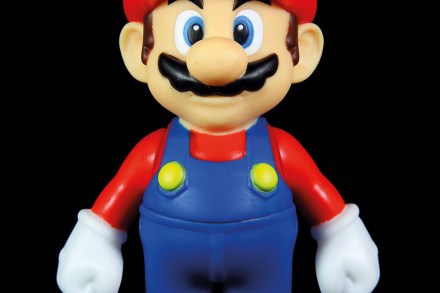
Nintendo and the plumber who conquered the world

It’s not more than a parlor game, perhaps, to speculate about history’s most crucial inventions. One invention often makes the next possible. Electric light revolutionized human productivity, allowing us to work well beyond sundown. The combustion engine and later the turbine engine collapsed our sense of distance, putting other continents within a day’s travel. We’re still debating what the internet’s done; how social media offers the double-edged sword of instant communication and addressability for good and ill; how it encourages the avatarization of ourselves as online presences. We’re both ourselves online and not quite ourselves, entirely embodied and yet psychically elsewhere.

nintendo

The tech right-MAGA alliance is far from over

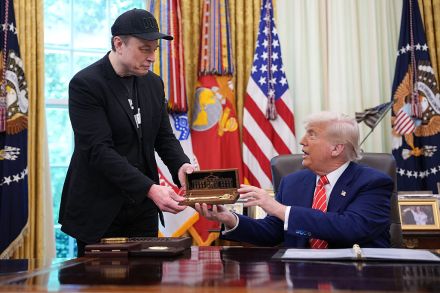
In the aftermath of the Musk-Trump break-up, many are wondering about the future of the “tech right” and its relationship to the MAGA movement. In 2024, the two groups fought together and won. One definition of the tech right is simply “Technology people who aren’t crazy leftists.” Many in this group shifted right because of the excesses of wokeness and DEI within Silicon Valley. The dysfunction of far-left culture, which attacks merit and excellence, created a lot of apostates. Some were Democrats until quite recently! For my part, I was raised in the tradition of liberty, with an education that included not just Ayn Rand and Milton Friedman, but also Edmund Burke and G.K. Chesterton. Not to insult my friends, but I am not a recent convert.

tech right

How China is out-innovating the West

The world received a jolt in 2018 – and it wasn’t from a Silicon Valley whiz or a lab at MIT. It came from Shenzhen, China, where a lanky, unassuming biochemist named He Jiankui did the unthinkable. Using the newly discovered CRISPR-Cas9 toolkit, and asking no one’s permission, He edited the genes of Lulu and Nana, twin baby girls, so that both were born immune to HIV. The scientific establishment gasped, jaws dropped and the moralists clutched their pearls. “Monstrous!” the bioethicists cried. “I was just horrified,” said Jennifer Doudna, who won the 2020 Nobel Prize in Chemistry for inventing the CRISPR gene-editing technique.

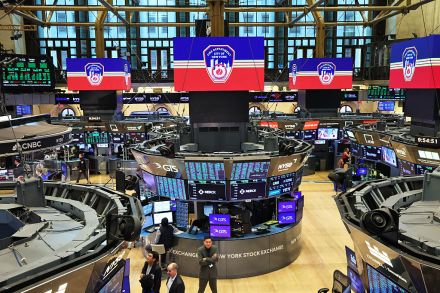
What happened to the great American IPO dream?

There is a dark but funny one-act play called No Exit by Jean-Paul Sartre, that gloomy, chainsmoking, wall-eyed French existentialist. The play is about three characters trapped in a room from which they cannot escape. No flames, no pitchforks, no brimstone – it turns out the afterlife isn’t the fourth circle of Hell, but a dinner party you can’t leave. Round and round these characters go, each demanding what the others won’t give. In the end, the worst punishment isn’t torture. It’s just being stuck. “Hell,” goes the famous line, “is other people.” Well, mon Dieu, we now have a sequel.

IPO

The Europe of American imaginations no longer exists

Since the United Kingdom left the European Union five years ago, the pair have been in battle to prove who has performed better. But the real story of the past five years is not a stagnant UK falling behind a buoyant EU, but of Britain and Europe being trapped in the same cycle of relative decline. It’s America that has quietly raced ahead of Europe this century. Following the pandemic it has become impossible to ignore the gulf in economic vitality between the US and Europe, the former growing by 16.3 percent per capita since 2008. There are very good reasons for America’s success, or rather, Europe’s decline. The EU and the UK increasingly treat their industries as pieces of heritage which must be preserved against disruptors and foreign competition.

Europe

Masa Son: the world’s most reckless investor

For a few days in February 2000, Masayoshi Son was the richest person in the world. A risk-taker and showman, universally known as Masa, he had long been disdainful of Japan’s staid "salaryman" business culture and was riding the wave of dot-com mania. His company SoftBank, founded in 1981, had bet big on the growth of online shopping. The bullish mood didn’t last, and Masa slunk away from the limelight — but only for a while. A techno-optimist, the now sixty-seven-year-old has repeatedly reinvented himself, urging doubters to see beyond the immediate: "You’re limiting your field of vision to thirty years… Start bold and think 300 years ahead.

Masa

How we can keep innovating

If the history of humanity is the history of big ideas — from the wheel to space flight, cave painting to the multiplayer game, monotheistic religion to special relativity — then the same is true of our future. By the 1960s the developed world had witnessed 200 years of extraordinary activity on every front. This was the era of the moonshot; of political obsession with technological mastery; of experimentation in music, culture, knowledge and relationships. Humanity had undergone a big-ideas revolution and the expectation was that progress would keep accelerating. In 1967, Herman Kahn, the futurist and theorist of nuclear war, and fellow futurist Anthony J. Wiener published The Year 2000: A Framework for Speculation Over the Next Thirty-Three Years.

stagnation