Bring back wisdom
Sir: Douglas Murray is right that reducing the educational attainment of politicians is not the answer to people’s demand for change (‘The perils of idiocracy’, 28 February). But we do have an educational divide driven by disrespect, which graduates have caused and need to fix. Historically, non-graduates associated those of higher education with values like wisdom, curiosity and insight, thereby qualifying educated people to fix complex problems and make big decisions affecting everyone else. Now, people see insufficient evidence of such qualities among those in charge.
The less that higher education imparts genuine wisdom and expertise, the more it relies on looking down on ‘respectable’ people and opinions. Until we stop that, and demand universities do what they’re supposed to do, the presence or absence of university degrees among our political class is a sideshow, and people without degrees will continue to distrust the decisions of those who have them.
Baroness Stowell of Beeston
House of Lords, SW1
Rank ignorance
Sir: Douglas Murray suggests that no one should be allowed near politics ‘unless they have at least one hereditary title – no lower than a marquisate and preferably averaging out at around an earldom’. He ought to refer to his Debrett’s: earls are one rank lower than marquises, and one above viscounts.
Philip Womack
London NW1
Farmers’ rights
Sir: It’s not only criminals giving farmers and landowners a tough time (‘County crimes’, 21 February). With ever-increasing rights to roam being established around the country, farmers’ rights are often considered secondary to those of any Tom, Dick or Harry who’d like to ‘get out in nature’. Councils across the country are increasingly throwing teams of lawyers and vast sums of taxpayer money to intimidate, impoverish and frankly exhaust landowners into allowing a patchwork of paths, bridleways and byways to crisscross farmland, impacting business and animal safety.
There is obviously a case for opening up the countryside where it is logical, benefiting the public without negatively impacting the farmer. More often than not, this is possible with a little thought and knowledge of the land. However, with process-driven local government officials waging a battle of paperwork, landowners have no option but to yield or face mushrooming costs. It is unusual that one man’s workplace is another man’s playground; with associated costs and liability pushed unilaterally onto landowners, local government is giving farmers a hard row to hoe.
D. Tetley
Cornwall
Short-lived lords
Sir: The shortest peerage must surely be that of Wilfred, the second Baron Stamp of Shortlands (Diary, 28 February). He and his father, Joshua, the first Baron Stamp (one of my predecessors as charter mayor of Beckenham), were killed in an air raid on 16 April 1941 at their home in Shortlands, near Bromley. It was held that Wilfred had succeeded his father and the peerage then passed to the second son, Trevor, who was not present. The family were required to pay death duties on both Joshua and Wilfred’s estates.
Cllr Nicholas Bennett JP
Mayor of Bromley 2019-20
Robert Maxwell’s lies
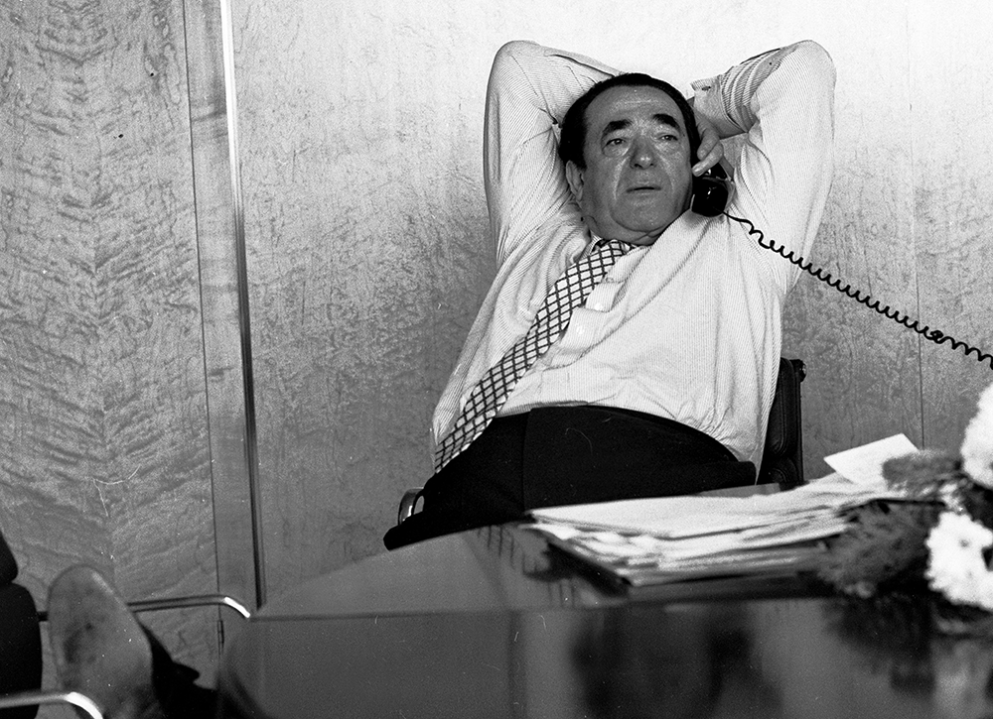
Sir: Ian Maxwell’s declaration of loyalty (‘Trial by outrage’, 28 February) to his father is understandable but mistaken, since Robert was an unmitigated liar and thief. I know this since I was one of the very few who prospered (in my case as to £250,000 through selling short) from Robert’s demise. I read his two quoted companies’ accounts 35 years ago and saw through them for what they were: a vast assembly of lies.
Simon Cawkwell
London W14
As we forgive those
Sir: Charles Moore (Notes, 28 February) warns against ‘radically politicised Christianity’. Agreed, aware that the Lord’s Prayer’s ‘Forgive us our trespasses, as we forgive those who trespass against us’ highlights a valued principle within our faith that is not common to all.
David Newman
Ely, Cambs
Ex-princess
Sir: Far be it for me to correct Robert Hardman, but I think there is an inaccuracy in his Diary (28 February). He writes of Lady Patricia Ramsay, who was the daughter of Prince Arthur, Duke of Connaught, and as such, a granddaughter of Queen Victoria. After marriage to Admiral Ramsay, she relinquished her title of Princess and her style of HRH, and assumed the style of Lady Patricia Ramsay.
Her father was governor general of Canada and in 1918 she had become colonel of Princess Patricia’s Canadian Light Infantry. As a young officer I was her very occasional equerry when she visited her regiment or other Canadian military. I remember the minor complication of arranging the aiguillette on my uniform to be altered to the right shoulder! I was told this was a tribute to her royal ancestry. A very elegant and graceful lady she was.
David Webb Carter
Bishop’s Waltham, Hants
In defence of C.S. Lewis
Sir: I object to Lloyd Evans’s ill-informed dismissal of C.S. Lewis as a fiction writer and as a scholar (Arts, 28 February). The Narnia books are not ‘batty’ or ‘freakish’. They are powerfully imaginative, often funny and always beautifully written. They have delighted adults and children alike for decades. As for Lewis being an academic ‘plodder’, I recall a note added to a long vacation reading list when I was an undergraduate. Against Lewis’s essay on Chaucer’s Troilus and Criseyde (in his book The Allegory of Love) my tutor had written: ‘Lewis’s analysis is so dazzling, do not forget to read the original.’
Ann Pilling
Hawes, North Yorkshire
The Devil’s Wheel
Sir: I appreciate Douglas Murray was using the Devil’s Wheel as a metaphor (‘Does anyone escape the Devil’s Wheel?’, 14 February), but here in Munich the Teufelsrad is very much alive and kicking. After more than 100 years, it remains among the most popular attractions at every Oktoberfest. Good clean fun and no political debris. Should Douglas wish to experience the thrill of a consequence-free Decline and Fall, he is welcome as my guest this autumn.
Rupert Bell
München
Lip service
Sir: One effect of the moustache, which was explained to me by my maternal grandmother when I ‘came out’ as a debutante in 1950, was not mentioned in ‘Notes on’ (28 February). She told me that kissing a man without a moustache is like eating an egg without salt.
Shirley Page
By email

Comments