Education

Dear Mary: What should I do if the view’s no good with my free tickets to Wimbledon?

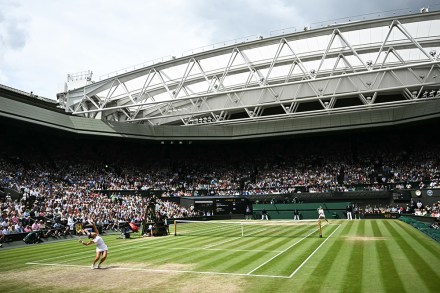
Q. Around this time of year a friend, who gets hold of tickets through an agency, usually asks me last-minute to Wimbledon. The trouble is it’s hard to know whether she has good seats. One year was perfection as we had shaded middle-tier seats, but last year we had an obstructed (pillar) view and I would rather have watched at home. I am sure there are those among her friends who would love to be there in any kind of seat so how, without sounding ungrateful or spoilt, can I ascertain what’s on offer before accepting? – H.S., London SW6 A. First familiarize yourself with the court layouts and seat numbers. Then, if she invites you, say: “What an incredible coincidence. I have just been speaking to X (a fictional friend). X has also managed to get last-minute seats.

Wimbledon

Farewell to the school I founded

From our UK edition

My son Charlie sat his final A-level paper last week and the significance of this has only just sunk in. It’s not simply that he has finished his schooling; he’s the last of my children to do so. No more PTA meetings, no more parents’ evenings, no more school runs. My kids are all grown up. I’ve fulfilled my biological duty, raising four of them to adulthood, and can now disappear over the horizon into the sunset – or, rather, the Sunset Care Home. This is particularly poignant as I helped set up the school my children went to. Between 2009 and 2011, I led a small group of parents and volunteers who founded the first free school to sign a funding agreement with Michael Gove, then the education secretary.

Let AI eat the universities

College is extraordinarily expensive and becoming less useful, and those who insist otherwise are working from a model of the labor market that stopped describing reality sometime in the 1990s. Four-year courses at private institutions often cost more than $70,000 a year, and it should come as no surprise that student debt has tipped over $1 trillion . This situation is ridiculous for a film student, but it is also ridiculous for a computer science graduate whose program could not keep pace with the industry it was preparing him for – and who learned more in four months on GitHub and dicking around on X and Repl.it than in four years of lectures. It’s sad, but how many people were attending school for “the life of the mind” to begin with?

Were Britain’s postwar dons just having too much fun?

From our UK edition

A history of academic life stands and falls by the number and quality of its anecdotes. On this count, Colin Kidd’s Twilight of the Dons unquestionably delivers. Did you know that the biologist Francis Crick wrote to Winston Churchill suggesting that an educational institution named after the statesman would be better off with a college brothel than the proposed chapel? Or that Eleanor Plumer, an early principal of St Anne’s College, Oxford, told the fellows of her fledgling institution that if they simply must have children, could they ‘kindly ensure’ they had them ‘in the University vacation’? At times, the book can seem to be an anthology of such anecdotes, combining, often in the same story, the world-historic and sociologically significant with the gossipy and trivial.

In praise of uncertainty over hollow conviction

From our UK edition

When I met Brian Dillon in February 2023, he seemed to have a lot on his mind. We had arranged to speak about Affinities, the newly published final instalment of Essayism, his sprawling three-part survey of literature, art and aesthetics. That morning, as he sipped decaf coffee in a quiet corner of the Barbican Kitchen café in London, he still didn’t know what his book was about. ‘At this point you don’t,’ he confessed. But even though he hadn’t made up his mind about Affinities, Dillon had already begun to think about his next project. It was to be a memoir of his education, called Ambivalence. This has now come to fruition.

White working-class boys are being left behind

This week marks the fifth anniversary of the publication of the report of Lord Sewell’s Commission on Racial and Ethnic Disparities (CRED). In spite of a suitably diverse group of commissioners (or perhaps because of that), it refused to blame ‘systemic racism’ for the underachievement of certain ethnic minorities. It didn’t dismiss that hypothesis entirely, but concluded that other factors, particularly class, geography and family background, were more important. This analysis – supported by lots of data – did little to protect the commissioners from the fury of the woke left, who denounced them for ignoring historical injustices. Exhibit A in the report’s argument was the poor educational performance of white working-class boys.

The hidden truth about our failing universities

From our UK edition

Is it worth going to university? Since 1999, when Tony Blair declared higher education the answer to all society’s problems, it has been a question Britain prefers not to ask. Every September, hundreds of thousands of school leavers pack their bags, wait for their maintenance loan to arrive and head off to their chosen city to drink, go clubbing and occasionally hand in an essay. Does this well-trodden path leave young people better off? It’s almost impossible to find out, not because the information isn’t available but because the government won’t let us see it. The Department for Education knows very well what graduates can expect when they start looking for work.

My burning ambition for my old school

From our UK edition

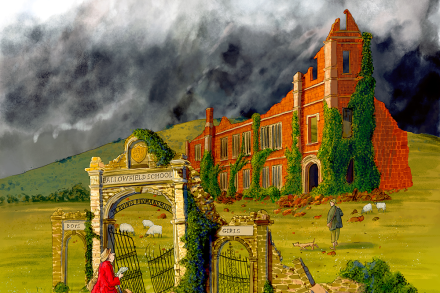
Every boy longs to see his school burn down and for me the dream came true twice. In February 1977, I was walking to Sunday Mass when I spotted a cluster of teachers at the school gates. The old Victorian hall had caught fire overnight and collapsed. I couldn’t believe it. This was my personal Towering Inferno and I’d missed the whole thing. In my mind’s eye I could see it all: the leaping flames, the burning joists, the black columns of ash rising over south London, and the thunderous roar as the roof crashed to the ground. Nothing was left but a few pathetic wisps of smoke rising from a pile of charred beams. The teachers were standing around looking shocked and miserable – as if mourning the death of a pet rabbit. Why so glum?

A literary guide to how to pay your school fees

From our UK edition

Another day, another report on how many children have had to leave their private schools, thanks to Labour’s VAT raid on fees. This particular survey, by wealth management firm, Saltus, found that almost one in ten parents have had to take their children out of the independent sector altogether while 65 per cent of those questioned admitted to making ‘significant changes’ to their circumstances to keep their children in private education.    When belts can only be tightened so far, parents need to get creative.

Screens in schools have been a catastrophic failure

About a decade ago, the people I dreaded meeting most at parties were the ed tech evangelists – men and women who lit up with zealous excitement about bringing screens into schools. If only every schoolchild had a laptop, they thought, then humanity could flourish, nurtured by the great river of the internet and by an exciting stream of educational apps. It was as if a school laptop was a Mary Poppins bag out of which whatever they most wanted was sure to appear. For the ed tech utopians of the right, what they dreamt of was a great stream of savvy little Einsteins, liberated from turgid teachers. For those on the left, it was about equal access, fairness, ‘pupil-centred learning’.

Letters: There’s no defending Robert Maxwell

From our UK edition

Bring back wisdom Sir: Douglas Murray is right that reducing the educational attainment of politicians is not the answer to people’s demand for change (‘The perils of idiocracy’, 28 February). But we do have an educational divide driven by disrespect, which graduates have caused and need to fix. Historically, non-graduates associated those of higher education with values like wisdom, curiosity and insight, thereby qualifying educated people to fix complex problems and make big decisions affecting everyone else. Now, people see insufficient evidence of such qualities among those in charge. The less that higher education imparts genuine wisdom and expertise, the more it relies on looking down on ‘respectable’ people and opinions.

Who has been removed from the line of succession?

From our UK edition

Out of line Andrew Mountbatten-Windsor may be removed from the line of succession. When was the last time this happened? — The Abdication Act of 1936 not only removed Edward VIII from the throne; it also removed his heirs from the line of succession. In the event, however, he didn’t have any. The last alteration to the line of succession came as a result of the Perth Agreement of 2011, when the prime ministers of the 16 Commonwealth realms agreed that in future females would be treated the same as males, and that the latter would not leap over the former as the then Prince Andrew had done when, on his birth in 1960, he pushed Princess Anne down the line of succession.  — The birth of Prince George in 2013 made the change academic, for now.

Mamdani’s People’s Republic of New York

Proudly displayed in the window of my local Barnes and Noble are copies of a children’s book called Zohran Walks New York. It’s a graphic novel that shows our city’s new perma-grinning mayor meeting residents who are overwhelmingly happy to see him. A more instructive text for the children of Park Slope was tucked away in the corner of the basement: Animal Farm. I bought it for my 11-year-old daughter at the weekend. She’s into dystopian novels.  More people will become hooked on state benefits and more staff will be needed to shove piles of cash towards them I thought of Orwell’s allegory of the Russian revolution this week when our mayor threatened to increase property tax to pay for his huge $127 billion budget.

Adventures in the City of Light: Rousseau’s Lost Children, by Gavin McCrea, reviewed

From our UK edition

What biographer would pass up a time-travelling opportunity to meet their subject face to face? This novel’s protagonist, Gavin Mulvany, an academic specialising in Jean-Jacques Rousseau, is somehow able to slip back in time to 1777, a year before the fractious French writer died. He turns from irritating fan to close companion, accompanying Jean-Jacques on long philosophical rambles and coach journeys around Paris. They attend the premiere of Voltaire’s last play (as does Marie Antoinette), call on Benjamin Franklin and visit the Marquis de Sade in a lunatic asylum. Gavin’s long-delayed book about Rousseau is concerned to solve the puzzle of why a passionate theorist on children’s education could dispatch his own five newborns to a foundling hospital, never to see them again.

The Chinese takeover of Britain’s public schools

From our UK edition

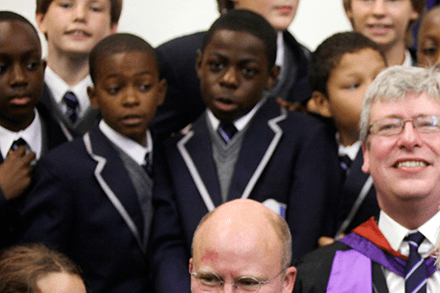
Roedean is now known as ‘Beijing High’. Cheltenham Ladies’ College is ‘Hong Kong College’. In the country’s most elite boarding schools, pupils say that they are one of just a handful of English children. Others note that Chinese has become the dominant language in hallways and dormitories. Many English parents can no longer afford a boarding school education for their children. And the pressure of recently introduced VAT on fees, as well as above-inflation rises year on year, means the number able to cough up will dwindle further. By contrast, China and Hong Kong’s growing economy and cultural obsession with education provides a surfeit of parents with the cash needed to secure the educational prospects of their children.

The five Haldanean principles that could reshape Britain

From our UK edition

If Reform get into government, there is one man they seem likely to turn to for guidance. He is an obscure figure, unknown to many, yet has acolytes across the political spectrum – from Dominic Cummings to Gordon Brown. His name is Richard Burdon Haldane and he died almost a century ago. It was recently reported in this magazine that Danny Kruger had been seen carrying ‘a well-thumbed copy’ of the most recent biography of Haldane. I wrote that book. In it, I describe how Haldane reshaped Britain in the early 20th century – and how, should others choose to follow his example, he might help to transform it again today.

The joyless reading app being forced on my son

From our UK edition

It was only recently that I fully appreciated how the books I read as a child formed me. A pregnant friend asked me about my parenting philosophy and I realised it amounted to ensuring my son would survive a tour of Willy Wonka’s chocolate factory. I never had the money of Veruca Salt’s daddy to indulge his every desire, but I came down hard on chewing gum, gorging on chocolate and, above all, staring at a screen.  Despite my son’s complaints that I was acting like a father from Victorian times, it seemed to have worked, and, as the Oompa--Loompas predicted, not being glued to a screen encouraged him to become a reader, out of boredom if nothing else. If the house was quiet, too quiet, I would usually find him reading a book in a corner.

Labour’s next rebellion

From our UK edition

When Bridget Phillipson arrived at the Department for Education, she knew which issue would define her tenure. Within days, she was facing dozens of new Labour MPs grilling her about how she planned to overhaul the system for special educational needs and disabilities (SEND). ‘From the outset we have gone out there to speak to the parliamentary Labour party,’ says an ally. ‘We know that this is a key postbag issue.’ Over the past ten years, the number of claims for special needs has exploded. A fifth of all children in England are now reported to have SEND; in Scotland, 43 per cent of pupils have some sort of additional learning need.

The steady erosion of academic rigor in German schools

German teachers are a privileged species. Most of us enjoy the status of a Beamter, a tenured civil servant. We can be dismissed only after a serious criminal conviction, we are exempt from social-insurance contributions and even our mortgage rates are lower. Such comfort discourages dissent. Yet, after more than 25 years as a pampered Beamter, I find myself overwhelmed, not by the teaching load or the students, but by the accelerating erosion of academic standards. Having taught English, history and Latin at four different Gymnasien, I have learned that challenging students is now frowned upon by both bureaucrats and politicians. Nearly all my colleagues agree that standards have plummeted.

young men

Is our education system radicalizing young men?

My 11-year-old son joined the elementary school band, and so I went to the parents’ orientation night held at a local high-school. As the night went on it became obvious why young men rage against the larger social system and why they might find a character like Nick Fuentes attractive. The classrooms were inundated with DEI messages and trans pride flags. On the walls there were posters, stickers and decorations that all invoked the various totems of diversity. Black Lives Matter messaging, decolonization messaging, LGBTQ+ messaging and basically every sort of race and gender social justice messaging you can imagine was present.