C.s. lewis

Letters: There’s no defending Robert Maxwell

From our UK edition

Bring back wisdom Sir: Douglas Murray is right that reducing the educational attainment of politicians is not the answer to people’s demand for change (‘The perils of idiocracy’, 28 February). But we do have an educational divide driven by disrespect, which graduates have caused and need to fix. Historically, non-graduates associated those of higher education with values like wisdom, curiosity and insight, thereby qualifying educated people to fix complex problems and make big decisions affecting everyone else. Now, people see insufficient evidence of such qualities among those in charge. The less that higher education imparts genuine wisdom and expertise, the more it relies on looking down on ‘respectable’ people and opinions.

Are angels real?

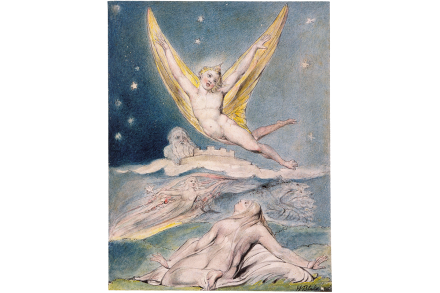
One day while out walking, William Blake saw angels sitting in the trees: “bright angelic wings bespangled every bough like stars.” He was eight years old. His fascination – some have called it an obsession – with angels lasted for the rest of his life. When he sat to have his portrait painted by Thomas Phillips, the two men began to argue about who painted a better angel, Michelangelo or Raphael. Phillips, not unreasonably, suggested that since Blake had never seen even an engraving by Michelangelo, he was not qualified to give an opinion on the matter. “But I speak from the opinion of a friend who could not be mistaken,” replied Blake. “And who may he be, I pray?” asked Phillips. “The Archangel Gabriel, sir.

‘I could turn very nasty – I was an egotistical brute’, says Anthony Hopkins

From our UK edition

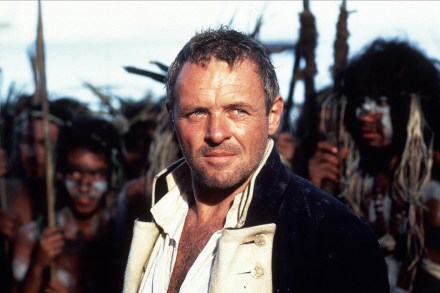
It’s a good job Anthony Hopkins is only an actor, as think what he’d be like as a dictator or grand inquisitor. ‘I could turn very nasty,’ he tells us in his memoir. Doing National Service: ‘I was beginning to enjoy the fisticuffs in my life.’ Encountering a Scotsman: ‘I felt a surge of hatred and anger. I head-butted him and smashed his nose so hard I heard it crack.’ To a director who’d annoyed him: ‘Learn some manners... or I’ll change the shape of your face.’ Mickey Rourke was told: ‘Touch me like that again and I’ll smash your face right into the back of your head.’ Hopkins is a nasty piece of work, and proud of it. He calls himself ‘a vindictive, cynical, insulting, horrible man’, adding for good measure: ‘I was an egotistical brute.

Even as literate adults, we need to learn how to read

From our UK edition

Few readers can claim to be what Samuel Taylor Coleridge called ‘Mogul diamonds’ – those who not only ‘profit by what they read’, but ‘enable others to profit by it also’. If such people were rare in Coleridge’s time, then today, when reading is in dramatic decline, they are scarce enough that even the white rhino might feel a little smug. Anyone seeking a glimpse of this endangered reader could be forgiven for thinking that a university English department was its most likely habitat, but they would be wrong. Behind the brown office doors where academics labour, one is more likely to find the common squirrel, hoarding information and burying it under dense soil.

The enduring brilliance of C.S. Lewis

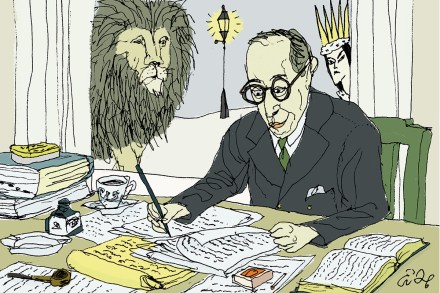
Unexpectedly, the Oxford literature professor Clive Staples Lewis – better known as C.S. Lewis – is having something of a moment, more than six decades after his death. Director Greta Gerwig, of Barbie fame, has embarked upon the ambitious project of filming all seven of his Chronicles of Narnia books for Netflix, starting with The Magician’s Nephew. She has assembled a starry ensemble that will include Daniel Craig, Carey Mulligan, the excellent Emma Mackey as the White Witch and, for the voice of the divine lion Aslan, none other than Meryl Streep. There are rumors that Lewis’s ever-popular satirical epistolary novel The Screwtape Letters is to be turned into an animated film.

Lewis

Why was C.S. Lewis such a killjoy at Christmas? A discussion with Alister McGrath

From our UK edition

27 min listen

Which 20th-century Scrooge had the following to say about the celebration of Christmas?  ‘It gives on the whole much more pain than pleasure… Anyone can force you to give him a present by sending you a quite unprovoked present of his own. It's almost blackmail… Can it really be my duty to buy and receive masses of junk every winter just to help the shopkeepers?’ Step forward C.S. Lewis, beloved Christian apologist and children’s author, whose splenetic denunciation of ‘the whole dreary business’ of Christmas and mean-spirited comments about carol singers are hard to reconcile with his reputation for benevolence. To make sense of the author’s views, Damian Thompson is joined by the renowned theologian and C.S.

Trump and his lawyers take on the Syndicate

Who has better lawyers: Donald Trump or the Syndicate? The fate of the election, and hence the fate of the country, may well come down to the answer to that question.  By “the Syndicate” (what I sometimes call “the Committee”), I of course mean the shadowy board of overseers that controls the Democratic Party and, by extension, the administrative apparatus that governs us. No one knows exactly who sits on this board. I suspect that even those who, in retrospect, we can see have occupied senior positions in its ranks are often uncertain about their place in the hierarchy.  Elsewhere, I have invoked C.S. Lewis’s idea of “The Inner Ring” to explain the dynamics of this phenomenon.

lawyers

Iron clad: good cooking’s most essential metal

Miles Coverdale’s translation of Psalm 105 in the Book of Common Prayer elevated iron from metallurgical to literary significance. The story of Joseph being sold unjustly as a bondservant — “Whose feet they hurt in the stocks: the iron entered into his soul” — shames flaccid times like ours. And iron’s virtues excel not least of all in cooking, where it can enter literally into our bodies and, who knows, maybe our souls too. Joseph just got things started. Think of the first ironclads, Monitor and Merrimac, hammering away at each other at Hampton Roads in 1862, of the dreadnoughts that put paid to Nelson’s wooden walls, of Agatha Christie’s ironclad alibis, of the verse in Christina Rossetti’s great carol: “Earth stood hard as iron, water like a stone.

iron

The English were never an overtly religious lot

From our UK edition

Generalisations about national characteristics are open to question. Nevertheless, the overwhelming impression one gets from reading the major works of English literature, or from studying the famous English men and women of politics, the military or the academic world, is that the English have not been an especially religious lot. Or, if you think that a strange judgment of a nation that produced the finest Gothic cathedrals in Europe and the hymns of Charles Wesley, then you could rephrase it and say that they have not generally worn their religious feelings on their sleeve. Jane Austen’s hilarious novels do not quite prepare us for her letters in which she confesses her sympathy for evangelicalism.

California’s next freedom to lose: speeding

There are perfectly practical reasons to study philosophy. That’s what I told my teenage daughter when she came to me with mild complaints about her reading assignments of Plato and C.S. Lewis, for a unit on free will and virtue. Far from being a luxury for elites with liberal arts degrees, everyday Americans gain from even the most basic philosophical study a reason behind the freedoms they enjoy. Why are you ever free to do anything potentially harmful or dangerous, at all?  In California, a state famous for protecting the freedom to do hard drugs in public and live beneath overpasses or in public parks, State Senator Scott Wiener has proposed a set of bills aimed at reducing traffic-related deaths.

speeding

America’s professor: the afterlife of C.S. Lewis

In the summer of 1955, an unusual meeting took place. Billy Graham visited the writer and academic C.S. Lewis in Lewis’s rooms at Magdalene College, Cambridge. It was unusual because leading British academics typically avoided Southern Baptist revivalists. But rather than encountering a fussy, prim don, Graham found a kind, intelligent scholar who was very happy to spend the afternoon with him. Later, Graham admitted he was intimidated by Lewis, but the English professor quickly dispelled any anxiety, probably by offering Graham a cup of tea. Graham’s impact on American religious culture, for good or ill, is unquestioned, but it is difficult to imagine what that same culture would look like without the works of C.S. Lewis.

lewis

Stupendously good: Much Ado About Nothing, at the Lyttelton Theatre, reviewed

From our UK edition

Simon Godwin’s Much Ado About Nothing is set in a steamy Italian holiday resort, the Hotel Messina, in the 1920s. A smart move, design-wise. The jazz age was one of those rare moments in history when every member of society, from the lowliest chambermaid to the richest aristocrat, dressed with impeccable style and flair. The show is stupendously good to look at it and it kicks off with a thrilling blast of rumba music from a jazz quartet on the hotel balcony. Even sceptics of jazz need not fear these players. The musical score is a triumph for one simple reason: there are no jazz solos. https://www.youtube.com/watch?

Why C.S. Lewis was right about war

From our UK edition

Well, at least Covid is over. No sooner had Vladimir Putin’s tanks rolled into Ukraine than the UK’s Covid advisory group Sage disbanded. The same effect was felt in the US, where the outbreak of war in Europe led to the immediate, unlamented disappearance of Dr Anthony Fauci. After two years on primetime, suddenly the good doctor was nowhere to be seen. Covid already seems so very last season. The ‘climate emergency’ likewise seems to have drifted away. For years, whenever the world was facing no more proximate emergency, every politician from the Scottish parliament upwards insisted that we were all doomed and heading to hellfire.

Is Sohrab Ahmari a Satanic ogre?

Sohrab Ahmari is an ogre sent by Satan to annihilate American freedom. At least, that’s the reputation he has with liberals of the more excitable sort. His new book ought to soothe their twitchy nerves. The Unbroken Thread is an easy going, ecumenical, rather cosmopolitan tour of 12 moral questions and select thinkers who responded to each of them. ‘My primary purpose,’ writes our implausible theocrat, is ‘not to offer definitive answers, drawn from any one particular tradition, but to explore the possibility that our contemporary philosophy might be wrong in crucial respects.’ Ahmari has been much vilified for his criticism of Drag Queen Story Hour, an event in which crossdressers introduce themselves to children in public libraries.

ahmari

Back in the magic land of Narnia

From our UK edition

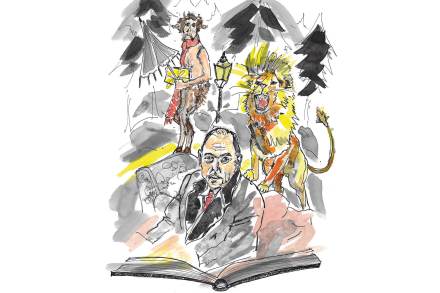
C. S. Lewis’s enchanting Chronicles of Narnia series has, in recent years, come under critical fire. It’s racist, sexist, colonialist; blatant propaganda for Christianity, hoodwinking children into a life of religious submission. These barbs seem to me to miss the point. As a geeky nine-year-old, I had a dim sense that Aslan had something to do with Jesus Christ. But so what — he was a talking lion! (And, even to children who weren’t Scripture swots, he clearly isn’t Jesus Christ, but something else.) Dyed-in-the-wool atheists get it wrong. I’ve never met a child who marched blindly from Narnia to Christ; but I have met children (now adults) who, already knowing Christ, have felt his joy in Aslan.

It’s all in a name: the stories behind book dedications

Don’t skip over the dedications in books. They can be as illuminating as the stories they precede and shine an intriguing light on the author’s private life and loves: Jane Austen and Edmund Spenser [caption id="attachment_9876775" align="alignnone" width="739"] Family portrait of Jane Austen[/caption] The dedication to Jane Austen’s Emma reads: ‘To His Royal Highness The Prince Regent, This Work Is By His Royal Highness’s Permission, Most Respectfully Dedicated, By His Royal Highness’s Dutiful And Obedient Humble Servant, The Author.’ The Prince Regent was George Augustus Frederick, uncle of Queen Victoria and the eldest of George III’s children. He was self-indulgent and excessive.

book dedications

How C.S. Lewis predicted Instagram

To peruse any of the tens of thousands of Instagram accounts devoted to food, some of them with nearly a million followers, is a jaunt into the pornographic. The photo captions alone seem straight out of paperback erotica. ‘See this naughty Asian pear get humiliated by sticky globs of caramel-infused pistachio milk while creepy cranberry sorbet watches,’ some of them might as well read. ‘This moist blood orange bundt cake is loaded with drippy pink glaze and grew up without a father.’ On Instagram, like Pornhub, you can sort by fetish. Got a thing for cakes and pies? Stylish editorial displays? Pizza? Seasonal vegetables? There’s a feed for every perversion, even at least one devoted to sprinkles, which is legitimately unsettling.

chocolate cake instagram c.s. lewis