Farmers

Letters: There’s no defending Robert Maxwell

From our UK edition

Bring back wisdom Sir: Douglas Murray is right that reducing the educational attainment of politicians is not the answer to people’s demand for change (‘The perils of idiocracy’, 28 February). But we do have an educational divide driven by disrespect, which graduates have caused and need to fix. Historically, non-graduates associated those of higher education with values like wisdom, curiosity and insight, thereby qualifying educated people to fix complex problems and make big decisions affecting everyone else. Now, people see insufficient evidence of such qualities among those in charge. The less that higher education imparts genuine wisdom and expertise, the more it relies on looking down on ‘respectable’ people and opinions.

Letters: The Tories and Reform have little to unite them

From our UK edition

Class war Sir: Your leading article, ‘More in common’ (24 January), laments the ‘civil war’ between Reform and the Conservatives. But this division goes much deeper. Reform’s core support is the patriotic white working class in the so-called Red Wall seats – the people (often male) who supported Brexit and flocked to Boris Johnson in 2019 when he promised to get Brexit done. They are cultural conservatives but economic statists. That’s why (against his better instincts) Nigel Farage backs steel and water nationalisation and is soft on welfare and pensions. Reform’s natural political bedfellows are not the Tories, but the SDP (left economically, right culturally).

Labour may have lost the countryside forever

From our UK edition

Before the last election, Keir Starmer promised that his party’s relationship with the countryside would be ‘based on respect, on genuine partnership’. But, 16 months into his premiership, the government is shedding rural votes after Rachel Reeves’s changes to inheritance tax. Protesters wearing flat caps and riding tractors have become a familiar sight in Westminster, such is the outrage about the effect on family farms. At the most recent protests, Labour MPs in rural seats were reduced to begging the Treasury to pause the changes ahead of the Budget. ‘So many of my farmers are pleading with me,’ admitted Samantha Niblett, MP for South Derbyshire.

Which birds are doing best in Britain?

From our UK edition

The last straw Farmers are threatening to strike over the government’s changes to inheritance tax in what is being described as a first in Britain. Besides France, where farmers regularly protest, India witnessed a farmers’ strike in 2020, which was eventually settled after the government dropped proposed new laws. But one of the earliest farmers’ strikes was conducted by the Farmers’ Holiday Association in Iowa in 1932, by farmers protesting at consistently low prices for their products. The idea was that farmers would go on ‘holiday’, refusing to sell any of their produce. Few, however, joined, leading to pickets blocking rural roads with telegraph poles. One policeman was killed, but in an accidental discharge of his gun. The action died down after a few months.

Farmers won’t be quick to forgive Labour

From our UK edition

12 min listen

Thousands of farmers descended on Westminster today to protest the inheritance tax changes proposed in Labour’s Budget. Amidst a sea of tweed and wellington boots, speeches and support came from the likes of Kemi Badenoch, Ed Davey, Nigel Farage and Jeremy Clarkson. To what extent is this just a fringe issue that the government will be able to brush off? Or has the issue exposed a rural blind spot for Labour? And how lasting could the damage be? Katy Balls and Spectator editor Michael Gove discuss with James Heale.  But first, William Moore has been out and about getting the views of farmers directly from the protest... Produced by Patrick Gibbons, Cindy Yu and Megan McElroy.

East Palestine and the roots of rural mistrust

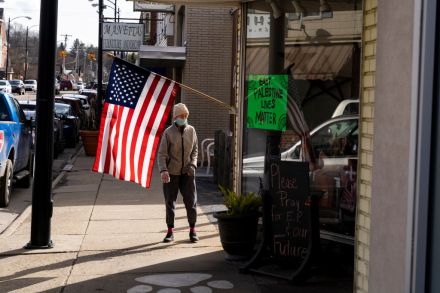
The East Palestine, Ohio, train derailment has thrust rural America into the national spotlight. Town mayor Trent Conaway, a hefty, scruffy figure who resembles many a resident of flyover country, has been all over cable news expressing his “frustration” over how the federal government has handled the disaster. “Frustration” is exactly the word I’d use to describe the predominant feeling I encountered last week during my visit to East Palestine. It’s the same attitude I come across constantly in my rural Pennsylvania homeland. The way the East Palestine disaster has unfolded magnifies the rural perception of government, and both sides of the aisle would be wise to take a closer look and listen.

rural

The worldwide working-class counterrevolution

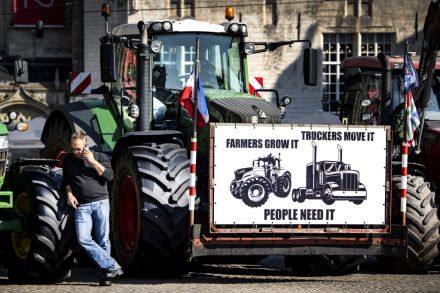
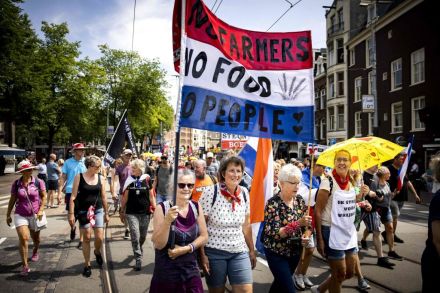
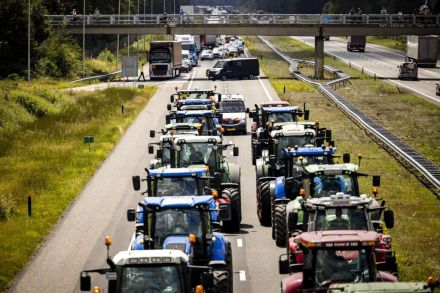
Something is happening across the world right now, something that deserves more attention than it's getting. First, to the Netherlands, where farmers have been protesting, blockading roads with their tractors and staging enormous rallies. The demonstrations have been going on and off since 2019, when the Dutch legislature proposed a crackdown on nitrogen emissions. Nitrogen is heavily emitted by livestock and fertilizer, which means the regulations are hitting Dutch agriculture especially hard. But it wasn't until July that the protests garnered international attention. The Dutch government announced plans in compliance with a court order to cut nitrogen emissions by 50 percent.

Dutch farmers touch off a worldwide revolt

Why are farmers around the world standing in solidarity with a tiny country in northwestern Europe? What’s going on here? Starting in June, 40,000 Dutch farmers took their tractors to the streets to protest their government’s proposal to slash nitrogen emissions. For some farmers, this plan will mean culling 95 percent of their livestock. For others, it will mean going out of business altogether, hoping to sell their land to make ends meet — with the Dutch government as the only buyer. I’m as green as the next guy, but there is a thin line between regulation and tyranny.

Dutch farmers are fighting for freedom

Dutch farmers have had enough of government overreach. And they’re taking to the streets as only farmers can. The government of the Netherlands, in order to fight climate change, recently proposed a 50 percent cut in ammonia and nitrous oxide emissions by 2030 — which will disproportionately impact the agricultural industry. Small farms are thus faced with two choices: shutter entirely or face poverty after culling their livestock. The Dutch government is not sympathetic to these concerns. In their words, “The honest message...is that not all farmers can continue their business.