Having it both ways
Sir: Your leading article on personal liberty touches on same-sex marriage in an interesting way (‘A wolf in sheep’s clothing’, 14 November). David Cameron’s introduction of same-sex marriage is declared to be a very good thing – ‘brave and right’, no less. In the next paragraph it is stated that the law should not be used to harass those ‘who want to hold the traditional beliefs of the Jewish and Christian faiths which underpin our culture of liberty’.
Is this a coherent position? Up to a point, I suggest. It is certainly coherent to advocate same-sex marriage and also the right of religious believers to dissent from it. But it is less coherent to advocate same-sex marriage and also to imply that those traditional believers are right to dissent. The sentence quoted contains an ambiguity: is it the Jewish and Christian faiths which underpin our culture of liberty, or is it the traditional beliefs of those faiths which underpin it? This may sound pedantic, but in fact a lot rests on it. I suggest that it is not coherent for a person, or a magazine, to advocate same-sex marriage and also to advocate a form of religion that opposes same-sex marriage.
Theo Hobson
London NW10
Cruel systems
Sir: Mary Wakefield’s analysis of the potential effects on warfare of recreating extinct species from their DNA, and then using tech to enhance their lethality on the battlefield, must rank as one of the most chilling articles ever to have appeared in your magazine (‘The great hellhound arms race’, 14 November). What an indictment of humanity it would be if, as she suggests, we prove unable to resist the urge to create ever more complex and cruel systems, designed to bring about our own grisly end. We can only pray that her prediction does not come to pass and that eventually our good side triumphs over our bad.
Jeff Green
Bath
Neets need jobs
Sir: Labour’s plan to try and get more young people into work is clearly commendable (‘Neet solution’, 14 November), but it appears no one is really joining the dots. Most employers’ costs keep rising under Labour, and as consumer spending is further tightened with rising cost-of-living pressures and now higher interest rates, many employers will further reduce staff numbers, especially with attractive hassle-free AI solutions available.
The most recent minimum wage rise is another example of Labour risking even more job losses, when they could have simply raised tax thresholds to help the lowest-paid workers, which could have positively impacted employment. Instead, we now learn that billions of pounds of taxpayers’ money will be poured into a system to help Neets into work, when other policies are making the prospect of them actually finding a proper job so much harder. It is time for someone in Labour to make this connection, to at least try to create a more hopeful picture for our young and perhaps, indeed, the UK economy.
Andrew Haynes
London SW6
Pilot lights
Sir: Peter Hitchens highlights our failure to understand the Polish determination to preserve their national independence (‘The pull of patriotism’, 14 November). We also collectively fail as a country to remember or truly appreciate the Polish contribution to defending our own freedom during the second world war. Almost 20,000 Polish pilots served in the Royal Air Force, particularly in the 302 and 303 Squadrons. These brave airmen played a crucial role in winning the Battle of Britain, with 303 Squadron being the most successful Fighter Command unit in the battle. As Air Chief Marshal Sir Hugh Dowding remarked at the time: ‘Had it not been for the magnificent material contributed by the Polish squadrons and their unsurpassed gallantry, I hesitate to say that the outcome of the Battle would have been the same.’ Many of these pilots and their families settled in London after the war, and in Lambeth we remain proud of our Polish community and the role they played in defending our freedoms against the evils of fascism.
Cllr Danny Adilypour
London Borough of Lambeth, SW9
The voice of doom
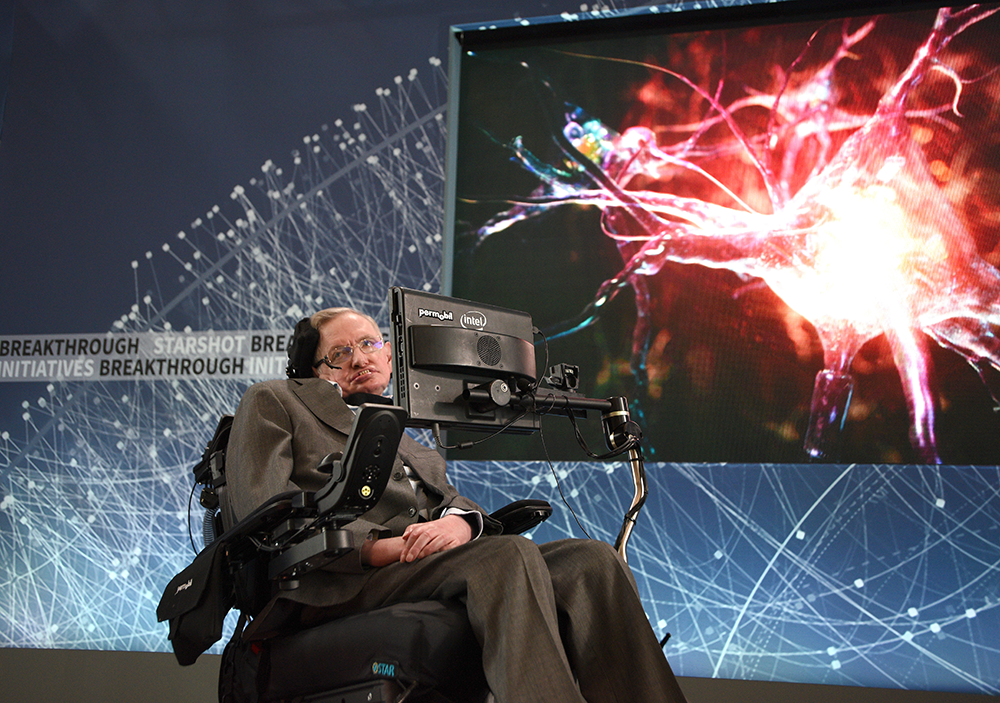
Sir: Stephen Hawking’s legacy (Books, 14 November) may turn out to be his extraordinary doom-mongering rather than his physics. In his final two decades he issued one doomsday warning after another: engineered viruses, nuclear war, climate catastrophe, hostile aliens, a vacuum-destroying Higgs field and rogue artificial intelligence.
The charge is not that every potential risk he named was imaginary. It is that he applied far looser standards outside his field than inside it. Because he was the world’s most famous scientist, his warnings were received as urgent and authoritative. British culture has long held that scientific claims should be scaled to the evidence and the public should not be frightened by authority alone. Britain’s apocalyptic turn has had many contributors, but Hawking’s fame and his status as a symbol of genius gave catastrophism a scientific authority it could not have earned by itself. When he said humanity had 100 years left, the statement reached people worldwide in a way no academic paper could.
Benny Peiser
Liverpool
Gets a laugh
Sir: I was surprised to read in Philip Hensher’s review (14 November) of the new Saki biography that he finds Harry Graham’s Ruthless Rhymes for Heartless Homes ‘startlingly unfunny’. I have been giving some talks recently to mark the 90th anniversary of Graham’s death. From the audience reaction, I would judge that most people still find them very funny indeed.
Late last night I slew my wife,
Stretched her on the parquet flooring;
I was loath to take her life,
But I had to stop her snoring.
‘Startlingly unfunny’? Really?
Jeremy Nicholas
Great Bardfield, Essex
Grave declaration
Sir: Toby Young’s column (14 November) on the dangers of muttering to oneself brings to mind an occasion when my internal monologue broke the surface. I was walking in an idyllic rural churchyard two years ago, and caught myself saying, quite distinctly: ‘And no doubt that makes me a terrible person!’ just as three well-dressed walkers rounded the corner of the church. I gave them a hearty good morning.
Neil Sewell-Rutter
Oxford
Wye oh why?
Sir: Apropos Courtenay Salmon in the visitors’ book (Letters, 14 November), there is a stone monument on the banks of the Wye in Hereford that reads: ‘In memory of Scott Trout and all of those who lost their lives in the river Wye.’ It gives me a shiver each time I walk by.
John Coulton
Hereford
Write to us: letters@spectator.co.uk





Comments