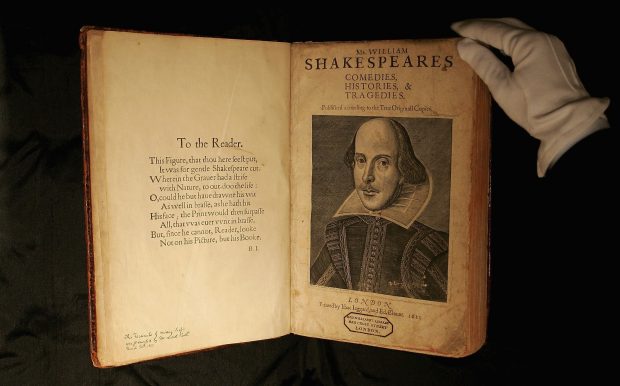
What can be said in a word? A lot, if you are a poet. Poets annex familiar words and empower them. Sometimes a single word, as used by them, can provide a key to their whole work. Here are some examples. (In this game, I permit two words if one is a definite or indefinite article or a preposition.) Blake: ‘lamb’; Milton: ‘high’; Keats: ‘blushful’; Gray ‘in vain’; Cowper: ‘stricken’; Tennyson: ‘the deep’; Pope: ‘Man’ (not ‘man’); Housman: ‘lad’; Burns: ‘lass’; Herbert: ‘sweet’; Hardy: ‘darkling’; Larkin: ‘almost’; Betjeman (this a good suggestion by my wife): ‘Aldershot’. In the case of T.S. Eliot, I am torn between the too general ‘time’, and the too recherché ‘axle-tree’. The poet I find it impossible to begin to ‘get’ in one of his words is Shakespeare.
This is an extract from Charles Moore’s Notes, which first appeared in this week’s Spectator magazine





Comments