Toby Young

Toby Young

Toby Young is associate editor of The Spectator.

AI Armageddon has replaced climate change hysteria

From our UK edition

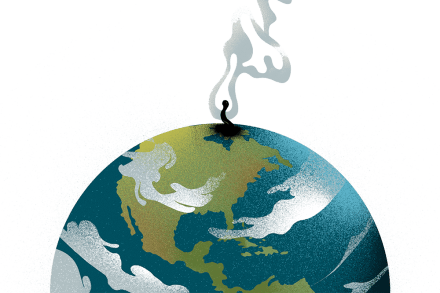
How worried should we be about AI? Absolutely petrified, according to a new documentary called Chasing Utopia. Billed as the Inconvenient Truth of the digital age, it’s a shop window for the alarmist predictions of Mo Gawdat, a former chief business officer at Google X who’s reinvented himself as the Al Gore of AI. The filmmakers follow him on a global speaking tour, delivering the same TED talk to interchangeable groups of credulous young people. ‘Beware!’ is his message. If we don’t rapidly change course, we’ll soon be at the mercy of a superior alien intelligence that sees humans in much the same way we view chimpanzees. I don’t buy it – partly because I think we’re a long way from artificial general intelligence, let alone artificial superintelligence.

First they came for Mandelson…

From our UK edition

At the time of writing, I haven’t seen the King’s Speech, but it’s a safe bet it will include a bill to enable wayward peers to be stripped of their titles. The point, of course, is so that Keir Starmer, if he’s still PM by then, can show us just how much he loathes Peter Mandelson. It’s the equivalent of Loyalists after the Restoration exhuming Cromwell’s corpse so they could ‘execute’ him and stick his head on a spike in Westminster Hall. But because Mandelson hasn’t been found guilty of a crime – and is unlikely to be – the bar for removing a title will have to be quite low. It will inevitably be some version of ‘bringing the Lords into disrepute’.

Can our democracy survive the ‘bad chaps’? 

What is the greatest threat to British democracy? Zack Polanski’s call for ‘building a society’ that ‘doesn’t include’ people who ‘identify as right-wing’? Labour’s efforts to flood the Upper House with party apparatchiks? Islamist extremism? The correct answer is Reform UK. That, at least, is the conclusion of a new book called What If Reform Wins by the Times reporter Peter Chappell. Before I get to its flaws, I should acknowledge it’s an enjoyable read, with plenty of deft, comic touches. It imagines that Reform wins a majority in June 2029, and then gives a blow-by-blow account of the constitutional crisis that follows, with the informal rules and conventions underpinning our democracy being stress-tested and found wanting.

Worried your child is being radicalised? Try this tip 

From our UK edition

A couple of weeks ago, the Guardian published an article entitled: ‘“I feel like I’m losing her”: the families torn apart by older relatives going far right’. It was full of heart-rending tales from metropolitan liberals about how their dim-witted parents had been duped into believing anti-Muslim conspiracy theories by following people like Rupert Lowe on social media. One particularly exasperated man suggested a course of therapy for his mother, fearing that she might want to join Reform. But is it really the online radicalisation of elderly parents that’s putting families under pressure in the run-up to the local elections? I suspect it has more to do with their children, particularly their daughters, embracing a toxic strain of identity politics imported from America.

The American dream is dying. Good

The American dream is dying, according to the Times. To mark the US’s 250th anniversary, the paper commissioned YouGov to explore whether the country’s citizens still believe that if you ‘work hard and play by the rules’ you will eventually be successful. Turns out, only 38 per cent of the respondents think this applies to all Americans, while 59 per cent think the American dream is now less attainable than it was when they were growing up. In addition, 38 per cent rated today’s quality of life as ‘excellent’ or ‘good’, compared with 60 per cent who said the same about 1976, the bicentennial year.

London has fallen

From our UK edition

I disagree with Sam Leith’s recent piece entitled ‘London hasn’t fallen’. He took at face value Sadiq Khan’s claim in a recent speech at a ‘disinformation summit’ that social media posts drawing attention to London’s rising crime rate – particularly knife crime, shoplifting, mobile phone theft and violence against women and girls – were either mis- or disinformation and were probably posted by bots, presumably based abroad. But is that true? What the mayor and his researchers fail to acknowledge is that some of the anxiety about crime in London reflects things that are actually happening Khan himself is guilty of spreading misinformation about knife crime.

Does Jolyon Maugham have any self-doubt?

From our UK edition

I was leaving the CNN presidential election night party at dawn in 2016, having celebrated Donald Trump’s victory, when Paul Staines, then the editor of Guido Fawkes, turned to me and asked: ‘Are we the baddies?’ This was a reference to a Mitchell and Webb sketch set during the second world war in which the question is asked by one Nazi of another. I assured him we were not, but it was a genuine moment of self-reflection on Paul’s part, not a joke. I don’t suppose Jolyon Maugham KC has ever been afflicted by such doubts, even after bludgeoning a fox to death with a baseball bat in 2019. Scarcely a week passes without the social justice warrior trying to drag someone into court or lodging an official complaint about them.

The noble work of chairlift diplomacy

In 1956, three British MPs encountered a group of Swiss politicians in the bar of the Hotel Fluela in Davos and after a few drinks challenged them to a ski race. A timed slalom contest took place the following day, with the three-person Swiss team beating the Brits by a combined four seconds. Not willing to take this lying down, the MPs insisted on a rematch the following year and thus was born the Anglo-Swiss Parliamentary Ski Week, which celebrated its 70th anniversary last week. I heard about it from my friend Dan Hannan shortly after I became a peer, and immediately put my name down, imagining it to be a massive freebie. Not so. The Graubunden canton provides you with a free lift pass, and the local ski school, which organises the races, throws in some complimentary guides.

The pros and cons of a Free Speech Bill

From our UK edition

Preston Byrne, the radical American lawyer, says his new Freedom of Speech Bill, which the Adam Smith Institute publishes today, was inspired by something I wrote. To better protect free speech, I said, we don’t need to transplant the first amendment into British law. Rather, we just need to pull up the weeds obscuring the beautiful rose garden that is English common law. The American Bill of Rights, after all, was an attempt to embed the best of the common law tradition in the US constitution. I’m flattered because there’s much to admire in Preston’s proposal. This is his second attempt at drafting a free speech bill and an improvement on the first, which urged lawmakers to create an ‘inviolable liberty’ that would be ‘immune from interference by parliament itself’.

The highs – and low lows – of supporting QPR

From our UK edition

At the beginning of the current football season, I thought there was a real chance that QPR would get promoted. We refreshed our squad with some smart recruitment over the summer, brought in a couple of strikers and hired a new manager in the form of Julien Stéphan, who’d steered Rennes to victory in the Coupe de France. The Hoops have been languishing in the second tier of English football for more than ten years and it looked like we might finally escape. I’d even begun to fantasise about launching a campaign to get rid of VAR in the Premier League, where it’s been in use since 2019. Earlier this week, a poll by the Football Supporters’ Association revealed that three-quarters of fans want to scrap it, with 97 per cent saying it hadn’t made watching football more enjoyable.

White working-class boys are being left behind

This week marks the fifth anniversary of the publication of the report of Lord Sewell’s Commission on Racial and Ethnic Disparities (CRED). In spite of a suitably diverse group of commissioners (or perhaps because of that), it refused to blame ‘systemic racism’ for the underachievement of certain ethnic minorities. It didn’t dismiss that hypothesis entirely, but concluded that other factors, particularly class, geography and family background, were more important. This analysis – supported by lots of data – did little to protect the commissioners from the fury of the woke left, who denounced them for ignoring historical injustices. Exhibit A in the report’s argument was the poor educational performance of white working-class boys.

Louis Theroux needs to make a positive case for masculinity

From our UK edition

I’ve always had a soft spot for Louis Theroux. I wouldn’t call him a friend, exactly, but I’ve known him for about 40 years. We started our journalistic careers at the same time and would frequently bump into each other at parties. He’s intelligent and funny and, in person, doesn’t answer every question with a question or pretend to be puzzled when he’s evidently long made up his mind. The passive--aggressive ‘just asking questions’ routine is, thankfully, confined to his TV appearances. By this I mean he has no hesitation in telling me I’m being ‘unbelievably stupid’ – which, because we disagree about politics, is quite often. But he’s a QPR fan so I can forgive these outbursts.

Am I an extremist?

On Monday, the Communities Secretary Steve Reed rose in the House of Commons to unveil ‘Protecting What Matters’, the government’s new ‘action plan’ to ‘strengthen social cohesion’ and ‘tackle division’. According to the accompanying press release: ‘Millions of families, friends and neighbours will feel a stronger sense of community, unity and national pride thanks to renewed efforts to stamp out extremism, hate and division announced today.’ I was not among those millions. Conspicuous by omission in the announcement was any mention of Islamism.

Why I’m a proud Zionist

The bomb shelter reserved for ‘volunteers’ at Kibbutz Dafna near the town of Kiryat Shmona in northern Israel was definitely substandard. It was damp and smelly, more like a lavatory than a fortified bunker, and not considered fit for the kibbutzniks: a pampered species compared to us. But when the Soviet-built ordnance started raining down on us, it did its job. We emerged, unharmed, the following morning, blinking into the dawn light. The terrorists had not succeeded in hitting the kibbutz with a single Katyusha rocket. No, I’m not embedded with the Israel Defence Forces on the Lebanese border, although the area surrounding Kiryat Shmona was under fire from Hezbollah earlier this week. This was in 1981 and I was just 17.

Keir Starmer’s selective ageism

From our UK edition

If the newspaper reports are correct and Margaret Hodge is about to be named as the next chair of Ofcom, it’s a surprising choice. The current chair, Michael Grade, had a storied television career, whereas Hodge has never worked in the media. But the most jaw-dropping thing about this appointment is that she’s 81. Not that I’ve got anything against octogenarians – I’ll be one myself in the blink of an eye. But the government has. In its manifesto, Labour promised to introduce a mandatory retirement age of 80 in the House of Lords, and it’s already set the wheels in motion. Why is Margaret Hodge considered to be too old to sit in the Upper House, but not too old to chair a public regulator? To complicate things, Sir Keir Starmer made her a peer in August 2024.

Why is Hope Not Hate out to get me?

From our UK edition

Hope Not Hate is up to its usual tricks in the Denton and Gorton by-election, keeping Britain safe from fascists. In this case, the local Brownshirt is not the Green candidate, Hannah Spencer, who implicitly compared Israel to Nazi Germany in a social media post on Holocaust Memorial Day last year. No, it’s the Reform UK candidate, Matt Goodwin. According to this ‘non-partisan’ thinktank– that’s how it describes itself – Goodwin is a ‘far-right provocateur’ who, if elected ‘will become one of the most extreme MPs in the House of Commons, perhaps second only to Rupert Lowe’. Hope Not Hate has form in this regard.

Labour turns on Starmer – inside the collapse, with Guto Harri, Tim Shipman & Toby Young

From our UK edition

45 min listen

‘Authority is like virginity. Once it’s gone, it’s gone’ – that's just one of the damning quotes about Keir Starmer that Tim Shipman has extracted from sources inside the Labour government. Much of Starmer's bad luck this week is arguably of his own making, so why is he seemingly so bad at being the Prime Minister? For this week's Edition, host Lara Prendergast is joined by political editor Tim Shipman, associate editor – and Conservative peer – Toby Young, and the broadcaster Guto Harri, who – as a former director of communications at Number Ten himself – knows a thing or two about the brutal reality of being at the heart of government.

Starmer's downfall TBC

When did gyms become so unfriendly?

From our UK edition

One of the drawbacks of being on the jabs is that you can lose muscle mass as well as body fat. I’ve been taking Mounjaro for about six months and, apart from the expense, I have few complaints. I’ve lost about 20lb and generally feel healthier. But Caroline insists I combine the weight loss with lifting weights, so I’ve been making regular visits to a gym in White City. I hear horror stories from gym users about people treating the space as if it’s their personal film set I used to be a bit of a gym rat in my twenties and thirties, but marriage and children, not to mention a full workload, put paid to that. Not much has changed in the last quarter century, save for one glaring difference: everyone is constantly on their phones.

Should I be cancelled for being in the Epstein files?

From our UK edition

I was planning to begin this column by saying how relieved I was to be mentioned in the latest Epstein files. Finally! After all, Jeffrey Epstein’s list of acquaintances reads like a Who’s Who of the global power elite. How embarrassing would it be to have lived in the same city as him from 1995 to 2000, as I did, and not even receive a glancing reference? But I realise this is a subject that shouldn’t be made light of. The revelations about Lord Mandelson are genuinely shocking, even to someone as jaded as me, and raise important questions about what Sir Keir Starmer knew and when.

Can superintelligent AI be regulated?

From our UK edition

In the House of Lords on Monday there was a short discussion, prompted by a question from an ex-Labour minister, about whether the government is doing enough to ‘regulate the development of superintelligent AI’. This is an example of what I call ‘Caligula syndrome’, a common affliction in the Upper House. You will recall that the lunatic Roman emperor declared war on Neptune, ordering his legions to line up on the coast of Gaul and collect seashells as ‘spoils of war’. What can the British government – or indeed any government – do to halt the advance of AI? Hubris doesn’t quite cover it. It’s in the same category as believing parliament can reverse climate change.