
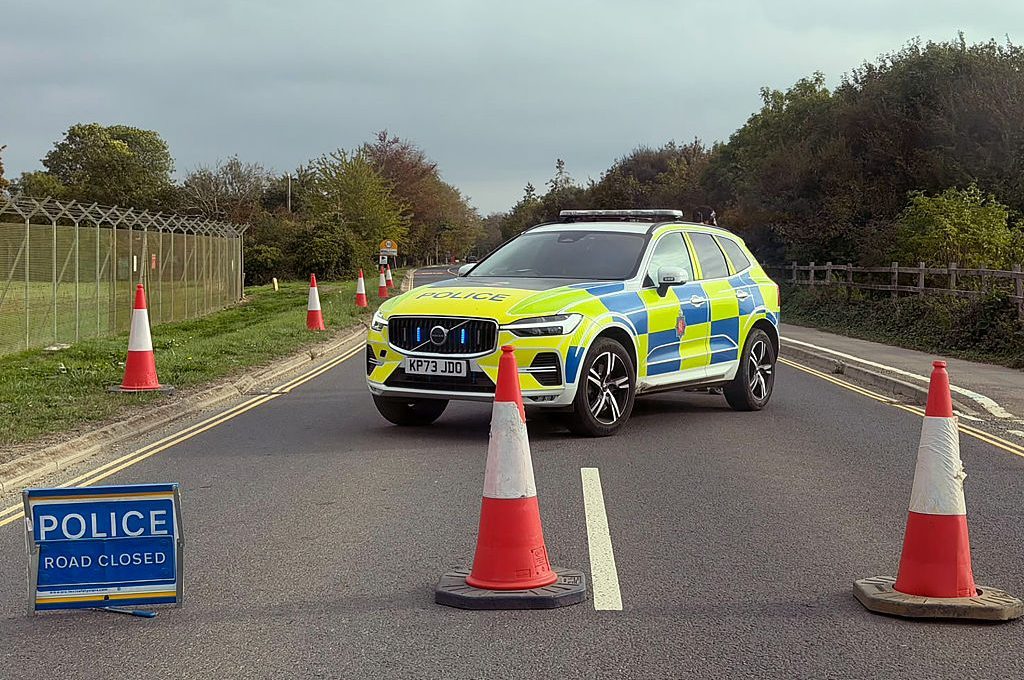
On Sunday, three suspicious trucks were spotted speeding toward the Royal Air Force airfield in Fairford, England. Shortly after, five masked men, later identified as British nationals, were detained under the Terrorism Act of 2006 and the Explosives Act of 1875. Had a bomb attack just been foiled? If so who planned it, and to what end? Then, on Monday, the five suspects were abruptly released on bail.
President Trump seemed nonplussed by the move. “I would not have released them,” he told reporters, but was full of praise for the conduct of the British authorities. The safety of RAF Fairford is a matter for the American President – it is operated by the US Air Force, the only airfield in Europe that can accommodate its heavy bombers. When the Iran war began, then-Prime Minister Keir Starmer denied Trump use of the base, but soon relented; in a characteristic fudge he said that the US could use it for “self-defense” operations. Every war since 1914 has been launched in ostensible “self-defense,” so in practice this meant little: the squadrons based out of Fairford have been merrily bombing Iran ever since.
Marco Rubio has said that the incident “clearly involved the hands of a foreign actor” – many have pointed to Iran as the source. To Congressman Randy Fine the decision to release the men on bail showed that Britain was now “no longer a reliable ally of the United States.” This seems premature. The British state could certainly have kept these men in its custody had it needed to. Thanks to Tony Blair, an individual can be held for 14 days without charge on the mere suspicion of plotting a terrorist act.
Nor would the British authorities have let the suspects go for ideological reasons: the current government is banging the drum for rearmament, and would not have wanted to see a large amount of American kit go up in smoke. The police have since announced that they found no explosives in the trucks. And on Tuesday evening, it was revealed by the Times of London that one of the suspects in the case called the police himself. The story is confusing, to say the least. Trump said of the suspects, “We know everything about them.” Yet there is still much that we don’t know about the case.
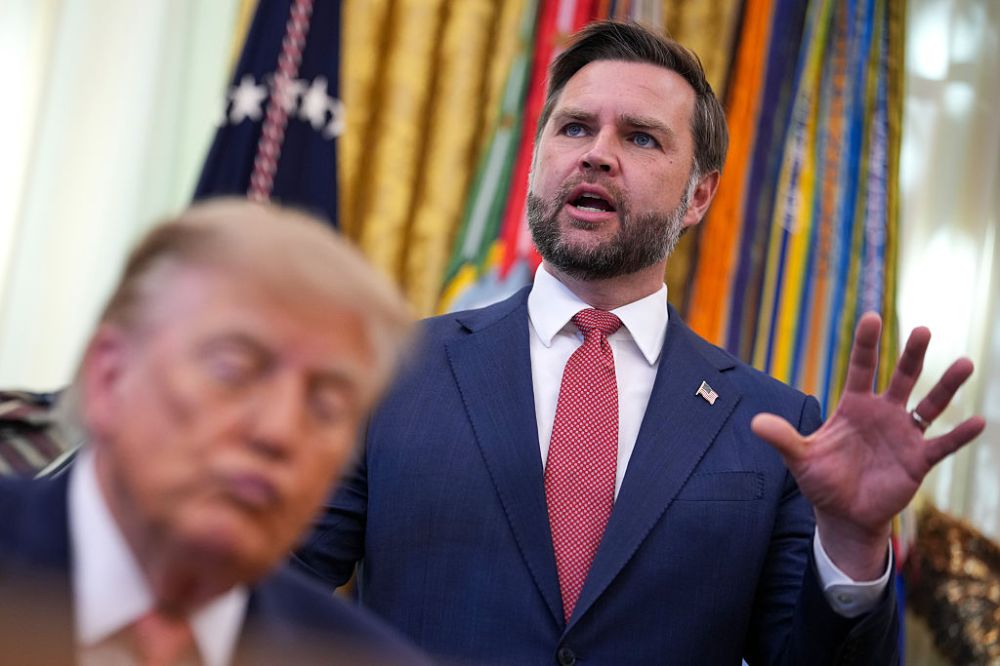
Who can blame people for speculating? The British justice system is secretive by American standards. Strict contempt of court rules limit what can be said or published about a suspect, for fear of prejudicing a jury. If the authorities release too much information about the Fairford five then the case might collapse; the argument is that erroneous and opinionated discussion can sway a juror when a case comes to court. British Defense Secretary Wes Streeting made a similar argument when he said, ominously, that “the more that we might say [about the case], the more insight we give to those who would wish us harm and do us harm, given the opportunity.”
This justification for withholding information was notoriously used after the murder of three small children in Southport in July 2024. The UK government refused to disclose anything about the suspect, later revealed to be a teenager named Axel Rudakubana, because, in Keir Starmer’s words, “if the details had been disclosed… it ran the risk [that] the trial would collapse.”
It is easy to see how this system could be abused. A government, not wanting certain tropes about crimes or terrorist attacks to spread, could threaten the public with a case’s collapse and the release of perpetrators.
Maybe there is something to this system. The opposite – no limits on what can be said about an ongoing criminal case – has problems of its own. It was dismaying to watch interviews with the jurors in the Lindsey Clancy trial, who appear to have been swayed by a sustained social media campaign to get her acquitted. AI and deepfakes on the one hand, and the increasing secrecy of governments such as Britain’s on the other – soon the public will have few hard facts about anything at all.
Perhaps Trump and Rubio would like us to believe that Iran was responsible for the Fairford affair, because war with Iran is their policy. Those of us in Britain who are not keen on a conflict in Europe will be glad that the President did not attempt to implicate the Russians. But he could have. None of us would have known the truth either way, on this or in anything else.



Comments