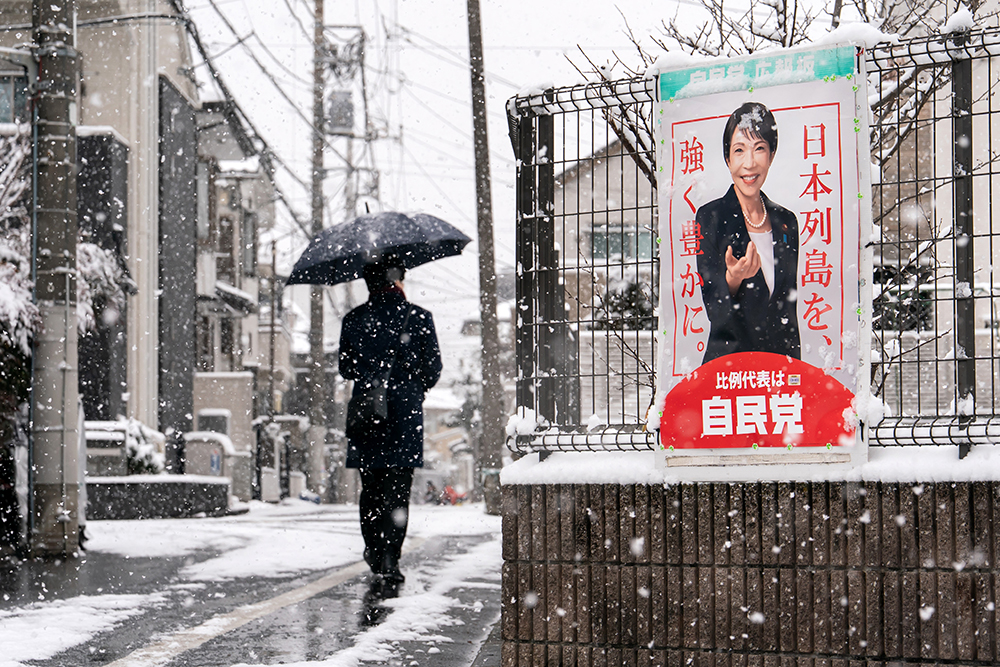


My scepticism towards soaring markets with unconvincing fundamentals was nurtured by working in Tokyo in the mid-1980s, when the Nikkei index took off like a rocket. Shamelessly boosted by traders and analysts alike, share prices rose to absurd heights before crashing in the early 1990s and taking with them any notion of Japan as the next great economic power.
The Nikkei took 34 years to regain its 1989 peak of 38,916. Since passing that benchmark, the index has roared upwards again – despite Japan’s chronic problems of stagnant growth, ballooning public debt, sclerotic corporate leadership, expensively ageing population and fears of inflation. This week the Nikkei broke through 57,000 in response to a landslide snap election victory for the Liberal Democratic party under the country’s popular first female Prime Minister, Sanae Takaichi, who promised more state spending and tax cuts to reignite growth.

Are her fundamentals convincing? I fear not: once again, the market is overegging the upside. But one of my other observations of Japan’s patriarchal culture was that its apparently subservient women were often made of steel. In a world run by mad, bad and incompetent men, Sanae Takaichi is a bright beacon on the eastern horizon. As a long-time Japanophile, I wish her good fortune.
Clashing heads
The mooted marriage of Rio Tinto and Glencore, mentioned last week, was called off by Rio just ahead of Thursday’s deadline – but the Financial Times’s Lex column for one still thinks it’s likely to happen. Consolidation of western-owned copper and other mineral interests is the natural trajectory of the sector and these two together would make the world’s largest mining business, worth $260 billion.
But talks appear to have fallen apart for two reasons, one understandable – Glencore believed it was being undervalued – the other less so. Rio reportedly wanted to nominate both the chairman and the chief executive of the combined group, while Glencore punted for one each. The latter issue speaks to whether the deal would have been a straight takeover by Rio, which represented 69 per cent of combined value when talks began, or a merger of near equals in a ratio closer to 60-40 reflecting Glencore’s prospects.
But it also hints at a clash between Rio bureaucrats and Glencore buccaneers – and a personal stand-off between chief executives Simon Trott for Rio and Gary Nagle for Glencore, with billionaire founder Ivan Glasenberg breathing down his neck. Big-ego machismo is too often the enemy of successful corporate co-operation. If public shareholders want this deal to happen, perhaps even with Glencore at the helm, they should knock the bosses’ heads together.
Bigger not better
A significant takeover in another rapidly consolidating sector is NatWest’s £2.7 billion purchase of Evelyn Partners, the wealth manager that was itself formed by the merger of Tilney with Smith & Williamson. The deal is seen as a sign that NatWest is back on form after 17 years in the post-bailout sin-bin: the addition of Evelyn to its existing Coutts wealth arm makes a new market giant. But clients of both can expect less bespoke service ahead, while high-street NatWest branch closures continue apace. In banking today, what looks hot for shareholders is rarely good for customers.
Thanks to Eddy
The news industry owes gratitude to Eddy Shah, who has died aged 81: his willingness to confront militant print unions as a northern local newspaper publisher in 1983 paved the way for the revolution in technology and working practices that followed in Wapping and Fleet Street.
Freelance columnists should thank him too, because the demolition of the old closed-shop culture turned journalism into a free market whose only barrier to entry was the challenge of attracting editors’ attention. And it wasn’t Shah’s fault that the internet came along to make everyone a would-be commentator, creating an excess of supply that crushed wordage rates below what we were paid a generation ago. But let’s be honest, it’s still more fun than having a job.
My personal recollection of Shah is an indirect one. Long after he moved on from newspapers to leisure developments and thriller-writing, he was charged in 2012 with having sex with an underage girl whom he admitted having met but claimed never to have touched, later adding: ‘Anybody walking down the street can point at a celebrity and say, “He raped me.”’
The following summer, I was a guest at a Gilbertian lunch table of Old Bailey judges noshing and gossiping in their gowns and wigs. The place next to me was empty until the missing Mr Justice bustled in. ‘Sorry I’m late, I’m trying Eddie Shah for rape,’ he declared cheerily. ‘Seems to be a frightfully nice chap.’ What this says about British justice I’m not sure, but the jury duly concurred with Shah’s plea of not guilty.
Gold for gastronomes
The Bank of England has slashed its UK growth forecast and the rain it raineth every day. No wonder so many of my older friends opt for South African sunshine at this time of year. But if you’re looking for a bargain late booking, you may be surprised. Since last April, reflecting near-doubled prices of gold and platinum of which South Africa has huge reserves, the rand has risen 16 per cent against the pound.
But that’s all the more reason to go armed with readers’ top restaurant tips: for seafood on the beach, Gaaitjie at Paternoster, north of Cape Town, or Chef’s Warehouse at Tintswalo Atlantic further south; for gastronomy among the vineyards, Le Lude at Franschhoek or Delaire Graff at Stellenbosch. And all the better if you saved last year’s winter holiday money to buy gold.



Comments