Taiwan

How Iran could end the AI boom

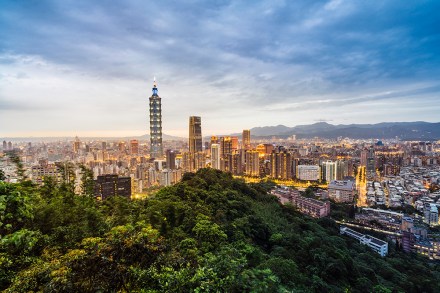
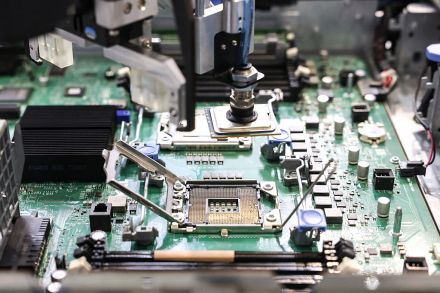
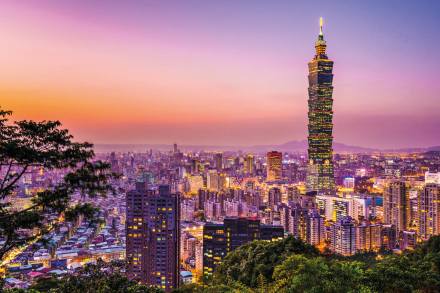
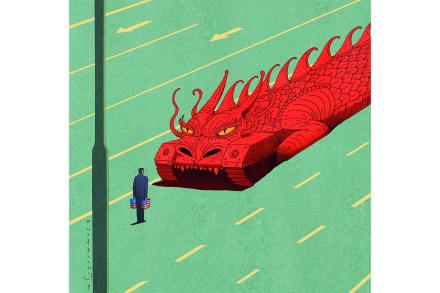
While Americans anxiously watch the price of gasoline tick higher as the war in the Middle East squeezes the global oil supply, the conflict has highlighted another energy vulnerability that could prove just as costly: Taiwan’s dependency on foreign natural gas. At first blush, energy issues an ocean away seem peripheral to American interests. They are anything but. Though the effect on the American economy won’t be immediate, energy insecurity in Taiwan is a looming disaster. Qatar, the source of 30 percent of Taiwan’s natural gas, has been effectively bottled up The reason is that AI – in fact, virtually all modern computing – is highly reliant upon the steady production of semiconductors in the world’s only true hub, Taiwan.

Semiconductors

Japan is refusing to tiptoe around the Taiwan issue

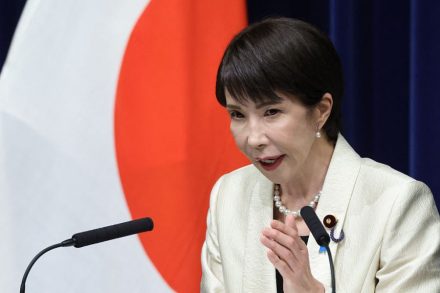
One of the most serious issues in the well-filled in-tray of freshly endorsed Japanese Prime Minister Sanae Takaichi is Taiwan, which China claims as its own sovereign territory, and the lamentable state of Sino-Japanese relations. Takaichi provoked fury with comments in the Japanese parliament in November when she stated that were China to attack Taiwan, it would be interpreted as a "survival-threatening situation" for Japan, implying a military response could follow. Under the terms of its constitution, Japan is severely limited in its military options but Takaichi appeared to be preparing more solid ground with her phrasing. A 2015 law changed the constitution allowing Japan to retaliate if the country faced a "life-threatening" situation.

America no longer knows how to fight a war

When educated Americans think about war, they’re apt to think of it in ideological terms. Wars are fought between dictatorships and democracies and the goal is to establish one form of government or the other in the defeated opponent’s territory. That’s certainly been the way American policymakers have thought about the wars of this century and it was the framework during the Cold War as well, when the conflict was said to be, fundamentally, a clash of ideologies. The French Revolution is probably the source of this concept, as the wars it set off were indeed largely about regime change, if not that alone.

war

Is the AI boom already over?

Is artificial intelligence a flash in the pan? Is the boom in tech shares, which exploded with the rise in public awareness of AI, doomed to go the way of other investment bubbles over the centuries? The answer to the first question is almost certainly no, and the answer to the second very likely yes. Investment bubbles do sometimes involve assets which have little intrinsic value, yet it is remarkable how often they begin as an entirely rational reaction to some new invention or development – an invention which outlasts the collapse of the speculative bubble, as if nothing had happened. You only have to look at a share chart and you would assume that railways went out of fashion in the 1840s, when a mad speculative umbrella collapsed.

AI

Trump’s foreign policy isn’t unprincipled

"He [Donald Trump] sees American leadership as merely a series of real estate transactions." That was the verdict of the Democratic senator Elissa Slotkin following the President’s address to Congress. Trump 2.0 does, admittedly, have the appearance of a political version of The Art of the Deal, in which the Donald is prepared to leverage a bilateral compact with every country in the world — so long as the price is right. There are no friends in The Art of the Deal, no permanent friends anyway, only prospective business associates. Ukraine wants the flow of armaments to resume? Sign over the rights to half your natural resources.

Trump

What I learned from my time in Taiwan

When hearing “Taiwan,” people who have some awareness of the world will think of its focal role in US-China relations or computer chips. And if they don’t have much awareness they’ll confuse it with Thailand — yes, this has happened to me multiple times. But most simply do not know much about the island that was once known as “Ilha Formosa” —beautiful island — by Portuguese settlers in the sixteenth century. The colonizers knew what they were talking about. The media tells us about military activity in the South China Sea, fostering fear in most. Before I left for study abroad in Taipei, most people’s first reaction when I told them where I was going was, “Aren’t you concerned about China?” or “Isn’t this a risky time to go?

Taiwan

How will the 2024 election impact US-China relations?

There was a time when the relationship between the United States and China had a bright future. While bilateral relations have never been particularly rosy since the two countries formally established diplomatic ties on January 1, 1979, US and Chinese leaders have long worked on the assumption that they had much to gain by deepening their cooperation and, if possible, expanding it to new heights. This was a widespread sentiment in Washington, reflected in speeches given by presidents from both parties. “I know there are those in China and the United States who question whether closer relations between our countries is a good thing,” President Bill Clinton told students at Beijing University in June 1998.

Gallagher china ccp confucius institutes china

Why Joe Biden’s Latin America policy is failing

At the opening ceremony of the Summit of the Americas in Los Angeles last year, President Joe Biden announced the Americas Partnership for Economic Prosperity, which the White House described as “a historic new agreement to drive our hemisphere’s economy recovery and growth and deliver for our working people.” The plan has become the administration’s signature Latin America policy. As noted by the White House, the region matters not solely because it’s where the US is situated, but because it also accounts for 32 percent of global GDP. Even more so, the region is rich in resources that are crucial in the development of emerging technologies.

latin america

Biden and Xi will resolve nothing in San Francisco

A year ago today, President Biden and Chinese President Xi Jinping shook hands with each other on the sidelines of the G-20 Summit in Bali, Indonesia, in an attempt to reset the world’s most important bilateral relationship. The two men, who knew each other during their previous encounters at the vice presidential level, hoped to exploit their familiarity with one another to bring US-China relations onto a more productive plane. And for a moment, the Bali talkathon seemed to have that effect.

xi

World events are not going America’s way

Contrary to the conventional wisdom, the world situation is grim for America. And it could actually get far worse. Why, then, are many of our national leaders acting as if things are going well? We need not doubling down but fundamental change. That starts with understanding that we are in serious trouble. The war in Ukraine, which is manifestly the Biden administration’s priority, is sadly likely to be protracted. While the Ukrainian counteroffensive is still ongoing, the best analysis indicates that the war has become a struggle of attrition. Russia is substantially mobilizing its economy and society for a long-haul war effort — and its armed forces appear to have at least partially adapted from their earlier failures.

world

Fear and complacency in Taiwan

On a recent trip to Taiwan as a guest of its Ministry of Foreign Affairs, I knew that war with an increasingly belligerent China is a daily possibility. Chinese ships are in constant circulation in the Taiwan Strait. Chinese aircraft unceasingly fly near the island, getting close to Taiwanese air space. Beijing’s increasingly threatening language about forced “unification” seems to bring a catastrophic attack closer. Genuine fear fluttered in the wake of Nancy Pelosi’s visit in August last year when China launched three days of drills that paid no regard to what they called the “imaginary” median line, which divides Chinese from Taiwanese territory.

Taiwan
taiwan

Why Taiwan’s defense is in the American national interest

Just 38 percent of Americans “support deploying US troops to defend Taiwan from a military attack by China” according to a Reuters/Ipsos released this week, with 42 percent opposing and 20 percent unsure. Vivek Ramaswamy, among the top contenders for the 2024 GOP nomination, also recently said that the US should only defend Taiwan until “we have semiconductor independence.” Add to this the Biden administration’s unwillingness to spend what is needed to build up the Taiwanese military and its failure to adequately support Ukraine — and anyone who values a safe, free, prosperous and stable world should be concerned. Because defending Taiwan from a revanchist, imperialist and brutal Chinese Communist Party is at the heart of America’s national interest.

Where is today’s equivalent of the Free Tibet movement?

Remember “Free Tibet?” The Tibetan Freedom Concert, a series of music festivals that began in 1996, featured such impressive acts as the Beastie Boys, Red Hot Chili Peppers, Smashing Pumpkins, Rage Against the Machine, U2 and A Tribe Called Quest. An entire generation of young Americans — enchanted with “the other” of Tibetan Buddhism — had no qualms condemning what they believed to be an authoritarian Chinese regime. And why not? The People’s Republic of China, however much they fumed over international denunciations of the Tibetans, seemed weak, and incapable of silencing the Western entertainment industry’s indignation. These days, not so much. The NBA apologizes for players or coaches who criticize Beijing’s actions in Hong Kong.

free tibet

The China influence puzzle

A “Chinese puzzle” in its classic version is a game where you must fit a variety of ill-assorted boxes inside other boxes. The term came to mean any intricate problem, especially one in which what looks like the way forward leads only to new obstacles.   These days, in which we are warned not to use ethnonyms for fear of giving offense, it might be safer to say something like “brainteaser.” But the efforts of the Chinese Communist Party (CCP) to manipulate American society genuinely deserve the old term. The news this past week adds a few curious details to those efforts. Details first; explanations to follow.

china ccp

A Chinese wargame in the halls of Congress

The House Select Committee on the CCP held a wargame Wednesday evening where members played the role of the US in a showdown with Beijing over Taiwan. As Committee Chairman Mike Gallagher said after the event, “We are well within the window of maximum danger for a [CCP] invasion of Taiwan, and yesterday’s wargame stressed the need to take action to deter CCP aggression and arm Taiwan to the teeth before any crisis begins.” The results of the game were — as Gallagher predicted in his opening statement — “sobering.”  A source close to the Committee told The Spectator that a critical lesson taken by participants was that deterrence must be the top priority.

xi jinping wang huning wargame militarizing IP china

The Paraguay predicament over Taiwan

On April 30, Paraguayans will go to the polls to select a new president. Though elections in the landlocked South American nation do not typically make headlines around the world, this vote carries outsized geopolitical importance: it could mean Taiwan loses yet another country to China. Opposition candidate Efraín Alegre of the Authentic Radical Liberal Party, or PLRA, has said that, should he win, he will retract Paraguay’s recognition of Taiwan as a country. At present, Paraguay is the largest of just fourteen countries to have formal diplomatic relations with Taiwan and the only one in South America. Paraguay first recognized Taipei in 1957 while under the dictatorship of Alfredo Stroessner.

paraguay

One year of war in Ukraine: six experts predict what will happen next

As the war in Ukraine enters its second year, today seems as a good time as any to reflect on its first, and see what the future might hold. Six foreign policy experts from across the spectrum of opinion offered their thoughts to The Spectator. As the war in Ukraine enters its second year, how do you foresee the conflict ending? Ted Carpenter: There are several possible outcomes, but the most likely is a ceasefire without a formal peace accord. That move would end the bloodshed, but it would leave the underlying disputes unresolved. Such an outcome would be similar to the armistice that ended the Korean War. It also would create the world’s largest and most dangerous “frozen conflict.

ukraine war nato

Enes Kanter Freedom on LeBron, Erdoğan and the earthquake

Basketball player and human rights activist Enes Kanter Freedom was invited as Leader Kevin McCarthy's guest of honor to the State of the Union last week, an address in which President Biden barely touched on foreign policy. The former Boston Celtics and Oklahoma City Thunder center spoke with The Spectator about democracy, autocracies and hypocrisy. John Pietro: How far does China’s influence reach into the NBA, in your estimation? Could you see the NBA ever standing up to China in the way the Women’s Tennis Association did in defense of Peng Shuai? Enes Kanter Freedom: I didn’t know how deep the relationship between the NBA and China was until Daryl Morey tweeted and said "stand with Hong Kong" and after that obviously the NBA lost millions and millions of dollars.

enes kanter freedom

Biden’s State of the Union went quiet on China

Joe Biden's meandering State of the Union left out a great many things, as his voice toggled between insincere whisper and frail bellow. The loudest moment of the night was when, going off-script from his prepared remarks, he insisted that really — c'mon, I really mean it! — China's Xi Jinping is being isolated from the world for some reason. https://twitter.com/greg_price11/status/1623157950654078977 "Name me a world leader who would change places with Xi Jinping! Name me one! Name me one!" Biden yelled. The comment had an air of frustration given that the humiliating Chinese spy balloon was fresh in the minds of all on Capitol Hill. "I’ve made clear with President Xi that we seek competition, not conflict," Biden said in his prepared remarks.

Trump is wrong that the US should negotiate peace in Ukraine

The GOP’s foreign policy doves and soft isolationists have grown stronger, with 40 percent of “Republican and Republican-leaning independents” saying the US is giving too much aid to Ukraine. Former president Donald Trump has now taken up the mantle of this movement, firmly anchoring himself to the anti-Ukraine aid faction of the party. Trump recently gave an interview to radio host Hugh Hewitt in which he made one thing clear: he’s no fan of aiding Ukraine. Asked about sending F-16s, Trump said, “I think the United States should negotiate peace between these two countries, and I don’t think they should be sending very much.” When Hewitt asked if the former president would cut aid to Kyiv, Trump responded, “we’ve got to make peace.