Taiwan

Is Tainan the world’s most dangerous city?

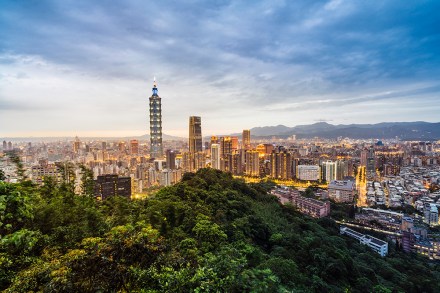
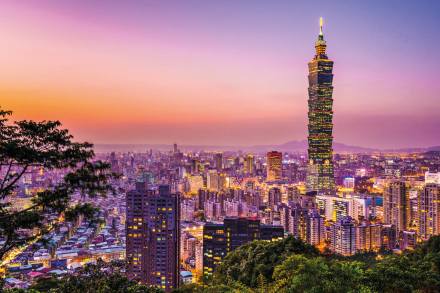
In a country full of brilliant food, the Garden Night Market in sultry Tainan, southwest Taiwan, is still a standout: a cheerful riot of steam, umami, deep-fried tofu and loud, vivacious chatter. Families drift past in loose formation, grandparents hefting toddlers with fruit ices, flirting teenagers orbiting bubble-tea stalls, couples sharing hot skewers of squid, pork and chicken gizzards. Almost everyone plays lurid and inexplicable games involving teddy bears and claw machines. I eat sublime oyster omelettes slick with sweet chili pepper sauce, then hot soup dumplings that collapse into scalding, savory bliss. Someone presses popcorn chicken into my hand. It is dangerously moreish. The next morning, Tainan feels sun-blessed and unhurried.

How Iran could end the AI boom

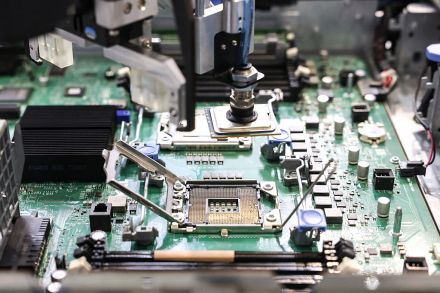
While Americans anxiously watch the price of gasoline tick higher as the war in the Middle East squeezes the global oil supply, the conflict has highlighted another energy vulnerability that could prove just as costly: Taiwan’s dependency on foreign natural gas. At first blush, energy issues an ocean away seem peripheral to American interests. They are anything but. Though the effect on the American economy won’t be immediate, energy insecurity in Taiwan is a looming disaster. Qatar, the source of 30 percent of Taiwan’s natural gas, has been effectively bottled up The reason is that AI – in fact, virtually all modern computing – is highly reliant upon the steady production of semiconductors in the world’s only true hub, Taiwan.

Semiconductors

Japan is refusing to tiptoe around the Taiwan issue

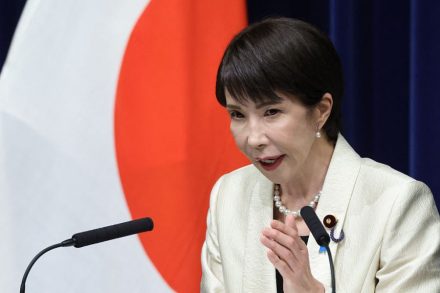
One of the most serious issues in the well-filled in-tray of freshly endorsed Japanese Prime Minister Sanae Takaichi is Taiwan, which China claims as its own sovereign territory, and the lamentable state of Sino-Japanese relations. Takaichi provoked fury with comments in the Japanese parliament in November when she stated that were China to attack Taiwan, it would be interpreted as a "survival-threatening situation" for Japan, implying a military response could follow. Under the terms of its constitution, Japan is severely limited in its military options but Takaichi appeared to be preparing more solid ground with her phrasing. A 2015 law changed the constitution allowing Japan to retaliate if the country faced a "life-threatening" situation.

Global fish stocks have been perilous for decades – so why is still so little being done?

From our UK edition

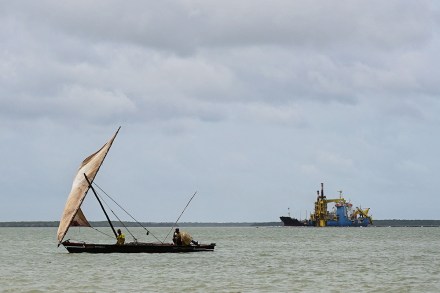
The great American activist Aldo Leopold once argued that to be a modern environmentalist was to suffer a world of wounds as you endured the losses inflicted on one cherished organism after another. No one, then, can suffer more anguish than the campaigner for the world’s fishes. In this wide-ranging, heartfelt, meticulously assembled account of our oceans Rose George shows why. She tells us that there are four million fishing vessels worldwide, the most appallingly efficient belonging to China, the EU, Taiwan, Japan, Russia and the USA. It is primarily these giant industrial regimes that have driven four-fifths of the planet’s fishes to the edge of sustainable limits. Much of this damage was done decades ago. Even in the 1970s the North Atlantic fisheries were declining.

An adorable Taiwanese debut: Left-Handed Girl reviewed

From our UK edition

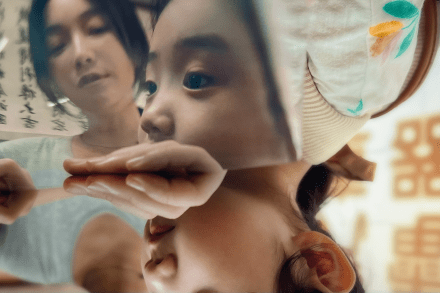
Left-Handed Girl is a Taiwanese drama about a single mother who moves back to Taipei with her two daughters to run a noodle stand in the night market. It’s one of those films where the stakes don’t appear that high – will the mother make the rent this month?; will the littlest daughter settle at her new school?; what’s grandma’s game? – yet we become so attached to this family and their survival it will all matter a great deal. It also features an adorable pet meerkat, GooGoo, and I doubt you’ll see a better film starring an adorable pet meerkat called GooGoo this year. I’d bet my life on it.

America no longer knows how to fight a war

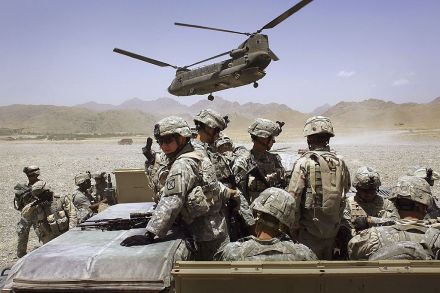
When educated Americans think about war, they’re apt to think of it in ideological terms. Wars are fought between dictatorships and democracies and the goal is to establish one form of government or the other in the defeated opponent’s territory. That’s certainly been the way American policymakers have thought about the wars of this century and it was the framework during the Cold War as well, when the conflict was said to be, fundamentally, a clash of ideologies. The French Revolution is probably the source of this concept, as the wars it set off were indeed largely about regime change, if not that alone.

war

Is the AI boom already over?

Is artificial intelligence a flash in the pan? Is the boom in tech shares, which exploded with the rise in public awareness of AI, doomed to go the way of other investment bubbles over the centuries? The answer to the first question is almost certainly no, and the answer to the second very likely yes. Investment bubbles do sometimes involve assets which have little intrinsic value, yet it is remarkable how often they begin as an entirely rational reaction to some new invention or development – an invention which outlasts the collapse of the speculative bubble, as if nothing had happened. You only have to look at a share chart and you would assume that railways went out of fashion in the 1840s, when a mad speculative umbrella collapsed.

AI

Trump’s foreign policy isn’t unprincipled

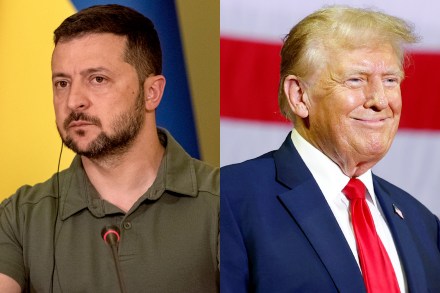
"He [Donald Trump] sees American leadership as merely a series of real estate transactions." That was the verdict of the Democratic senator Elissa Slotkin following the President’s address to Congress. Trump 2.0 does, admittedly, have the appearance of a political version of The Art of the Deal, in which the Donald is prepared to leverage a bilateral compact with every country in the world — so long as the price is right. There are no friends in The Art of the Deal, no permanent friends anyway, only prospective business associates. Ukraine wants the flow of armaments to resume? Sign over the rights to half your natural resources.

Trump

Rana Mitter on the legacy of Sun Yat-sen

From our UK edition

43 min listen

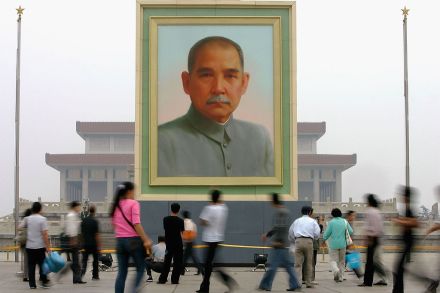
Walking around Taipei a couple of years ago, I spotted a familiar sight – a bronze statue of a moustachioed man, cane in his right hand, left leg striding forward. The man is Sun Yat-sen, considered modern China’s founding father. I recognised the statue because a larger version of it stands in the city centre of Nanjing, the mainland Chinese city that I was born and raised in. That one figure can be celebrated across the strait, both in Communist PRC and Taiwanese ROC, is the curious legacy left behind by Sun. March 12th this year is the centenary of Sun’s death, so what better opportunity to look at his legacy, and who better to discuss Sun than the historian Rana Mitter, who needs no introduction with Chinese Whispers listeners.

Will China soon rule the waves?

From our UK edition

On Sunday morning, a communications cable between Sweden and Lithuania was damaged, almost certainly deliberately. Just hours later, the C-Lion cable, the only data link between Finland and central Europe, was severed by what authorities have diplomatically called an ‘external impact’. Most would call it sabotage. In a week where the Biden administration finally gave Kyiv authorisation to use longer-range missiles against targets in Russia, few should think it is a coincidence. Sir Walter Raleigh said that ‘whoever commands the sea commands the trade’ and that ‘whoever commands the trade of the world commands the riches of the world – and consequently the world itself’.

What I learned from my time in Taiwan

When hearing “Taiwan,” people who have some awareness of the world will think of its focal role in US-China relations or computer chips. And if they don’t have much awareness they’ll confuse it with Thailand — yes, this has happened to me multiple times. But most simply do not know much about the island that was once known as “Ilha Formosa” —beautiful island — by Portuguese settlers in the sixteenth century. The colonizers knew what they were talking about. The media tells us about military activity in the South China Sea, fostering fear in most. Before I left for study abroad in Taipei, most people’s first reaction when I told them where I was going was, “Aren’t you concerned about China?” or “Isn’t this a risky time to go?

Taiwan

Joan Collins, Owen Matthews, Sara Wheeler, Igor Toronyi-Lalic and Tanya Gold

From our UK edition

30 min listen

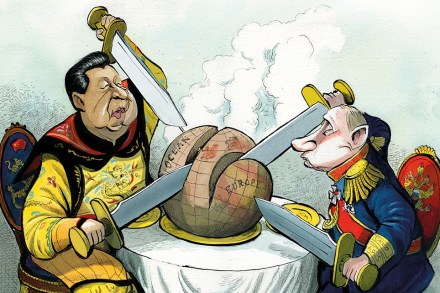
On this week’s Spectator Out Loud: Joan Collins reads an extract from her diary (1:15); Owen Matthews argues that Russia and China’s relationship is just a marriage of convenience (3:19); reviewing The White Ladder: Triumph and Tragedy at the Dawn of Mountaineering by Daniel Light, Sara Wheeler examines the epic history of the sport (13:52); Igor Toronyi-Lalic looks at the life, cinema, and many drinks, of Marguerite Duras (21:35); and Tanya Gold provides her notes on tasting menus (26:07).  Presented and produced by Patrick Gibbons.

What would a second Trump presidency bring for China?

From our UK edition

30 min listen

Trump is tough on China, but what really motivates his hawkishness? Does he care at all about China's human rights abuses? Or is he fundamentally a foreign policy disentangler, hoping to rein back America's overseas commitments? How much does the China policy of a second Trump presidency depend on which advisors the president surrounds himself with? On this episode of Chinese Whispers, The Spectator's China podcast, assistant editor Cindy Yu talks to deputy editor Freddy Gray and Jordan McGillis, economics editor at the Manhattan Institute's City Journal. Produced by Cindy Yu and Patrick Gibbons.

Market apocalypse? No, a welcome correction

From our UK edition

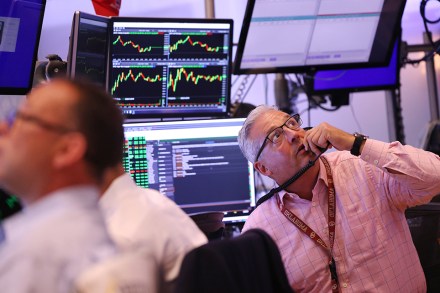
A bout of global stock-market turmoil and an outbreak of UK street violence as adjacent news items gave an apocalyptic feel to the start of the week. But as rioting continued, markets appeared to steady, led by Tokyo with a 10 per cent Tuesday rebound. We know the ugly sentiments that animate the thugs – but do we understand the sudden nerviness of investors? Once media clamour about 1,000-point falls subsided, two strands emerged, both American. First, fear – driven by bad employment figures – that the US economy is weaker than previously thought, fuelling a conviction that the Federal Reserve should have cut interest rates at its late-July meeting rather than waiting for the next in mid-September.

Elbridge Colby on why America must pivot from Ukraine to Taiwan

From our UK edition

29 min listen

The war in Ukraine is only bogging America down, says Elbridge Colby, a former national security adviser to the Trump administration. On this episode of Americano, Colby tells host Freddy Gray why the US should – and likely will – reduce its support to Ukraine and Europe, to focus on the increasing threat China poses over Taiwan. Europe, he says, can pick up the slack on its own continent. Colby has been tipped to become Trump's national security adviser should he win in November this year. Produced by Cindy Yu and Joe Bedell-Brill.

There’s trouble ahead for Taiwan’s new president

From our UK edition

Not many inaugural ceremonies bring together dragons, dancers, rappers, and a 10-metre-high blue horse breathing steam out of its nostrils. But last Monday morning, as thousands gathered to watch the inauguration of Taiwan’s new president William Lai, Taipei’s residents were treated to just that. And as Lai danced on the stage, he may well have been very happy. His inauguration ceremony, an eclectic display of Taiwanese culture, had gone off without a hitch.  Moreover, his inaugural speech, designed to outline a pragmatic foreign policy while developing new ideas to stimulate Taiwan’s economy, had elicited what felt like a relatively muted reaction from Beijing.

A Chinese invasion of Taiwan remains unlikely

From our UK edition

For a second day, yesterday, Chinese fighter jets and warships surrounded Taiwan for drills which the People’s Liberation Army said were designed to ‘test the ability to jointly seize power, launch joint attacks and occupy key areas’. They followed the inauguration earlier this week of Taiwan’s new and democratically elected president Lai Ching-te, who Beijing has characterised as a ‘dangerous separatist’. The exercises were a ‘strong punishment’, said the PLA, presumably for Taiwan’s audacity in electing a leader who wants to distance the island as far as possible from the thuggish leaders of the Chinese Communist Party (CCP).

How will the 2024 election impact US-China relations?

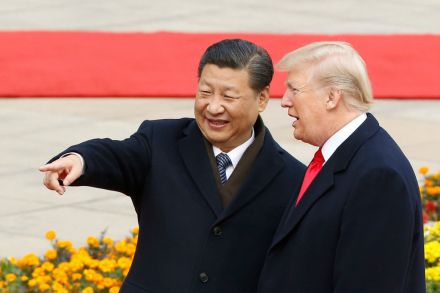
There was a time when the relationship between the United States and China had a bright future. While bilateral relations have never been particularly rosy since the two countries formally established diplomatic ties on January 1, 1979, US and Chinese leaders have long worked on the assumption that they had much to gain by deepening their cooperation and, if possible, expanding it to new heights. This was a widespread sentiment in Washington, reflected in speeches given by presidents from both parties. “I know there are those in China and the United States who question whether closer relations between our countries is a good thing,” President Bill Clinton told students at Beijing University in June 1998.

Gallagher china ccp confucius institutes china

Cindy Yu, Mary Wakefield and Natasha Feroze

From our UK edition

18 min listen

This week: Cindy Yu reads her piece ahead of the Taiwanese elections (00:54), Mary Wakefield discusses the US opioid crisis which she fears has come to the UK (07:13), and Natasha Feroze tells us about the rise of relationship contracts (13:26).  Produced and presented by Oscar Edmondson.

Taiwan can’t escape China’s shadow

From our UK edition

The Taiwanese rock band Mayday – ‘the Beatles of the Chinese-speaking world’ – are being investigated by the Chinese Communist party for the crime of lip syncing. Local authorities are combing through recordings of Mayday’s Shanghai concerts from November looking for evidence of ‘deceptive fake-singing’, as the CCP calls it, which has been illegal in China since 2009 (although the law is rarely enforced). Last month, an anonymous Taiwan-ese government source told Reuters that the investigation had been cooked up because the pop stars refused a request from Beijing to say something nice about China in the run-up to Taiwan’s election this Saturday. The band found itself at the centre of a row between the presidential hopefuls about Chinese interference.