Trade

Inside the Cambodian cybercrime compounds run by Chinese gangs

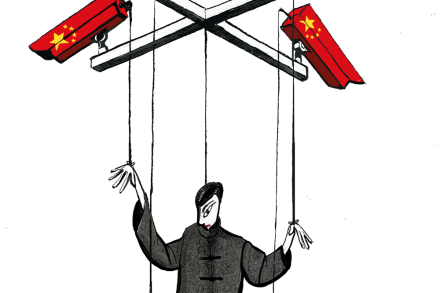
The scrappy Cambodian border town of Poipet, long associated with vice and criminality, was shaken shortly before Christmas by the sound of F-16 fighter jets screaming overhead. The Thai Royal Air Force was, astonishingly, bombing a series of casinos. At least five fortified compounds were damaged, which were part of a vast industry that has conned millions of people across the world out of billions of dollars. This was “a war against the scam army,” Thailand’s army said. Scamming is a mainstay of Cambodia’s economy. The country earns an estimated $12 billion annually from online scamming alone, around half the value of its formal economy. Poipet is just one small outpost of a Chinese organized crime network, many elements of which have links to the Chinese Communist party.

Will Congress shield the US from foreign attacks on the First Amendment?

Britain’s Online Safety Act is part of an escalating censorship war between Europe and the United States. It was sold to the British public as legislation that would protect children; in practice, it is a far-reaching internet censorship statute with explicit extraterritorial reach. The OSA purports to grant the UK’s communications regulator, Ofcom, the power to do what no one on Earth has the lawful power to do: compel US websites to censor themselves and their users. This affects everyone, not just tech firms. If the UK can impose British speech rules on US companies, then the First Amendment stops being law and becomes a suggestion. At least 29 nations, mostly America’s allies, have enacted similar laws.

A rare earths deal is China’s gift to Trump

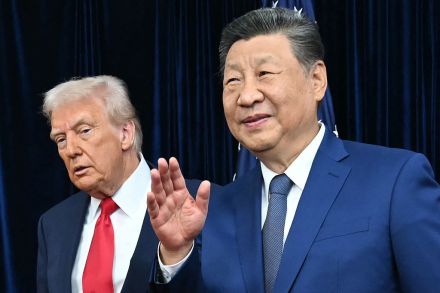
Donald Trump went nuclear. Before his meeting with Chinese leader Xi Jinping at an air base in South Korea, he ordered the Pentagon to test atomic weapons on an “equal basis” with China and Russia. Was Xi impressed? Probably not. While Russia expressed indignation, China did not permit itself to be distracted by Trump’s nuclear shenanigans. Instead, Beijing aimed to obtain economic concessions from a prideful Trump, which it did. From the outset, Xi sought to bring Trump down a peg, declaring that “both sides should consider the bigger picture and focus on the long-term benefits of cooperation, rather than falling into a vicious cycle of mutual retaliation.” Trump seems to have absorbed the lesson.

The Art of the Dealmaker-in-Chief

Who really thought Donald Trump’s America was about to join the stampede of first-world powers promising to recognize Palestine at the United Nations?  "Wow!" He exclaimed this morning on Truth Social. "Canada has just announced that it is backing statehood for Palestine. That will make it very hard for us to make a Trade Deal with them."  All over the world, commentators convinced themselves that Trump’s expression of concern on Monday about "real starvation" in Gaza meant he was pivoting with global opinion and against Israel.  It turns out, however, that Team Trump is not for turning when it comes to the Middle East. Marco Rubio, the US Secretary of State, has accused the countries now embracing Palestinian statehood of falling for "Hamas propaganda".

Trump deals

The truth about the Trump ‘trade deals’

They say three times makes a pattern. So what should we make of the President’s trade agreements, three of which he confirmed this week, as the August 1 deadline for "reciprocal tariffs” looms?  If there remained any confusion about his agenda, he helpfully laid it out in all caps. “I WILL ONLY LOWER TARIFFS IF A COUNTRY AGREES TO OPEN ITS MARKET. IF NOT, MUCH HIGHER TARIFFS!” he wrote on Truth Social. “USA BUSINESSES WILL BOOM!” Given the size of the lettering, and the similarities to the deals secured with Indonesia, the Philippines and Japan this week, we should take Donald Trump at his word on this one. Put simply: so long as other countries cut taxes for their businesses, he will hike taxes on American businesses ever so slightly less.

trump trade

Trump’s Japan deal is a hollow victory

The reaction of markets to the US trade deal with Japan shows yet again that if you presage bad news with even worse news you can make people pathetically grateful at the outcome. Shares in Toyota surged by 14 percent at the news. Yet why, when the deal will see imports of Japanese cars to the US slapped with tariffs of 15 percent? Because back on "Liberation Day" in April,  Donald Trump announced that Japanese imports would be subject to 24 percent tariffs. Reactions to Trump’s reset in trade relations with the rest of the world have undergone wild swings in recent months. First, markets plunged.

Tariffs

Don’t bet on the Trump economy

The Trump White House took a victory lap on Monday, declaring in its newsletter that the American economy is back – back bigger and better than ever. Core inflation is down. Industrial production is up. Claims for unemployment dropped. Tariff revenue rose. The newsletter even cites the Wall Street Journal—otherwise in bad odor in the Trump White House – for decreeing that the American economy is “regaining its swagger.” Is it time to splurge on a fancy vacation? As it happens, I’m currently visiting Vermont where the number of tourists is distinctly lower than in previous years.

Economy

Tariffs will make America poorer

Is life worse today than it was 50 years ago? According to a Pew Research survey, 58 percent of respondents believe it is. Perhaps watching the doom and gloom of the nightly news gives the impression that times have never been worse. But the facts show otherwise.The world has never been richer, food has never been more abundant, and extreme poverty is at historic lows. We are fortunate to live in a country where the people have a strong work ethic and control a vast, resource-rich territory. Yet, even with those advantages, we rely on trade to access goods that America simply does not produce in abundance, like coffee and bananas. Perhaps we should ask a more nuanced question: is international trade good or bad?

Rand Paul

What has reaction been to the UK-EU deal?

From our UK edition

18 min listen

Fallout continues from yesterday's summit and the announcement of a deal between the UK and EU – or is it fair to call it 'fallout' as, despite criticism over the deal from Nigel Farage and Kemi Badenoch, has the public got Brexit fatigue?  James Heale and Michael Simmons join Patrick Gibbons to talk about the reaction to the deal. Fisheries has taken up most discussion but Michael points out a lesser talked about commitment to energy policy. And, with the government keen to talk about it in tandem with recent deals with India and the US – and Gulf states soon, according to Rachel Reeves this morning – what's the political narrative around the summit? Produced by Patrick Gibbons.

Why Trumpism won’t fix Clintonomics

As a longtime critic of the Clinton administration’s “free trade” agreements, I’ve lately been mocked by liberal friends who suspect I’m sympathetic to the “plan” hatched by Donald Trump and his senior advisor on trade, Peter Navarro, to “ruin” the country with indiscriminate import tariffs. This sort of jokey ridicule goes with the territory when you jab at neoliberalism from the left. Bill Clinton still has legions of fans among the Democratic party establishment and its media acolytes, and it’s hard for them to face up to the fact that the former president’s economic policies have led directly to Trump’s election as president not just once, but twice.

trade
AI

Is the AI boom already over?

Is artificial intelligence a flash in the pan? Is the boom in tech shares, which exploded with the rise in public awareness of AI, doomed to go the way of other investment bubbles over the centuries? The answer to the first question is almost certainly no, and the answer to the second very likely yes. Investment bubbles do sometimes involve assets which have little intrinsic value, yet it is remarkable how often they begin as an entirely rational reaction to some new invention or development – an invention which outlasts the collapse of the speculative bubble, as if nothing had happened. You only have to look at a share chart and you would assume that railways went out of fashion in the 1840s, when a mad speculative umbrella collapsed.

Is Canada doing enough to tame Trump?

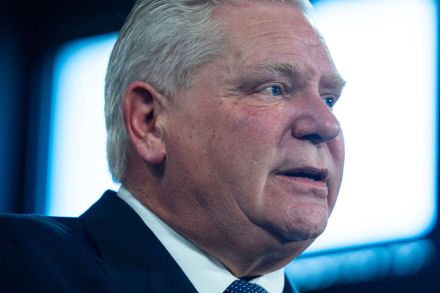
There’s such a thing as cutting off your nose to spite your face, and the tariff war between Canada and the US is starting to look like a prime example. On Monday, Ontario Premier Doug Ford announced a 25 percent surcharge on electricity exports to the US, affecting an estimated 1.5 million households and businesses in New York, Michigan, and Minnesota. Trump responded with all-caps outrage, raising the March 12 tariff on steel and aluminum imports from Canada from 25 to 50 percent — a move that would be devastating for Ontario’s auto sector. How, the President asked, could Canada stoop so low as to use electricity — a resource that impacts the daily lives of innocent people — as a bargaining chip and a threat?

Canada

Europe should be careful in wishing for their own Trump

When I visited Toronto with a UK delegation last winter, conversation focused on the issues of immigration, housing and inflation that were contributing to the unpopularity of Justin Trudeau, who finally announced his resignation as prime minister last month. The prospect of Donald Trump’s return to the White House was the slumbering python in the chandelier above the conference table: I sensed our hosts preferred not to think about how bad it might turn out to be. Well, now they know. In response to Trump’s declaration of 25 percent tariffs on Canadian goods, plus 10 percent on imported energy, Trudeau retorted with tariffs on many billions worth of US products.

Trump

Where will you find the most shoplifters?

From our UK edition

Power of assembly Nigel Farage claimed he would put together the biggest political rally in British history to launch Reform UK’s local election manifesto in March. How many people will have to assemble to fulfil his promise? – The Chartists claimed to put together a crowd of 500,000 when presenting a petition demanding electoral reform to parliament in 1842. – The Stop the War Coalition claimed 1.5m for its march against the Iraq War in 2003 (although the police put it at half that). – The People’s Vote movement claimed 1m took part in its rally in March 2019 demanding a second referendum. – But when it comes to political rallies, we are amateurs.

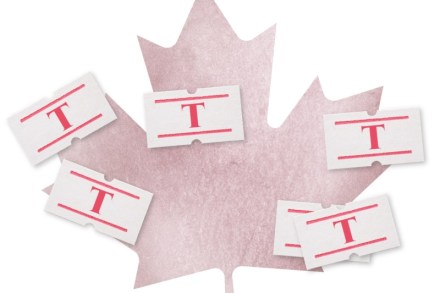
How Trump’s Mexico and Canada tariffs could change trade history

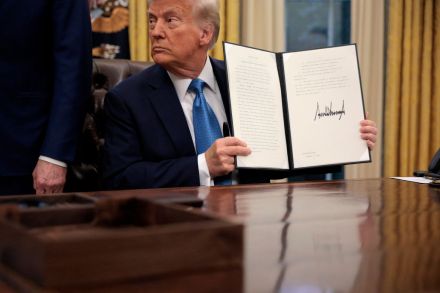
President Donald Trump has set Saturday as the deadline to impose 25 percent tariffs on Canadian and Mexican imports. From the Oval Office earlier this week, Trump explained that the move aims to push the US’s neighbors to take swift action to curtail illegal immigration and fentanyl, as well as to address growing trade deficits. The tariffs may or may not include oil, with Trump saying Thursday that determinations were still being made. Following Trump’s tariff feud with Colombian president Gustavo Petro Sunday, with the Trump forcing his Colombian counterpart to welcome deportees, his latest move signifies an expansion of his revamped “FAFO” foreign policy.

Get ready for Trump’s ‘FAFO’ foreign policy

President Donald Trump posted an AI-picture of a gangster version of himself on Instagram at around 3 p.m. Sunday. Behind the fedora-clad figure, the text “FAFO” — short for “fuck around and find out” — appears alongside a smiling face.  What happened earlier that Sunday, and the machine-made picture that followed, tells us a lot about how Trump 2.0. will deal with the world.  After two planes carrying Colombian illegal aliens departed the United States this weekend, self-proclaimed humanist and former guerrilla fighter Gustavo Petro, Colombia’s president, refused to allow the plane to land. “I deny the entry of American planes carrying Colombian migrants into our territory,” Petro said on X.

The Vikings never really went away

From our UK edition

For many people, the mental picture of a Viking is of a blond giant in a horned helmet leaping out of a sharp-prowed longboat to pillage and slaughter the terrified inhabitants of the nearest village or monastery. The horned helmet is a myth, but the Vikings were, in general, red-haired or blond and taller than the Anglo-Saxons (Scandinavians are still, on average, an inch or so taller than Britons) and for almost 100 years raiding the English coast was what they did. As ‘heathens’, the Vikingsconsidered neither monasteries nor churches sacred Thanks to their unrivalled expertise in boat-building, they were unmatched as pirates – looting, taking prisoners for slavery or ransom or exacting tribute for not so doing. They applied the same technique to land piracy.

A dreamy, if overly ambitious show: Silk Roads, at the British Museum, reviewed

From our UK edition

Towards the end of the British Museum’s Silk Roads show, there is a selection of treasures found in England. Among them is a copper flagon made in Syria and buried in Essex in the late 500s. It is believed that the flagon belonged to an English mercenary who went to fight for the Byzantines against the Sassanians in the 570s. The flagon’s looping handle would have held it tight to a saddle, so perhaps it came to England attached to the warrior’s horse as he rode home from his adventures in the East. There are many spectacular objects in this exhibition. Very many If objects are to inspire more than awe in us, we also need a handle.

India’s century: Sunak’s plan for a new Indo-Pacific alliance

From our UK edition

When Rishi Sunak became Prime Minister, India’s press was thrilled. ‘From Age of Empire to Rishi Raj’ declared the Times of India: another headline hailed the ‘Browning Street’ phenomenon. ‘Indian son rises over Empire’, proclaimed the New Delhi TV channel, a play on the colonial-era adage that the sun never sets on Britain’s empire. When Sunak visits New Delhi for the G20 next week, it will be quite a moment. Two Hindu heads of government will meet – the old power and the new. Sunak’s agenda is to bind Britain closer to a growing Asian economic powerhouse – which last week completed its first successful moon landing – while containing China by bolstering its rivals.

The dollar is here to stay

Reports of the death of the US dollar as the world’s reserve currency are greatly exaggerated. Fortunately for America, while the dollar is by no means unsinkable, it will not be toppled anytime soon. Threats exist, but rather than coming from abroad, to paraphrase Lincoln, they spring up among us. How the US manages its economy will largely be the determinant factor in the dollar’s continued supremacy. Currently, the dollar makes up about 58 percent of foreign currency reserves worldwide, well ahead of its competitors. The next closest currency is the euro at 20 percent, and then the yen and pound sterling, both at about 5 percent — China’s renminbi is at a paltry 3 percent (just ahead of a real powerhouse, the Canadian dollar).

dollar debt