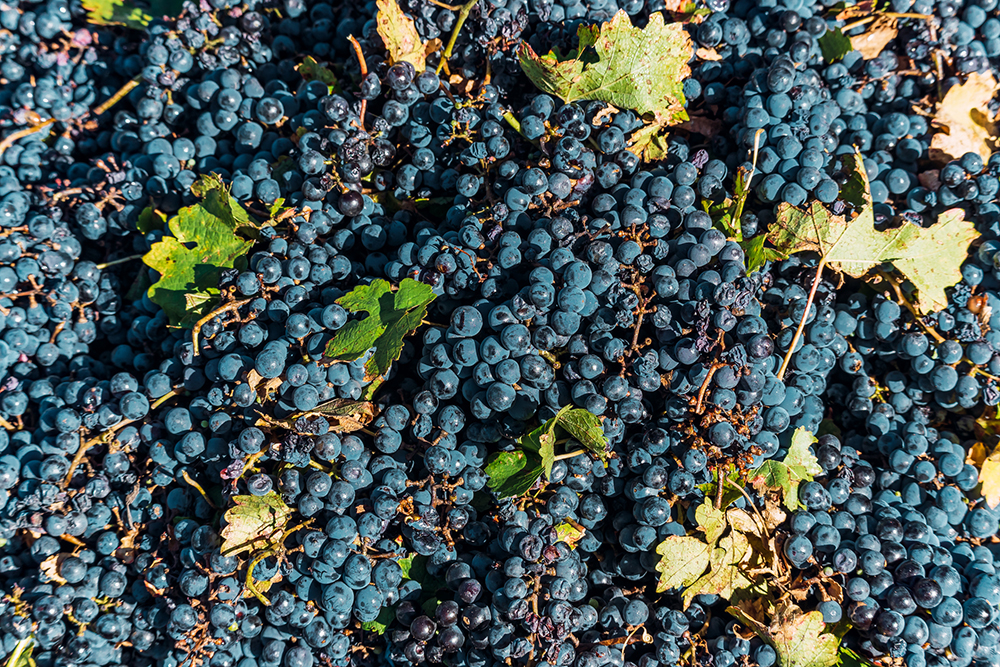



Malbec, observed Hugh Johnson, is a “conundrum.” Sometimes it is light in color as well as body. That’s what it tends to be like in the Loire, where the grape is called côt (apparently its original name). It used to be grown in Bordeaux, where it was used primarily as a sort of filler, rounding out the cabs and merlots. In Cahors, its major French venue today, it is sometimes called côt noir or Auxerrois. There malbec tends to be bold, spicy and dark. “Dark,” in fact, is one of the wine writer’s favorite adjectives for this allotrope of malbec. This was the “black wine” that Thomas Jefferson would sometimes add to his claret to deepen its color.
But malbec is a fussy grape. The French climate is a challenge. Emigrés brought malbec to Argentina, where it really came into its own. In the valleys of Mendoza, in north-west Argentina, malbec can produce luscious wine that blooms and lingers in the mouth. I have not yet had anything to say about malbec in these adventures on the wine route (if I might crib from Kermit Lynch). To fill that lacuna, I gathered six serious thinkers and six typical specimens of malbec from France and Argentina. What follows is our report.
We started with a 2021 Les Côts from the Dinocheau winery from Touraine in the Loire. This is a fresh, undemanding wine. The literature mentions “notes of blackberry, plum, dark cherry, violet and earthy undertones.” We concurred with the “earthy undertones” but decided to hold off on recognizing the fruits. You can find a bottle for about $17. Try it on a summer afternoon and let us know.

Next up was a 2019 Chateau Les Hauts d’Aglan from Cahors. A blend of 90 percent malbec and 10 percent merlot, this well-made wine retails for about $23. We had just been promised “notes of blackberry, plum, dark cherry, violet and earthy undertones” with that Les Côts from Dinocheau. Now we were asked to find “aromas of dried plums, brandied cherries, mushrooms and tobacco.” I went around the room. Pleasant enough nods about the wine, blank looks about the dried plums, brandied cherries, mushrooms and tobacco.
One more from Cahors, the 2022 “Au Cerisier” from Château Combel-la-Serre. It is labeled “Malbec-Côt-Auxerrois,” which is to say “Malbec-Malbec-Malbec.” You can find it for about $30. The process of association works wonders in the world of wine. The cerisier in question is a cherry tree on the plot of land where the vineyard is located. A stylized version of the tree with a tree house perched atop appears on the wine’s label. With that in mind it seemed only natural that the winemaker should say that the nose was “characterized by fine aromas of wild cherries.” OK. Well, not really. It was pretty good all the same, but we weren’t sure whether claiming a “balance between fruit, terroir and pleasure” was really a plus. We are taking it under advisement.
It’s time to visit Javier Milei. While we are waiting for an appointment, let’s sample some wine. One of the very best spots for wine in Argentina is Valle de Uco in Mendoza. We started with a modest bottle, the young (maybe too young) 2024 Escorihuela 1884. It’s a single vineyard wine, 100 percent malbec, and will set you back maybe $20.
The consensus among our judges is that “serviceable” would be a more accurate adjective than “delectable.” It is plenty complex – there is lots going on – but the wine seemed to us both taut and unresolved. This may well be simply a function of age, which is to say, of youth. We made a note to try it again in a couple of years.
The two best malbecs we sampled were the 2021 Nicasia from Bodega Catena Zapata and the 2022 Bramare from Viña Cobos. Both are 100 percent malbec. Both are from the Valle de Uco (though the Bramare also has a Luján de Cuyo bottling). At about $100, the Catena Zapata was the more expensive (we got the Bramare for $45). Which was better? It was a bit like asking whether ribeye is better than New York strip. Both wines were excellent. The Nicasia is from one of Argentina’s most celebrated vineyards. It was rich, almost buttery, but clearly will improve with age.
The Bramare, a high-altitude Argentine red, is the progeny of Paul Hobbs, the celebrated “Malbec Maestro” who cut his teeth at Simi and on the inaugural vintage of Opus One with Robert Mondavi. Hobbs is involved in wineries the world over, but his pioneering efforts in Argentina with malbec in the late 1980s and early 1990s cemented his reputation.
His Viña Cobos makes delicious wine and in the judgment of our distinguished panel of tasters it qualified as the most notable discovery of the day.



Comments