
Tehran knows it does not need to defeat the United States in a conventional war. It can instead exploit the vulnerabilities of America and its Sunni Gulf allies by opening up new fronts. With shipping in the Strait of Hormuz disrupted, Saudi Arabia has been transporting oil via the Red Sea and keeping global energy markets just about under control. But that alternative Red Sea route is now being threatened and the economic consequences are becoming considerably more serious.
Iran’s mullahs are widening their war with the US not only through direct attacks, but through their Shia allies and proxies across the Middle East. Earlier this month, the Iran-backed Houthis seized strategically important territory across Yemen’s Red Sea coast. From there, they can threaten shipping through the Red Sea. At the same time, an attack launched from Iraqi territory has forced Riyadh to shut down its East-West oil pipeline, which provides an alternative route for exporting Saudi crude around the Strait of Hormuz.
This is now the Iranian strategy. It is what the professor of political science Robert Pape calls “asymmetric escalation.” Tehran’s objective need not be an outright American military defeat. It is enough for Washington to realize that it cannot contain the conflict. The choice becomes obvious: withdraw and accept a loss of control, or commit more resources, accept greater risks and pay a steadily higher price. That is how wars that begin with confidence collapse into a never-ending quagmire. It is what happened in Afghanistan, Vietnam and Iraq. And it is what may now be happening in Iran.
The bombs have not forced Tehran to capitulate, nor have they produced a popular uprising
Since February 28, the US and Israel have inflicted enormous damage on Iran. Its navy has been devastated, its air defenses badly degraded and its ability to project military power beyond its borders has been sharply curtailed. Iran’s economy, meanwhile, has been battered by the war and the naval blockade, with inflation soaring and unemployment rising. But military destruction is one thing, political submission is another. The two should not be confused.
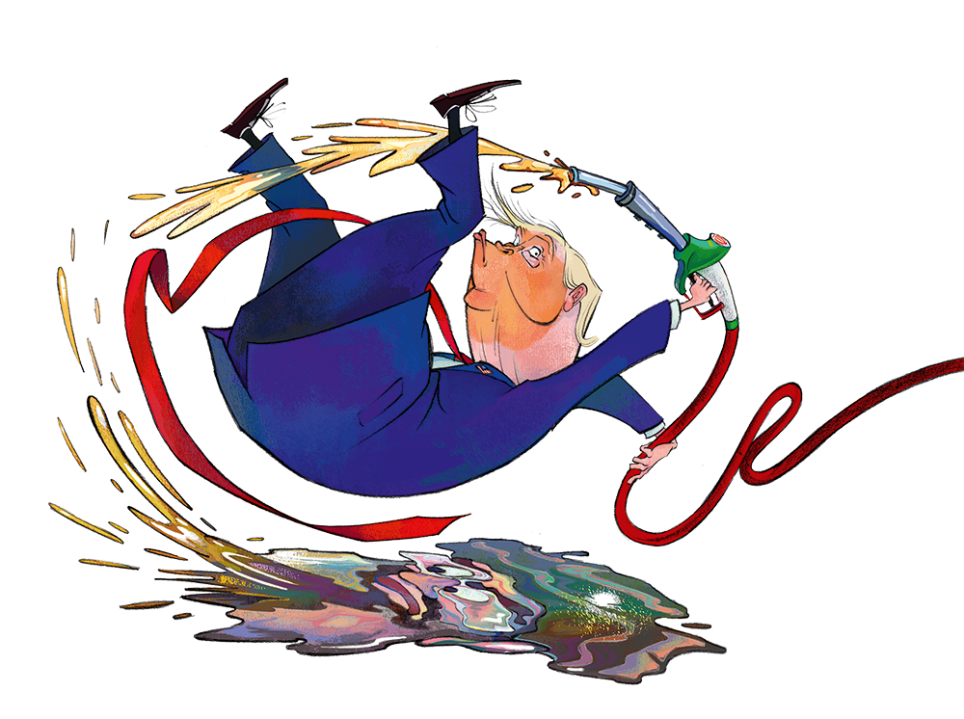
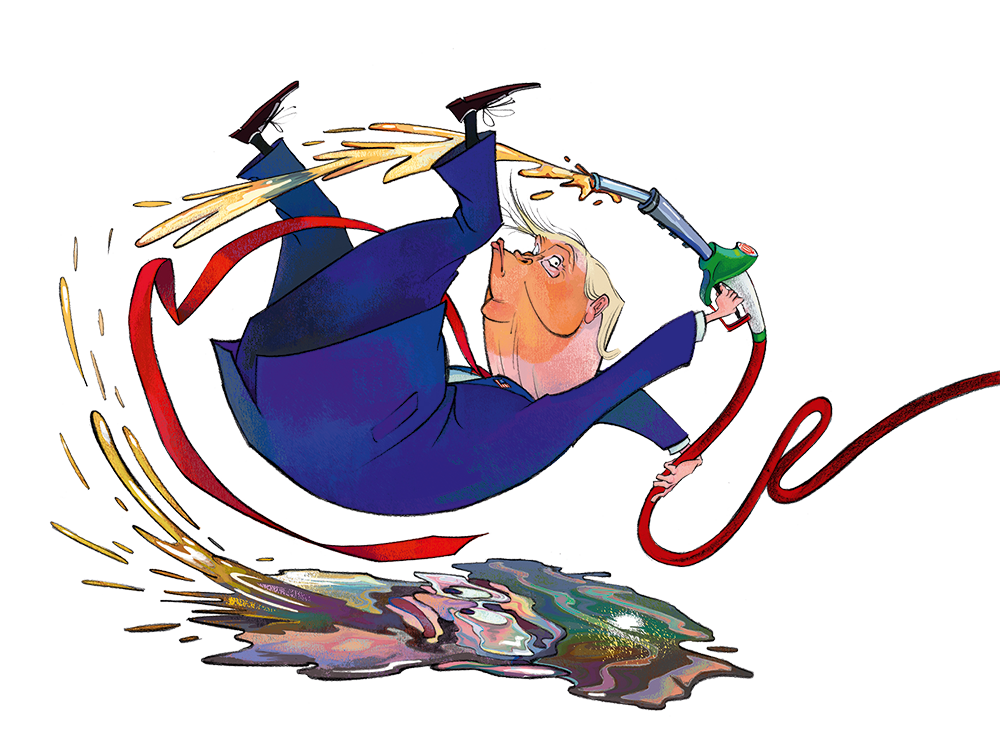
The bombs have not forced Tehran to capitulate, nor have they produced a popular uprising against the Islamic Republic that some in Washington had hoped for. Indeed, Iran has demonstrated a serious capacity to absorb punishment while finding new ways to impose costs on its adversaries. This is the uncomfortable truth confronting Donald Trump: America can win battles while losing control of the war.
Complicating things further is the fact that Iran is hardly alone: China, Russia and Turkey all have reasons to help Tehran survive. More importantly, the Iranian regime now faces what it regards as an existential struggle with the “Great Satan” and the “Zionist regime,” a powerful incentive to endure punishment rather than submit to it.
When Trump haphazardly went to war in February, he promised quick and decisive results. His ambitions went well beyond punishing Iran’s military. He wanted to eliminate its uranium program, destroy its ballistic-missile capability and cripple its regional proxy network. There was even heady talk of regime change – an ambition that should have sounded familiar to anyone who remembered Iraq.

And yet here we are, nearly seven months after the Iran war began, and the Islamic Republic is enduring. In fact, it may be getting stronger. In early September, a former CIA analyst told the Wall Street Journal that he’d identified satellite images that suggest Iran’s underground factories are still producing weapons. “We could be talking about hundreds of missiles or possibly thousands of missiles,” he said. Meanwhile, the US Department of War’s inspector general found “strategic inventory shortfalls” in US missiles and the Congressional Budget Office projects that it could take five years to replenish stockpiles.
History should have provided a useful warning to Trump and his advisors. Iran is becoming a quagmire, not unlike the failed American adventures of the past half century. Take Vietnam. The prevailing assumption in Washington was that JFK’s vow to “pay any price” in the cause of liberty would lead to success. As the war dragged on, battlefield successes were repeatedly presented as evidence that victory was approaching. Yet the underlying strategic problem remained unresolved. The Tet Offensive of early 1968 provides the classic example. Militarily, Tet was a catastrophe for the Viet Cong: American and South Vietnamese forces ultimately repelled the attacks, while the North Vietnamese suffered enormous casualties from which it took years to recover.
Yet politically, Tet was disastrous for Washington. The scale and audacity of the offensive showed the American public that the enemy was far from defeated – despite years of official assurances that the opposite was true. This was the context of General William Westmoreland’s famous phrase: “light at the end of the tunnel.” Despite being intended to reassure, that phrase became a trap. Every setback could be dismissed as temporary; every success became evidence that final victory was just around the corner. Tet exposed the widening gulf between battlefield metrics and political reality. America could claim victory after victory and still lose the war.

That, as David Halberstam identified in his 1965 book, is “the making of a quagmire”: that optimism becomes institutionalized. The longer a war continues, the more difficult it becomes to admit that the original assumptions may have been wrong. After all, the Kennedy and Johnson administrations were populated by what Halberstam dubbed “the Best and the Brightest” – or as John Mearsheimer calls them, “well-educated and ambitious individuals who frequently lack wisdom and almost always lack humility… [who] tend to think that all problems have ready solutions, which their brilliance will enable them to identify and implement… [and who] rarely acknowledge limits to US power, which means they sometimes pursue boneheaded policies that lead to disaster.”
The same thing happened in Iraq. There was considerable confidence that the overthrow of Saddam Hussein would clear the way for a democratic state. The dictator fell; the Iraqis would soon be liberated; “the indispensable nation,” as Madeleine Albright called America, would have done its work. It would be a “cakewalk,” as at least one neo-con confidently predicted in 2002.
The longer a war continues, the more difficult it becomes to admit assumptions may have been wrong
Instead, the rapid collapse of Saddam’s regime unleashed a Sunni insurgency among a minority that had lost its privileged position over the Shia majority. The insurgents were more than willing to fight the new political order in Baghdad and its American sponsors. Once again, military setbacks were followed by renewed confidence that the war was approaching a decisive phase. The vocabulary was different from Vietnam’s “light at the end of the tunnel.” Now the phrase was “strategic turning point.”
The capture of Saddam, the killing of Abu Musab al-Zarqawi, the Sunni Awakening, the surge; each could be presented as a turning point. Yet none resolved the underlying political problem: the overthrow of Saddam had unleashed deep instability. The Shia majority had its first chance at power in more than 30 years.
Post-Saddam Iraq, far from becoming the stable democracy its liberators envisaged, descended into insurgency, sectarian violence and eventually civil war, followed by the rise of the Islamic State. The war rested on assumptions – about weapons of mass destruction, links with al-Qaeda and the ease with which democracy could be established – that proved disastrously wrong. By dismantling the Sunni political order, Washington created the space for the Shia majority to assume power. Iran, Iraq’s Shia neighbor, was the principal beneficiary. Shia militias that had once operated on the margins of Iraqi politics emerged as powerful political and military leaders, many of which had greater loyalty to Tehran than to Baghdad.
Today, some of those same forces have proven themselves capable of opening a new front against Saudi Arabia on Tehran’s behalf. One of the unintended consequences of the Iraq war is part of the strategic landscape Trump confronts: the destruction of Saddam’s Sunni-dominated Iraq helped create the conditions in which Iran’s Shia allies could become a formidable regional force.
In today’s war with Iran, we hear much of the same language of Vietnam and Iraq. Not “light at the end of the tunnel” or “strategic turning points” but “game changers,” “inflection points” and “tides turning against Tehran.” The underlying psychological mechanism is much the same. Each setback becomes temporary; each success becomes evidence that victory is finally within reach.
What now? Trump could escalate, although America’s extreme munitions shortages make that difficult. He could double down on the naval blockade, hoping to choke the regime to death. Or he could withdraw and settle for an ugly stalemate, leaving the Strait of Hormuz under Iranian control with no reparations, sanctions relief or unfrozen assets.
America finds itself in a war where military victories fail to produce a politically satisfactory end-state
Who knows what Trump will do. He was once an America First enthusiast, one of the few American political leaders who seemed to understand the failed logic of those past quagmires. Yet the logic of the Iran conflict is pulling him toward precisely the kind of mission creep he campaigned against.
Yet again, America finds itself in a war where military victories fail to produce a politically satisfactory end-state. That leaves the stronger power with the unenviable choice of accepting an unsatisfactory settlement or continuing indefinitely in the hope that the next blow will finally do what the previous one did not.
Iran does not need to destroy US forces; the Houthis do not need to defeat the US Navy; Iraqi Shias do not need to flatten Riyadh. They need only make Washington’s political objectives so costly that they are no longer worth it. That is the tragedy of the quagmire. An army does not necessarily become trapped because it cannot fight its way out. It becomes trapped because every attempt to fight its way out only makes the final exit harder.




Comments