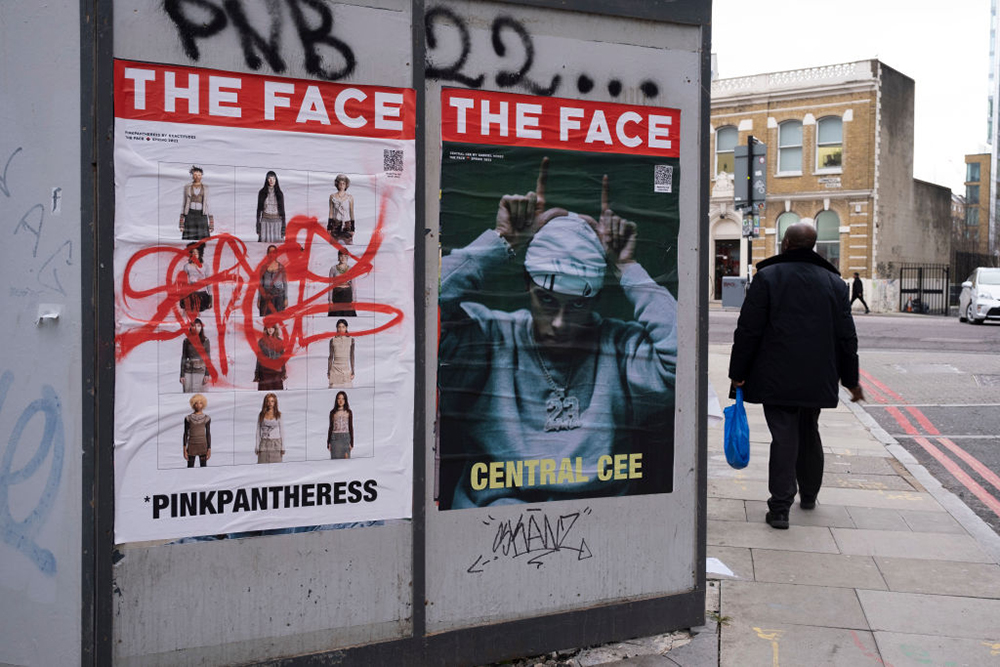
The Face, launched in London in 1980 by Nick Logan, was one of my first portals into subcultures that were far from my reach growing up in suburban Atlanta. The magazine introduced me to the photography of Corinne Day, Juergen Teller and David Sims. The original iteration stopped publishing in 2004 and then restarted, under new leadership, in 2019. The new version had some high points, especially an Olivia Rodrigo cover photographed by Jim Goldberg. Still, it could never capture the true spirit of the original and ownership unceremoniously pulled the plug last month. I knew the business was for sale, for a very affordable price, but they couldn’t find a buyer. I don’t blame it on the editor or contributors; I blame it on the times. The carefree, undone spirit of the 1990s and 2000s no longer exists, and it’s impossible to recreate that feeling. Rest in peace to the original subculture bible.
When did everyone start using industry lingo? Words and phrases that used to stay in the confines of Hollywood, food, finance, fashion, media and publishing are creeping into daily speech. Online civilians are discussing musicians’ ticket sales, designer musical chairs, movie opening-weekend data and FCC-busting media conglomerate mergers like self-taught experts. “Dying on the line,” a phrase used by restaurant cooks to signal they are overwhelmed during service and barely holding it together, translates well to real life, but let’s leave that to Gordon Ramsay and apron-clad Bourdain worshippers. Opening a new creative agency, production company or private equity firm? Do everything in your power not to call it a “shop.” If you don’t have a SAG card in your wallet, avoid calling anything “single cam.” Just because the information is readily available doesn’t mean everyone needs to use it.

Strangers, a memoir written by Belle Burden, has truly captured the zeitgeist. Her grandmother was socialite and former Vogue editor Babe Paley. The book is a bestseller and already in its fifth printing, and Gwyneth Paltrow is set to play Burden in a Netflix adaptation after a bidding war. The story is compulsively readable: a 20-year marriage ends without warning during Covid in a $7.5 million Martha’s Vineyard estate due to infidelity. What follows: grief, betrayal and the slow, unglamorous work of starting over. A divorce story with no lessons that focuses on survival. I read it in one sitting on a flight from New York City to Los Angeles, and I have heard similar stories from my peers.
When you live in downtown Manhattan, a quick 30-minute train ride uptown can be a treat. The air is cleaner, the people are much older, the dogs are purebred and the streets are spotless. We usually make this trek for art or shopping and last weekend we did a bit of both. Lévy Gorvy Dayan, in a grand Beaux Arts-style townhouse on 64th Street, is one of the most beautiful galleries I have ever visited. The checkered marble floors and sweeping staircase make almost anything look great. We were there for The Adventure of Domenico Gnoli, the largest exhibition of works by the artist in the US in more than five decades, following his celebrated 1969 solo presentation at Sidney Janis Gallery, New York. Gnoli only made around 40 paintings in his tragically short career. The precise details of the paintings feel obsessive and clinical and easily hold your eye. A painting of a brick-walled corner blew me away. After ogling it and taking a picture with my iPhone, we left through the heaving double doors and headed to the Row.
I am not a cook. I don’t enjoy it. I don’t romanticize it. I try my best to leave it to the professionals. Last year, we moved to a much better apartment in a neighborhood that is eight minutes farther from the beating heart of my Manhattan – SoHo – than I would like. Previously, I was within spitting distance of several quick and nutritious options. From desk-jockey to-go salads and pre-made sushi to above-average banh mi and pizza made by former Eleven Madison Park chefs. Now, because of scheduling and proximity, I am forced to man the Wolf range in our kitchen and cook the only thing I know how to make: a humble helping of scrambled eggs. I have to have at least a single piece of toast with the soft scramble; I need a little crust-crunch, otherwise my simple lunch can start to feel like baby food. Luckily, my walk home from Equinox takes me along Church Street in TriBeCa, right past the petite and charming Frenchette Bakery, where I now stop weekly for a fresh country loaf. I slice and toast a single piece every day, and it brings me great joy. I will never be a farmer’s market guy, but the power of fresh ingredients is no longer lost on me.


Comments