Manhattan

Meeting Jay McInerney, Manhattan’s sassiest social novelist

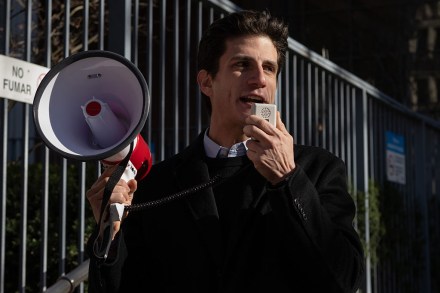
Since his debut novel Bright Lights, Big City appeared in 1984, Jay McInerney has been one of the best-known writers whose work is mostly grounded on the long, skinny, granite-bedrocked river isle the Lenape called Manahatta, “island of hills.” He has lived in town for most of the past four decades too, and currently divides his time between a Village penthouse apartment and Water Mill in the Hamptons. McInerney walks into the lobby of the Marlton Hotel on West 8th Street, just paces from Washington Square, and heads turn. Young lovelies on their laptops with Mission Control Center-sized cans over their ears and chic hairstyles look up and blink, appealingly. Waiters slide swiftly to his side.

Adieu, Dinosaur the pigeon

On one of the first warm Saturdays of this year, hundreds of New Yorkers flocked to the popular High Line, the railway-turned-public park that extends over 22 blocks of Manhattan, to bid farewell to a T-Rex-sized pigeon. The pigeon, cast out of aluminum and named “Dinosaur,” had been a resident of its elevated perch since 2024. As so many New Yorkers will tell you, though, part of what’s magical about living in this city is that the experience is often transient. In the words of Baz Luhrmann, you should “leave before it makes you hard.” There’s nothing worse than a hard pigeon and so it was that on that glorious day last month, I joined throngs of people eager to get one last look at the monstrous, departing bird.

How the Face died on the line

The Face, launched in London in 1980 by Nick Logan, was one of my first portals into subcultures that were far from my reach growing up in suburban Atlanta. The magazine introduced me to the photography of Corinne Day, Juergen Teller and David Sims. The original iteration stopped publishing in 2004 and then restarted, under new leadership, in 2019. The new version had some high points, especially an Olivia Rodrigo cover photographed by Jim Goldberg. Still, it could never capture the true spirit of the original and ownership unceremoniously pulled the plug last month. I knew the business was for sale, for a very affordable price, but they couldn’t find a buyer. I don’t blame it on the editor or contributors; I blame it on the times.

February in New York: where dreams come to die

I probably sound naive, but February always struck me as a month that should be full of hope – brimming with the type of optimism that comes from new beginnings. At least here in New York, though, it was grim. Everything feels more expensive. Everyone’s temper seems as short as the blink-and-you’ll-miss-them daylight hours. And then there’s the weather. The streets are flanked like an Arctic military checkpoint by car-sized mounds of calcified brown snow. The kind of snow that has visible layers, like a geological cross-section of urban neglect. The kind that has already gobbled up who knows how many small dogs. The wind is so ferocious, it makes that chemical skin peel you’ve been targeted for on Instagram look pleasant. New York does sleep. And thank goodness it does.

How Garrison Keillor is living at 83

I’ve been having a wonderful year since I turned 83 and decided to lighten up on world affairs and let other people agonize over corruption in high places and the fate of American democracy, which concern me too. But at this age one can only take on so much. Time is running out. Time to leave the problems to the young and energetic and devote myself to writing limericks. Better to do one thing well than wave your hands and yell at a brick wall. One day an old man in ManhattanSaid at the library he sat in,“Enough politics,I’ll write limericks.So light up your pipe and put that in.” A remarkable metamorphosis:One door opens, one closes.What a reliefTo give up that griefAnd happiness is the prognosis.

Is OCD hip?

About half-way through the one-woman show Unstuck, the American comic Olivia Levine admits that it’s “hip” to talk about one’s obsessive-compulsive disorder.   She’s right. In Unstuck – which tracks Levine’s at times paralyzing battle with the illness – Levine is following a well-trod path, seen on many a movie and television show. The OCD character can’t stop counting or washing their hands or looking over their shoulder. Often their symptoms are played for laughs or sympathy or to showcase their weird but essentially charming quirkiness. Rarely is the more menacing side of OCD shown.  Levine is here, then, to disrupt the stereotypes and, with humor and likability, discuss the symptoms that are less often depicted in media.

Olivia Levine (Bryan Berlin)

In memory of Saul Zabar

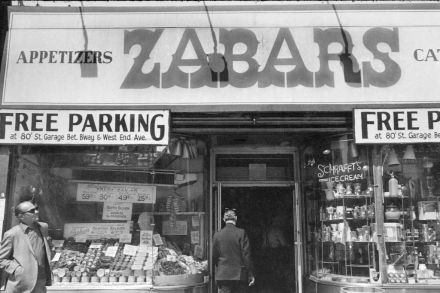
On what is controversially called Columbus Day weekend, which this year fell uncontroversially at the end of Sukkot, my wife, daughter and I found ourselves in our native habitat: New York. Naturally, this meant a trip to Zabar’s, though because our daughter is a toddler who travels by stroller when she is not toddling, I decided to make this Saturday different from all other Saturdays: “to” Zabar’s meant this time “up to but, alas, not inside.” After all, weekends are always a madhouse in the country’s most famous “appetizing” store, founded in 1934, but especially so four days after patriarch Saul Zabar’s death on October 7 (of all days) at the age of 97. An awful lot of pilgrims journeyed last week to the mecca of this self-described “lox-smith.

zabar’s

Why New York is a city built on the written word

When I visited New York for the first time in a decade recently, one of its most famous living writers, Paul Auster, died on the day I arrived. This was not, I hope, anything to do with my presence in the city he spent decades memorializing; he had been suffering from terminal cancer for a considerable time. Yet as I sat at my desk at the first hotel I was visiting, the Frederick in Tribeca — a comfortable and well-located spot, let down slightly by its surly and unhelpful staff, but redeemed by stylish touches like a tiled map of nineteenth-century Manhattan built into the well-appointed shower — and started to write a tribute to Auster for our website, it made me wonder what, exactly, I was trying to find out about literary New York. Was I exploring its distinguished past?

new york

The ungaggable Donald Trump flames his ‘enemies’ at Trump Tower

In the same building where he once descended down a golden elevator and embarked on a campaign that would forever change American politics, this morning Donald Trump lumbered up to the mic in New York City to launch napalm at all his enemies, particularly Judge Juan Merchan, Alvin Bragg and Michael Cohen — who he didn't mention by name, other than calling him a "sleazebag" and saying that he didn't qualify as a "fixer." The idea of a gag order for this man is so ridiculous, I love that they even tried to do it. It was classic Trump: meandering, angry, darkly comic, rhetorical guns blasting away at everyone around him, golden hair blown out and wearing a bright crimson tie as wide as his head.

donald trump press conference

Man set himself ablaze outside Trump trial courthouse

A man set himself on fire outside of former president Donald Trump’s trial in New York City this afternoon. Nearby media outlets caught the disturbing scene on camera, in which his body was engulfed in flames, with a nearby reporter urging for a fire extinguisher. One person attempted to pat down the fire with his jacket, until another arrived with the fire extinguisher. An eyewitness told PIX11 News they were standing next to the man when he began pouring a flammable liquid on himself. The witness claims that the man made political statements before starting the fire. Newsweek's Katherine Fung reports that the man was apparently holding a sign that included a link to a Substack with a letter entitled: "I have set myself on fire outside the Trump Trial.

fire ablaze

The Trump trial is a precursor to how a republic ends

Among the many great lines in T. S. Eliot’s Four Quartets, is this mournful observation from “The Dry Salvages,” the third of the bunch: “We had the experience but missed the meaning.” How much happens to us that we only half register or undergo without really twigging its significance? One example that is both pedestrian and historical: the criminal trial in Manhattan of Donald Trump.  As I write, Trump is leading slightly in the polls, which means he is not only at the head of the chief opposition party, but also that he represents an existential threat to the future of the regime that is persecuting — er, prosecuting him.  The trial, brought by Soros-funded district attorney Alvin Bragg is often described as being about “hush money,” i.e.

donald trump trial

Bragg’s joke of a press conference

Manhattan district attorney Alvin Bragg officially indicted Donald Trump on April 4 on thirty-four counts of “falsifying business records in the first degree... with the intent to defraud and intent to commit another crime and aid and conceal the commission thereof.” This makes Trump the first president in US history to be indicted on a criminal charge. Not willing to let any opportunity — however ignominious — go to waste, Trump is already selling t-shirts on his website featuring a digitally-created mugshot with the words “Not Guilty” emblazoned below and the prisoner code "45-47" (get it?). The former president was not required to take an actual mugshot by Bragg's office.

alvin bragg

A seaplane out of Manhattan

In the awfulness of LaGuardia Airport, the small 1939 Marine Air Terminal stands out as a reminder of earlier and better days. Today it is arguably the oldest American airport terminal in operation. Shuttered for decades, the building was resurrected by the Pan Am Shuttle in the 1980s, then the Eastern Shuttle, then the Delta Shuttle, and most recently JetBlue. Here was a terminal made for commercial aviation before the age of the “airbus.” You might miss the Daily Planet details of the main hall if you only pass through the side door. Designed by William Delano of Delano & Aldrich, the terminal connects the classicism of the Beaux-Arts with the thrust of Art Deco.

seaplane
doors

The perception of doors

The architectural historian Andrew Alpern has for decades done the dirty work when it comes to pre-war New York apartments. Others have presented glossy coffee-table books full of newly commissioned professional photographs. Alpern has focused on the practical details of apartment design, especially floor plans, which tell us so much about how people actually live in their apartments, or at least were originally meant to. His Apartments for the Affluent (1975), Historic Manhattan Apartment Houses (1996) and New York Apartment Houses of Rosario Candela and James Carpenter (2002) are essential compendia; anyone with an interest in New York residential architecture, especially of the magnificent variety, must have them. The more industrious uptown real estate agents also find them useful.

Walking around the Ukrainian Village

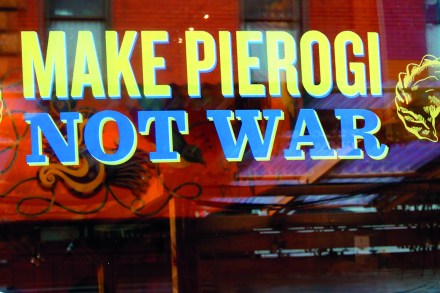
When I heard that long lines had begun forming to get into Veselka after Russia invaded Ukraine, I almost rolled my eyes. I’ve been patronizing the restaurant, in the heart of New York City’s Ukrainian Village, for years, and there’s often a queue — at the height of brunch, the line can stretch for a block. But there’s no denying it’s seen an uptick in traffic as New Yorkers aware of the brutal images from Bucha and Mariupol want to feel they’re doing something to help. “Eat borscht, stand with Ukraine” reads a sign; the restaurant is donating all proceeds from sales of its hearty beet soup to Razom for Ukraine, a nonprofit. The Ukrainian Village, or Little Ukraine, is an enclave of Manhattan’s East Village.

Ukrainian

Summer in Newport

Hello, shipmates! Digby here, back ashore, back at my desk, bunking in Vermont for the holidays with a shapely ski bunny and a seabag stuffed full of sailing stories of harrowing feats on the high seas. Well, few of them are particularly harrowing, save for a midsummer horror when a bespectacled crewmate, his face fogged with mask mist, misplaced a pair of Pol Roger bottles that now sleep with the fishes. Champagne donated to Davy Jones aside, it’s been a good year. I spent the summer in Newport, of course. It’s a fine town, and though I feared it would feel a bit dead on account of the persistent plague, the pandemic was no match for the nautically minded.

newport

Is New York coming back?

New York Well, at least P.J. Clarke’s survived the lockdown ordeal. Founded as a ‘saloon’ by an Irish migrant in the late 19th century, the restaurant-bar is a Manhattan dining icon — and a defiant one at that: it’s housed in a modest two-story building, nestled among the skyscrapers of Midtown East, a relic of an older, redbrick Gotham, refusing to give way to the titans of law and finance who occupy the commanding heights of glass and steel nearby. Reality is a little more complicated than that, of course. These days, P.J. Clarke’s is owned by a consortium of financiers, and before the lockdowns, its patrons very much included the finance bros dressed in their standard-issue uniforms (button-down, slacks, Patagonia vest).

p.j. clarke's

A tale of two tapas

In 146 BC, Scipio Aemilianus laid siege to and destroyed the city of Carthage, thus bringing the third Punic War to an end. Scipio made a gift of what remained of the Carthaginian library to the kings of Numidia, Rome’s old ally against Carthage. At the direction of the Senate, however, he held back one book, the agricultural treatise of Mago, which he sent back to Rome. It was duly translated into Latin, but all that remains are fragments, which is too bad, for Mago apparently had a lot to say about many exigent matters, including the cultivation of grapes and making of wine. It appears that it was the Phoenician precursors of the Carthaginians who, around 1500 bc, first planted grapes in the Iberian peninsula.

Tapas bar

Stop Andrew Cuomo’s war on restaurants

New York Cuomo to New York City restaurants: drop dead. This is the unmistakable message from Gov. Andrew Cuomo to the cornerstone dining industry in America’s premier city. Thankfully, Cuomo’s veritable kiss of death for these establishments is earning him nothing but rotten tomatoes. Cuomo is being fricasseed like a cartoon rabbit for his policy on Gotham’s eateries. New Yorkers across the political spectrum are baffled and revolted at his treatment of these signature local enterprises. Cuomo deserves every spoon of hot gravy ladled down his back. The Emperor of the Empire State has unleashed a policy that makes zero scientific, meteorological, or economic sense. Aside from that, it couldn’t be more brilliant.

new york city restaurants

Why should The Strand survive?

On Friday book-loving New Yorkers got a shock as the city’s largest bookstore — The Strand — announced that it risked going out of business. A post on Twitter from the company said: ‘We need your help. This is the post we hoped to never write, but today marks a huge turning point in The Strand's history. Our revenue has dropped nearly 70% compared to last year, and the loans and cash reserves that have kept us afloat these past months are depleted.’ https://twitter.com/strandbookstore/status/1319686649798905856 What followed included an appeal to the public to return to the store to ensure that the 93-year-old business could keep trading. Prominent writers and pundits rallied around, and in recent days lines have appeared outside.

strand