
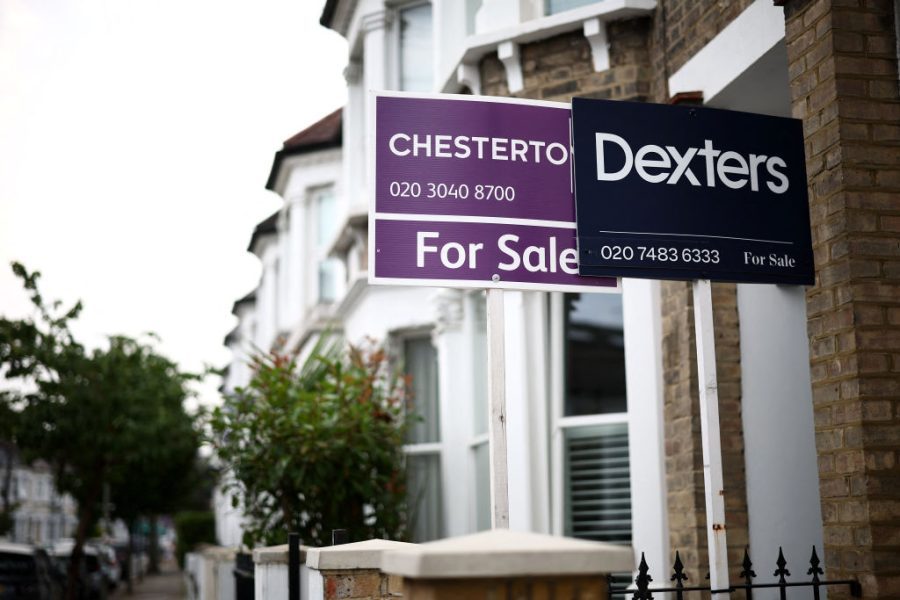
After another punishment beating for buy-to-let investors in the Budget, it would be tempting to think that frustrated would-be homebuyers can now have things a little more their own way: no more being outbid by investors and speculators who have been pricing the young out of the market. But things aren’t quite working out for first-time buyers as might have been imagined.
Yesterday’s rise in the Bank of England’s base rate to 4 per cent is a painful reminder that yes, the era of near-zero interest rates is well and truly over. According to one mortgage company, the average rate for a buyer with a 5 per cent deposit is now 5.75 per cent. This compares with 2.75 per cent in November 2021. Those who took out a fixed rate then are going to see a very large surge in repayments.
Many Your First Home mortgages could quickly end up as sub-prime loans
While Andy Burnham professes to be focused on the cost of living, mortgage rates are an aspect of the surging cost of living which he seems to have overlooked. While shaving a few pounds off our energy bills by cutting VAT and transferring social and environmental levies onto general taxation, he has forgotten about what is still the biggest cost for many households: their mortgage repayments. To put it into perspective, a homebuyer with a £200,000 mortgage moving from a fixed rate of 2.75 to one of 5.75 per cent is going to have to pay an extra £6,000 a year in interest repayments. Transferring social costs from energy bills saved households £150. Removing 5 per cent VAT on an average £1,800 domestic energy bill saves £90.
Rising interest rates cannot be laid entirely at Burnham’s door: the world is emerging from an era where too many people thought that 1 per cent interest rates were normal. That was always going to be painful. That said, excessive government borrowing and a refusal to cut a single penny off the runaway welfare bill is dragging interest rates upward.
Moreover, Burnham is setting himself up for big problems in the future by reviving George Osborne’s Help to Buy scheme, this time under the branding of ‘Your First Home’. This will allow homebuyers to take out mortgages with deposits of as little as 2.5 per cent. Their mortgage lenders will be partly protected by transferring some of the risk to the taxpayers, who will be forced to stump up loans equivalent to up to 20 per cent of a property’s value. The scheme will be especially focused on buyers with moderate incomes by excluding the better-off.
Is that really such a good idea in a market of falling house prices and rising interest rates? If you deliberately set out to recreate the conditions which led to the 2008/2009 financial crisis, this is how you would do it: by tempting buyers to purchase properties they can’t really afford. With a mortgage equivalent to 97.5 per cent of your home’s value, it isn’t going to take much of a reversal in property prices to dump you in negative equity. Osborne had the good fortune that his Help to Buy scheme coincided with an era of rising prices. With the Halifax reporting a 1.2 per cent fall in average house prices over the past 12 months, many Your First Home mortgages could quickly end up as sub-prime loans.
Maybe those who end up being trapped will look back in fondness to their days in the rental sector when it was their landlord, not them, who had to worry about mortgage rates, service charges, ground rents, cladding bills and all the rest. The war against landlordism is not going to create the paradise which some seem to imagine.




Comments