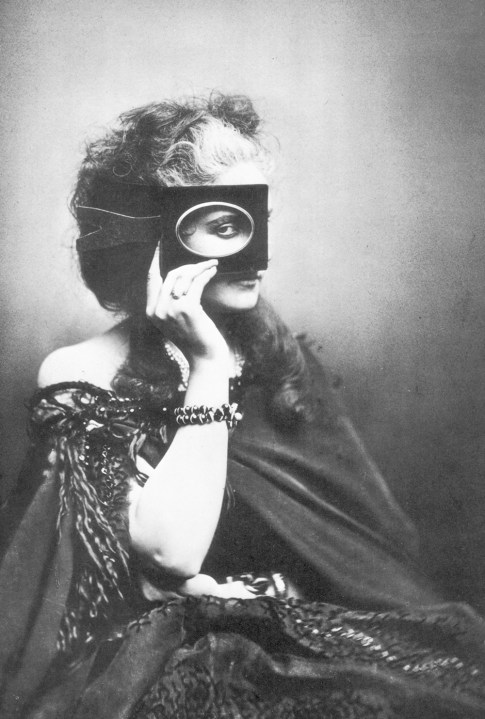
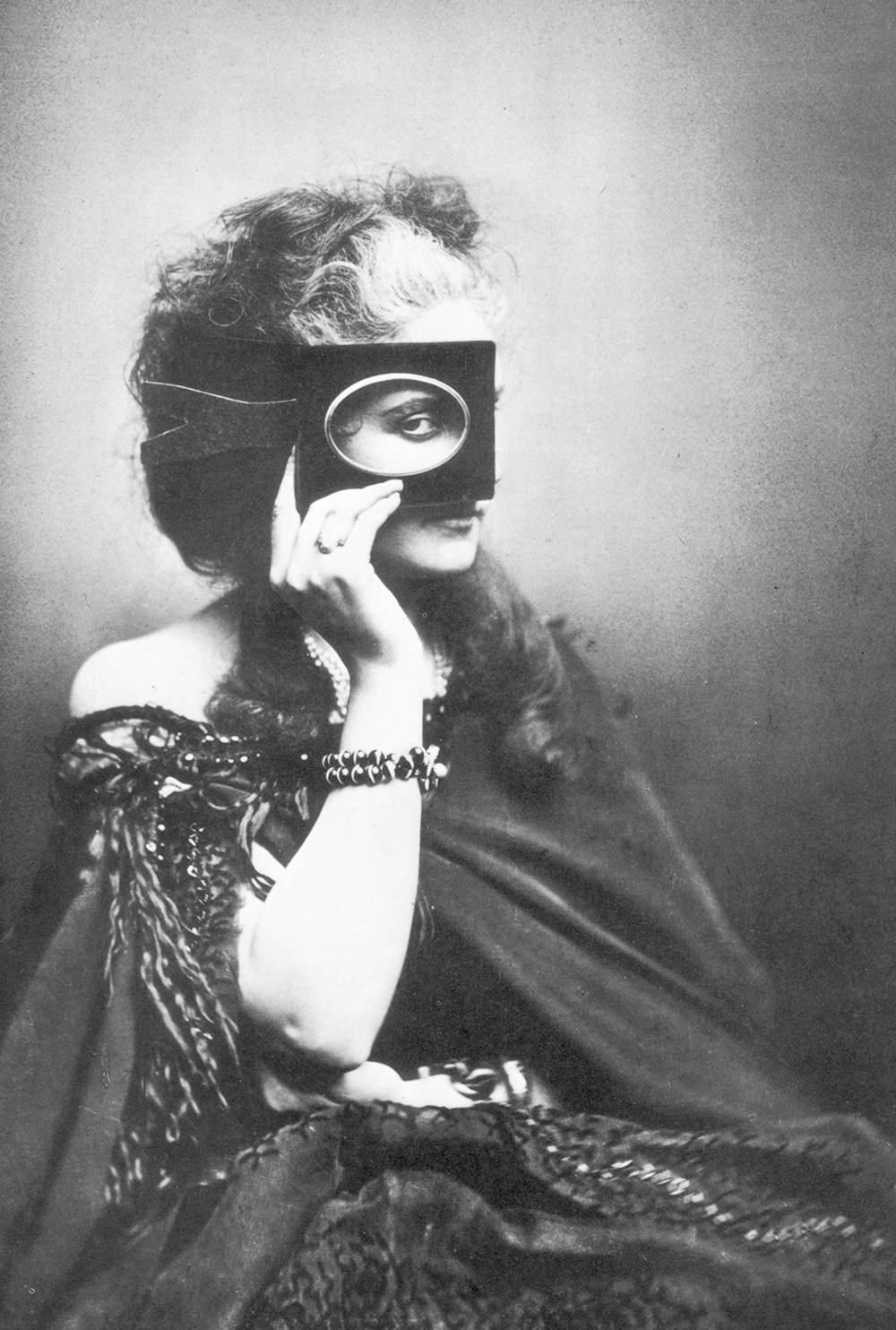
‘The whore of the Risorgimento’ or ‘the divine Countess’ – Virginia Oldoini Verasis di Castiglione was among the most extravagantly flamboyant figures of the 19th century, notorious principally as the mistress of Napoleon III. Drawing on thousands of unpublished documents, Benedetta Craveri’s biography of the woman whose name, according to the arch-priest of aesthetes Robert de Montesquiou, became ‘synonymous with beauty’ presents a nuanced portrait of an aristocratic adventuress. Her talent for seduction played a pivotal, yet largely unacknowledged, role in the unification of Italy.
Born in 1837 to an impeccably ancient family in Florence, Virginia was married at 16 to Francesco di Castiglione, who transformed from dashing suitor to ‘nagging pedagogue’ as soon as his bride was immured in the family palazzo in stuffy Turin. Her first struggles against the constrictions of married life were manifest in her refusal to address her husband by the familiar tu; and her looks soon presented her with an opportunity for independence which intertwined with that of her country. In the 1850s, the court at Turin was the centre of the ‘new Romantic culture of Italian nationalism’, and the great statesman Camillo Cavour had convinced King Vittorio Emmanuele that it represented an opportunity for the house of Savoy. Political support from France was essential and the exquisite Countess of Castiglione seemed a means of securing it.

Over several private visits from the King – during one of which he raped her – Virginia was persuaded to provide information from Paris, ideally from the imperial bed. Writing to his foreign minister Luigi Cibrario, Cavour confessed: ‘I have enlisted the lovely Countess of Castiglione in the diplomatic corps, inviting her to “coquette” and seduce when necessary the emperor.’
Declared ‘queen of the season’ at the Tuileries Palace, where guests climbed on chairs to get a better view of her, Virginia conquered Napoleon III as swiftly as she came to dominate what the Goncourts sneeringly described as the ‘cobbled and slapped-together court of new names and freshly usurped titles’. While Virginia flaunted her triumph over the enraged Empress Eugénie, Napoleon sought to confirm France’s political centrality in Europe with the congress following the Crimean War, in which the House of Savoy allied with victorious France and England. Whether the congress or Virginia’s charm was the salient factor in pushing the emperor towards supporting Italian independence is uncertain, but Virginia herself was in no doubt, later claiming: ‘I made Italy.’
Coercing a teenage girl to spy for her government in a relationship with a 50-year-old man didn’t seem to strike anyone as problematic at the time; but Viginia left a hint as to her feelings about her mission to ensnare ‘the Old Man’ in a later inscription on a photograph: ‘In birth, I equal them. In beauty, I surpass them. In spirit, I judge them.’
Infamy followed quickly on fame. By the time Italian unification was achieved in 1861, Virginia was separated from her bankrupt husband, excluded from society and living in poverty and isolation with her much neglected son: ‘Here I am, cast out into the world, unhoused, unroofed and uncarriaged, 22 years old, and never have I had a single good day.’ Her attempts to return to Paris and rekindle her affair with Napoleon III waned ignominiously into a peripatetic, avaricious existence, funded by increasingly exasperated banker lovers, including James de Rothschild. Despite Craveri’s efforts to interpret Virginia as a sort of libertine figure from a Laclos novel imprisoned in a bourgeois, Balzacian world, she emerges as an exuberantly horrible character, entirely callous and without remorse for the damage she inflicted on her family, and one whose only pleasure was tormenting the many men who loved her.
Coercing a teenage girl to spy for her government didn’t seeem to strike anyone as problematic
Still, there is something captivating about her ruthlessness and lack of hypocrisy. Writing to one lover about Napoleon III, she remarks: ‘I see in the papers that the Old Man is confined to bed and faring very badly… Damn! If he croaks, we’re fucked!’ By the age of 40, lonely and increasingly unstable, Virginia had become a squalid ghost of her former self – an embarrassment where she was not merely a memory.
Craveri, a distinguished historian, expertly guides us through her subject’s role in the complex soap opera of dynastic politics in 19th-century Europe. But the book’s most impressive achievement is its resuscitation of Virginia as an artist. At the height of her beauty, the countess embraced photography, collaborating with the Mayer et Pierson studio in Paris on what became a series of more than 400 images. Much later, in 1893, she posed for the ‘Série des Roses’, an unnerving exposure of the devastation of old age. Shrivelled, toothless and pathetically draped in the mangy remains of her former fineries, Virginia engaged one of the world’s newest technologies in one of its oldest artistic motifs – ‘Vanitas’. Where once she had permitted her naked legs and feet to be photographed, she now revelled in their decline, creating ‘The Amputation of Gruyère’, with the limbs revoltingly propped on a coffin-like pillow. In ‘Nostalgie’, she is a Toulouse-Lautrec-like streetwalker, refracted through bottles in a lowlife bar.
Craveri convincingly positions Virginia as a bold and unflinching creator who ultimately secured immortality beyond the gaze of the men who exploited her. In her last, most shocking composition, ‘Ti-fille brune’, Virginia is pointing crudely at her vulva, exposing the true coarseness of the role she was forced to play in the making of her nation.





Comments