Espionage

Trump looks like a spent force

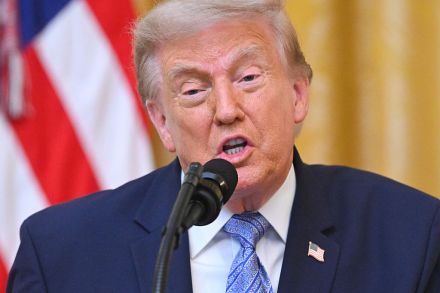
Pete Hegseth has announced that the US military will test soldiers over 30-years old for low testosterone. But judging by President Trump’s pallid performance on Thursday night during his election integrity speech, the testing should commence with him. Trump appeared to be a spent force, slurring many of his words and rehashing old grievances ad nauseam. His principal complaint: starting in 2019, China engaged in machinations to make it look like “your president wasn’t so hot.” This speech wasn’t a show of strength, but a confession of weakness Last night, Trump himself never brought the heat. The American left went into overdrive, fretting that Trump would fire an opening salvo to seize control of the midterm elections in November.

Trump

A feast of wartime espionage: the latest crime fiction

From our UK edition

Do novelists need credentials? Once, almost a century ago, the vogue for hard-boiled fiction meant that in the masculine Hemingway hegemony then holding sway, novelists needed to be graduates of the ‘University of Life’. Writers, it was argued, had to spend their apprenticeship riding the rails, tending bar in tough-guy saloons and doing almost any work that could be described as manual labour.  This changed postwar, with greater affluence and millions more people in higher education, including women. Among them were a growing number taking postgraduate degrees in creative writing – most famously at the Iowa Writers’ Workshop, but followed quite credibly in this country at the University of East Anglia.

The conspiracy of silence surrounding the Nord Stream bombings

From our UK edition

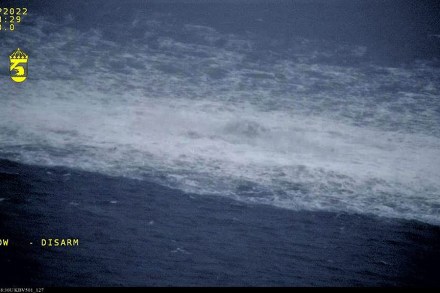
Six months after undersea explosions ripped through three of the four Nord Stream gas pipelines between Russia and Germany I wrote a 2,500-word story for The Spectator entitled ‘Were Ukrainians behind the Nord Stream bombings?’ Citing senior European security sources, the piece revealed a conspiracy of silence – for fear of an anti-Ukraine backlash – by western intelligence agencies, law enforcement authorities and government to cover up what they all knew to be the truth. Forensic evidence and a German police investigation had disclosed that pipelines carrying the Russian gas on which the economies of Germany and many other European countries depended had been blown up by a tiny team of Ukrainian saboteurs.

The uncertainty principle: The Interpreter’s Secret, by Andrew Rosenheim, reviewed

You can’t really make this stuff up any more, political reality having long since outpaced fiction, but thank goodness there are people who continue to try. Recent history has supplied more than enough intrigue, misinformation, diplomatic doublespeak and sheer zone-flooding mad shit to challenge even the most inventive writer of political thrillers, but fortunately Andrew Rosenheim is more than up for it.

The spies who are loved

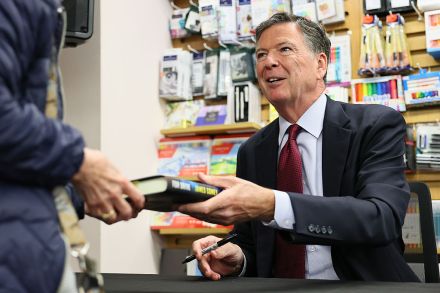
One consequence of Trumpism has been the open entry of America’s national security state into politics. Former spies and generals such as Mark Milley, James Comey, Elissa Slotkin, Robert Mueller and Alexander and Eugene Vindman are all offered to us as stately and apolitical figures who have, in extremis, bestirred themselves in defense of the republic. America’s governing class increasingly relies on such people to lead it, as Virginia’s new Governor Abigail Spanberger shows.  They have evolved a distinct rhetorical style. With the exception of Milley these people pose as scrupulously neutral bureaucrats who have, in a quivering way, finally raised a voice in protest.

james comey spies

Tradecraft secrets: a choice of crime fiction

From our UK edition

If it takes one to know one, this may explain why spy fiction is enjoying such a renaissance, since among the best new titles are those written by former intelligence operatives. I.S. Berry and David McCloskey are both former CIA officers who happily acknowledge how much their novels rely on their past careers. Equally impressive is the work of ex-MI6 officer James Wolff, whose use of a pseudonym puts him at a comparative disadvantage when it comes to promoting his books, but whose Spies and Other Gods (Baskerville, £20) places him in the top tier of today’s spy writers. A young ex-academic, Aphra McQueen, is sent by a parliamentary oversight committee to investigate a whistleblower’s complaint about MI6.

Why doesn’t the CDC care about Chinese biolabs in America?

If you rent a cheap Airbnb house in Las Vegas, you might not be altogether surprised to find dead crickets in the garage. But a thousand vials of medical samples in several freezers – and a centrifuge? After the cleaner and one guest fell ill at a property in the city’s Sunrise Manor neighborhood last week, federal agents raided it and found a whole laboratory’s worth of scientific kit of the kind more useful to medical scientists than, say, drug dealers. Curious. Curiouser still, the house belongs to a Chinese national named Jia Bei (Jesse) Zhu. He is currently in prison awaiting trial over a secret laboratory that (it is alleged) he was running in Reedley, California.

Biowarfare

They should never make another James Bond film

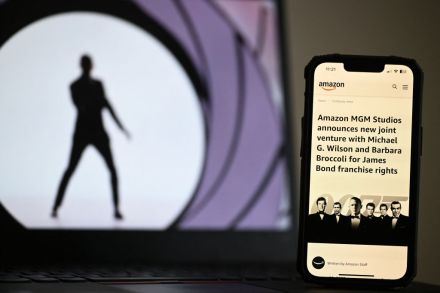
The 25th and most recent entry in the James Bond franchise, No Time to Die, premiered over four years ago. Since then, there has nonetheless been Bond drama. In 2022, Amazon acquired MGM, and with it the rights to 007. But it took several more years to wrest producer control from Eon productions, run by the Broccoli family’s Barbara Broccoli and her half-brother Michael G. Wilson, scions of the filmic spy empire created by their father Albert “Cubby” Broccoli. (The family claims that the vegetable is named after them, their fortune having been founded by crossing rabe with cauliflower.) Most recently, writers for the long-delayed upcoming 26th Bond film, set to be directed by Denis Villeneuve, appear to be stumped, plotwise.

china embassy

Trump team warned over London’s Chinese super-embassy

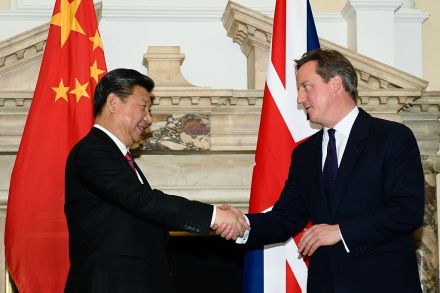
So much for simple Chinese takeout. In his never-ending search for economic growth, British Prime Minister Sir Keir Starmer has finally alighted on the obvious answer: cozying up to the liberal-minded democrats of Tiananmen Square. The Prime Minister is expected to fly to Beijing in the new year, once the long-awaited Chinese super-embassy in the London neighborhood of Tower Hamlets secures planning approval next month. No wonder 2025 is the year of the snake, eh?  But there now seems to be a wrench in the works, ahead of the mooted approval on December 10. For a group of American politicians are up in arms about the possible threat to global financial security.

The reluctant spy: The Predicament, by William Boyd, reviewed

From our UK edition

According to the literary critic Harold Bloom, male writers have daddy issues. So keenly do they feel the oppressive influence of their forefathers that when they take up the pen it is to use it as a sword. To produce something new, they must engage their predecessors in a writerly duel to the death. Bloom’s examples are all very highbrow – Blake vs Milton, Keats vs Shakespeare – but the theory applies across the literary spectrum. When William Boyd sits down to write a new spy novel and, removing his pen from its sheath, looks up to assess the field, it is (among others) the faces of Ian Fleming and John le Carré who stare back. What better way to deal with the anxiety of their influence than to create a spy who is not only reluctant but practically monogamous too.

The Chinese spy case you won’t have heard about

From our UK edition

The Hong Kong Economic and Trade Office, handsomely housed in London’s Bedford Square, is responsible for trade relations between the formerly British ‘special administrative region of the People’s Republic’ and the UK, Scandinavian and Baltic states, and Russia. Its organigram boasts a ‘dedicated team for attracting businesses and talents’, including specialists in ‘investment promotion (fintech)’. So far so good: those who detest China’s suppression of Hong Kong also tend to believe its best hope for a return to relative freedom lies in attracting global attention as a hub of trade and finance. But also on the HKETO chart is ‘Office Manager Bill C.B. Yuen’, who will shortly be attracting headlines of a different kind.

John Bolton’s AOL chat with Iran

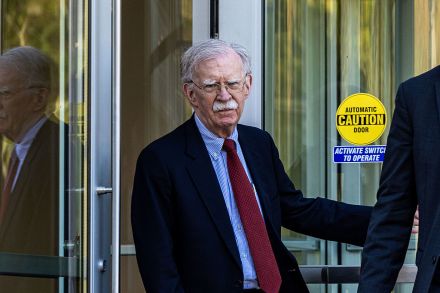
“John Bolton Surrenders To Federal Authorities” is a headline I could have only dreamed of seeing 20 years ago, but this morning it came true. Following yesterday’s grand-jury indictment of Bolton, the former Trump National Security Advisor and W. Bush Iraq War architect/manipulator gave himself up and pled not guilty in federal court on charges of mishandling classified information. But if Bolton isn’t guilty, I’m a high-stakes poker professional. The charges claimed that Bolton was “unlawfully hoarding” documents, that he sent classified information over grandpa communication medium AOL instant Messenger in 2018 and that he shared more than 1,000 pages of notes, while working on a memoir, with his wife and daughter, neither of whom had security clearances.

John Bolton

The truth about Chinese espionage

From our UK edition

13 min listen

Tim Shipman's bombshell cover piece for the magazine this week explains how the collapsed spy trial blew up in the government’s face. As well as raising ‘serious questions’ about Keir Starmer’s judgment and Jonathan Powell’s role, ‘the affair reveals a Whitehall tendency to cover up the gory details of foreign spying in the UK’. According to Tim, four ‘highly credible sources in the upper echelons of the last government… have revealed that far worse scandals have been hushed up’. One, involving Russia, was suppressed ‘to avoid embarrassing a former prime minister’.

Are the Tories to blame for the China spy scandal?

From our UK edition

14 min listen

Keir Starmer did not go into Prime Minister’s Questions with the intention of resolving the row over the collapse of the Chinese spying case: he merely wanted to avoid the pressure building too much. He announced in a long statement at the start of the session that the government would be publishing its three witness statements, and then spent the rest of his sparring with Kemi Badenoch arguing that this was all the fault of the previous government anyway. So who is to blame, the Tories or Labour? What does the inability to deal with this scandal say about the ineptitude of successive governments, and how they communicate with the public? James Heale speaks to Tim Shipman and Isabel Hardman.

In defence of Chris Cash

From our UK edition

Can you be a spy by mistake? If, with no treacherous intent, without ever intending to disadvantage your own country, you share information which might give another country advantage over yours, are you spying for that country? In ordinary usage I’d answer these questions with a firm no. Spies operate for many reasons – reward, blackmail, ideology or as a profession – but they do know they are spies. It’s intentional behaviour. If I’ve ever met or communicated with Chris Cash, I don’t remember it. He has, however, been described to me by mutual friends whom I trust. Their descriptions concur. Nothing I’ve learnt about this young man, who worked at Westminster on research into China, suggests it’s likely he can justly be accused of being ‘a Chinese spy’.

Is the British Council really a ‘nest of espionage’?

From our UK edition

I worked for nearly a decade at the British Council in East Asia. Every day, under the guise of teaching English and promoting awareness of British culture abroad, I would compile dossiers on people of interest, take pictures of government buildings and military installations and pass secret documents to couriers to smuggle back to Britain. I would sometimes meet contacts in parks where we would have brief, cryptic conversations beginning with a code line like ‘The geese are flying south early this year’, without ever directly looking at each other. Except of course I did none of these things and neither, I am convinced, did anyone else.

Everyone who was anyone in Russia was spied on – including Stalin

From our UK edition

Vasili Mitrokhin was a KGB colonel smuggled out of Russia by MI6 in the early 1990s with a treasure trove of notes from the KGB’s archive. The resulting 3,500 CI reports (CI meaning counter-intelligence – information about hostile spies) identified 1,000 KGB agents around the world and were shared with 36 countries. The CIA rated it ‘the biggest CI bonanza of the post-war period’, while the FBI described as ‘the most detailed and extensive pool of CI ever received’. The story behind it was as remarkable as the haul itself. Gordon Corera’s fluent narrative draws on many sources, including the magisterial two-volume Mitrokhin Archive compiled by the historian Christopher Andrew and Mitrokhin himself.

From the early 1930s we knew what Hitler’s intentions were – so why were we so ill-prepared?

From our UK edition

MI6’s historical archive suffered disastrous weeding on grounds of space from the 1920s onwards. One of many mysteries was the identity of a 1930s/40s agent referred to cryptically in surviving papers as ‘C’s German source’ (C being the chief of MI6). Now, as a result of indefatigable research, Tim Willasey-Wilsey has established who the man was who almost uniquely reported on the thinking of Hitler’s pre-war inner circle. In the course of this the author may also have resolved the origin of the notorious Zinoviev Letter, believed by many in the Labour party to have lost them the 1924 general election.   William Sylvester de Ropp, a baron usually known as Bill de Ropp, was a Lithuanian Balt, born in 1886.

Heroes of the Norwegian resistance

From our UK edition

Reading Robert Ferguson’s fascinating history of the experiences of the Norwegians during the five years of German occupation between 1940 and 1945 – a collage of resistance, collaboration and the grey areas in between – I was reminded of the remarks of two Norwegian nonagenarians. In 2011, I interviewed Gunnar Sonsteby, a hero of Norway’s resistance movement, for The Spectator. The country’s most decorated man, Sonsteby told me that he was spurred to acts of sabotage and the ‘liquidation’ of collaborators by sheer outrage at the German presence. Conversely, earlier this year, I wrote the obituary of Olav Thon, the owner of a chain of supermarkets and hotels and one of the richest men in Norway. Thon had been criticised for trading in furs with the occupying forces.

Is the Trump administration ready to stop Chinese espionage?

For Republican voters sick of “deep-state” shenanigans, Kash Patel, the new head of the FBI, seems an ideal appointment. He and his new deputy, the former police officer turned podcaster Dan Bongino, look and sound like exactly the right men to disrupt a bureau that has at times in the past eight years acted as an investigative arm of the Democratic party in its attempts to thwart Donald Trump through the legal system. Patel is considered so pleasingly anti-establishment that his ties to a Chinese e-commerce business have been largely overlooked. He has holdings worth up to $5 million in a fast-fashion company called Shein, founded in China but headquartered in Singapore, and he intends to keep his stock. There’s nothing wrong with that, per se.

espionage