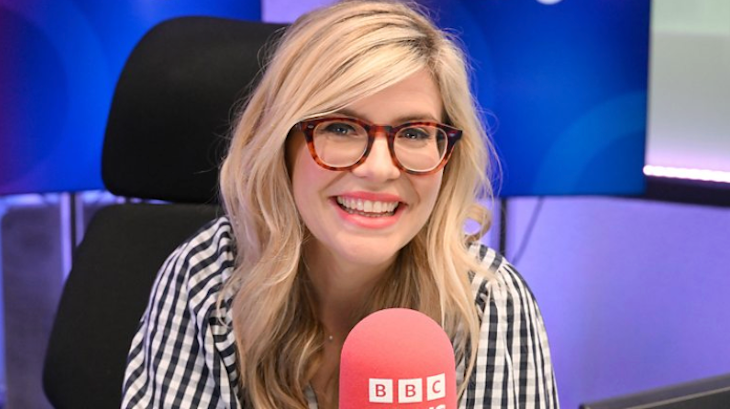
As Oscar Wilde – were he a media correspondent – might have said, to lose one presenter is misfortune. To lose two looks like carelessness. Emma Barnett’s departure from BBC Radio Four’s Today programme means two frontline presenters have now bitten the dust in ten days. She lasted just over two years. Amol Rajan, who left the week before last, managed five. Even British Prime Ministers sometimes survive longer than that.
Today however, is a very different beast. As the programme insider put it ‘The ghost of John Humphrys looms large, still’
It wasn’t always like this. John Humphrys and Brian Redhead, both of whom I worked with on the programme, lasted 18 years, and current presenter Justin Webb has clocked up 17 so far. So what on earth is going wrong?
Three words: planning (and) decision making.
Planning first: Today bosses should have seen the PR cluster f**k coming a mile off. They knew Amol’s last program was going to be on 2 September, but they also knew Emma’s future on the program was looking increasingly shaky.
This was partly because of severe health problems. Her endometriosis and other severely debilitating health conditions caused her ‘bone grinding, life altering pain’ and once, it is said, caused her to blackout on air, during a program.
So when it became clear that Emma’s future on the program was coming to an end, they could and should have done a nifty bit of PR planning to nip this weekend’s unfortunate headlines in the bud. A double goodbye on air perhaps, for both Amol and Emma, lasting five minutes at most. It would have got all the bad news out there in one go, the PR equivalent of ripping off the plaster.
Or, failing that, they could have got down on their knees and tried to persuade her to stay for a few more months, thereby putting a bit of clear blue water between the two departures.

But – and this is where the decision-making bit comes in – there were problems with the appointment in the first place.
I have huge sympathy for Emma. It is horrendous to have your professional abilities discussed and dissected by the chattering classes. But it very much comes with the territory of course. Resilience, in a job like hers, is paramount. But it’s not her fault that BBC bosses promoted her to a position which arguably rather exposed her.
According to a (very) long serving producer on the program: ‘Put bluntly, they stopped recruiting the best people for the job years ago.’
Instead of asking themselves ”Who would be the best for the program?’ They started giving presenter jobs out on the basis of a big name on another program suddenly becoming available.’
So, when it became clear that Barnett didn’t see her long-term future presenting Woman’s Hour – her previous job – BBC bosses snapped her up for Today immediately. And it was easy to see why: she was excellent on that show and pulled off the difficult trick of being simultaneously sympathetic but authoritative.
Today however, is a very different beast. As the programme insider put it ‘The ghost of John Humphrys looms large, still. Presenters feel a huge pressure to emulate his combative, interrupting – every – other sentence style, even though most listeners, these days, prefer a more relaxed, gently inquisitorial approach.’
You get more flies with honey that vinegar, in other words. That’s why the late Ed Stourton was so good, even though he got the sack for his efforts. He knew when to interrupt and did it so skilfully that it didn’t sound like interrupting at all. He simply nipped in with a question, when the interviewee was drawing breath. Currently, Justin Webb and Anna Foster are pulling off the same trick: they are not trying to win at all costs, and score points, but they are still holding the interviewee to account. But they are also trying to make it a decent listening experience. Which, surprise surprise, is the most important thing of all.
The problems, sadly, were evident from the start. During Emma’s first headline interview – a spectacularly fractious interruption fest with Jeremy Hunt – a very senior BBC executive actually rang the studio halfway through, saying words to the effect of ‘Get this off the air immediately.’
A similar sense of panic is enveloping the program this week because, as my insider puts it: ‘Emma is due to present next week, but at the moment we don’t even know if she’s going to turn up. Nobody here knows what is going on.’
Perspective is needed though: this is a drama, not a crisis. The program still has nearly six million listeners and is still, probably, more influential than its competitors.
But it is nowhere near as important as it was. In the 1980s, if politicians wanted to tell the nation something they would go on Today. Indeed, one morning in 1988, Margaret Thatcher phoned the programme directly and was put on air immediately to correct an erroneous speculation that President Gorbachev had cancelled a visit to Britain. Now, however, politicians and people of influence can of course bypass Today and the entire media with just one post. on X, or similar.
It’s a flesh wound then, not a fatal bullet to the head. Today will survive, if not thrive, especially if the bosses manage to get Emma Barnett’s replacement right. I expect Katya Adler’s agent is in for a very busy week.






Comments