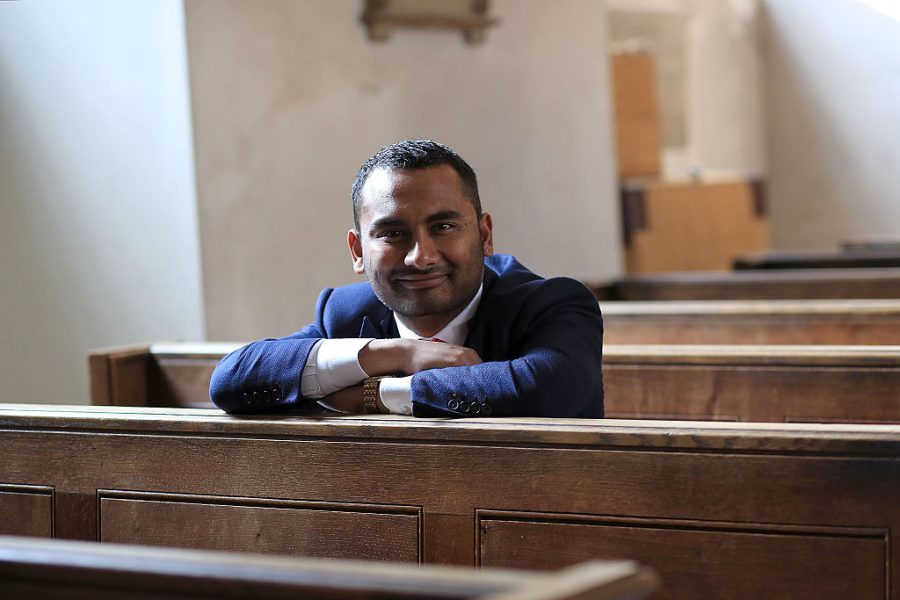
I never wanted to be one of those grumpy ex-BBC types who write articles with headlines like ‘what has happened to Today?’. My resolve, however, was broken yesterday by the following text from a distinguished former BBC editor:
The Today programme now playing the Amol Rajan leaving tape on air! If you didn’t hear it, listen on catch up – utter madness.
I worked for the BBC for 15 years and was a reporter on Today for six of those. They were the best years of my professional broadcasting life, and I want the programme and the corporation to survive and thrive. But I defy even the BBC’s staunchest defenders to listen to what I have now heard and not, at the very least, be baffled by what is, indeed, going on at Today.
What happened yesterday will only hand BBC critics several hand grenades to lob at it
The programme spent its last sixteen or so minutes – that’s SIXTEEN minutes – bemoaning the fact that Amol, who has presented Today for only five years, was leaving. Sixteen minutes. That’s exponentially more than the time it gave to items on the cost of living crisis, the war in the Middle East, the new Prime Minister‘s first serious encounter with the leader of the opposition at PMQs, and the crisis in Britain’s jails.
It started with Amol’s co-presenter, Emma Barnett, saying ‘the end is near’, and then a compilation of Amol’s ‘best bits’ was played. Amol quoting Aeschylus. Then Hamlet. Then talking to kids about the amount of time they spend on their mobiles (Amol, we learned, often spends more than five hours a day on his). Then a eulogy from Nick Robinson:
Presenting with Amol is unlike presenting with anyone else. It’s not just the pink shorts.
Then a (very good) clip of him holding a GB News executive to account. Then an interview with Gareth Southgate. Then a clip of Justin Webb asking him if he was going to go on Strictly Come Dancing. Then a eulogy from Justin himself. Then an interview with an unnamed writer. (Hanif Kureishi, I think). Then an interview with the cricketer James Anderson. Then another eulogy from another co-presenter, Anna Foster (‘you’re a good person’) And then, finally, before handing over to Amol himself, another eulogy from Emma Barnett, who told us that Amol likes three sugars in his tea and is ‘a good friend’.
Amol then asked Emma if she thought he was making a terrible mistake before, irony of ironies saying, ‘I promise to keep this brief.’ He then paid tribute to his ‘incredible, heroic colleagues’, someone called Clare, his kids, his wife, his mum, and his dad, before name-checking his heroes (Shakespeare, Bertrand Russell, Bob Marley, Shane Warne and Del Boy. ) He then thanked everyone in the gallery, everyone on the programme and everyone listening.
To be clear, this is absolutely no criticism of Amol Rajan himself. He’s a fine broadcaster, a very nice bloke, and has brought a refreshing modernity to the programme. But even he himself said, before the tape was played in, that he was ‘against this montage’.
He’s only been on the programme for five years. Justin Webb has presented for 17 years. What will they do when he leaves? Go full, rolling, 24-hour news?
There is nothing wrong with marking the departure of a much-loved presenter. It is a tradition. It happened for John Humphrys, Mishal Hussain and Sarah Montague. But those segments were nowhere near this long and were for presenters who, in John’s case, had spent much longer on the programme than five years.
And, crucially, the tributes made to them were used to reflect on the stories the presenter had covered and their significance. Not on how great they were to work with or how nice they smelled. (Emma Barnett actually said this to Amol.) Surely five minutes of this sort of thing, at most, would’ve served Amol, his colleagues, the programme, and the BBC much better?
The reason why Amol is a good presenter is that he brings a fresh perspective on things: he is sharp, brave and likeable. I would have loved to have heard him discussing the significance of the biggest stories he’s covered and analysing them.
I’m genuinely fascinated as to why and how this happened. Because, without wanting to sound like Fred Truman, it would never have happened in my day.
I wonder if it’s something to do with the century of the self: our obsession with ourselves and our identities. The other day, on a train from Newcastle to London, I saw three young girls, completely oblivious to the rest of the carriage, filming themselves and posting the videos on TikTok and Facebook in a way that raised the eyebrows of everyone else on the train. Could the Today programme have succumbed to a similarly self-indulgent state of mind? If so, how? Surely, its prime function is to avoid that at all costs?
What happened yesterday will, sadly, only hand BBC critics – and, if they’re honest, many of its defenders – several hand grenades to lob at it. And it will all be totally justified. This stuff matters. Let us hope the programme’s editor and its editorial overlords get the memo.



Comments