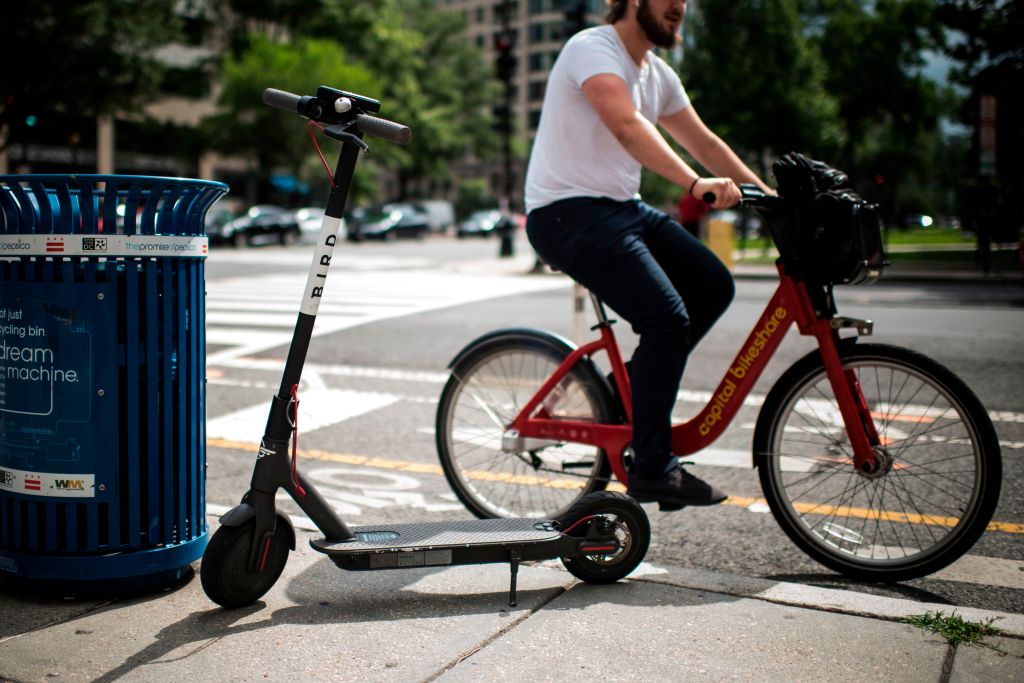
Scattered along the streets of Washington DC are electric scooters. Most have four-letter names: Bird, Lime, Skip, Jump, Bolt. Using one for the first time, you may prefer to employ another four-letter word. I know I did.
My first taste of the e-scooter phenomenon was on a visit to Los Angeles in February last year. The Santa Monica company Bird had been up and running for only five months, yet already its scooters were all over the city, like avian excrement. Students at UCLA embraced the Birds. Nobody seemed fazed by the undeniable fact that you cannot look cool on a battery-powered two-wheeler. The epidemic then spread to other American metropolises: Atlanta, Minneapolis, Miami. New York has so far held out, but will likely soon fall.
DC is the Wild West of e-scooterdom: there are just too many operating here. None stands out — though the Razor scooters do have comically large wheels and Birds make a slightly irritating tweeting noise when they’re locked and unlocked.
E-scootering all seems quite easy. After downloading the app, you scan a QR code on the handlebars and flick through a few screens of safety notices and disclaimers. You aren’t going to bother reading all warnings, and the app designers know it. The cheerful graphics tell you to wear a helmet and not to ride on the sidewalk. Nobody obeys. I’ve yet to see a scooterer with his or her head protected. I have frequently seen e-scooters scuttling along a pavement. A CDC report from May found that almost half of e- scooter injuries involved some form of head trauma. It’s dangerous for pedestrians, too, who often have to dodge these silent vehicles on the street. Bike paths are the safest option for e-scootering. Usually, they aren’t available.
The top speed of these scooters, though advertised at 15mph, seems to be closer to 12mph, which Robert Stephenson’s Locomotion No. 1 managed on the first passenger train ride in 1825. Stephenson’s riders may have found such pace unnerving, but it’s rather tame these days. I find it demoralizing to be overtaken by a Lycra-clad cyclist as I pootle along the asphalt. Occasionally, the battery runs out and I slow to a halt. The e-scooter is a wretched species to be introduced into the urban ecosystem. But it’s moreish, like crack.
It’s no surprise, then, that pioneering companies such as Bird and Lime have now made the now-familiar stratospheric tech journey to billion-dollar valuations. They face competition in the e-scooter market from the ride-app big boys Uber and Lyft, which have the advantage that they will already be on most people’s phones. Why wait an extra 30 seconds to download something new? E-scootering is all about convenience, even if, like a lot of tech, it’s not really that convenient. I’m actually finishing this article on my iPhone, and need to cross town — must scoot.
This article is in The Spectator’s November 2019 US edition. Subscribe here.