
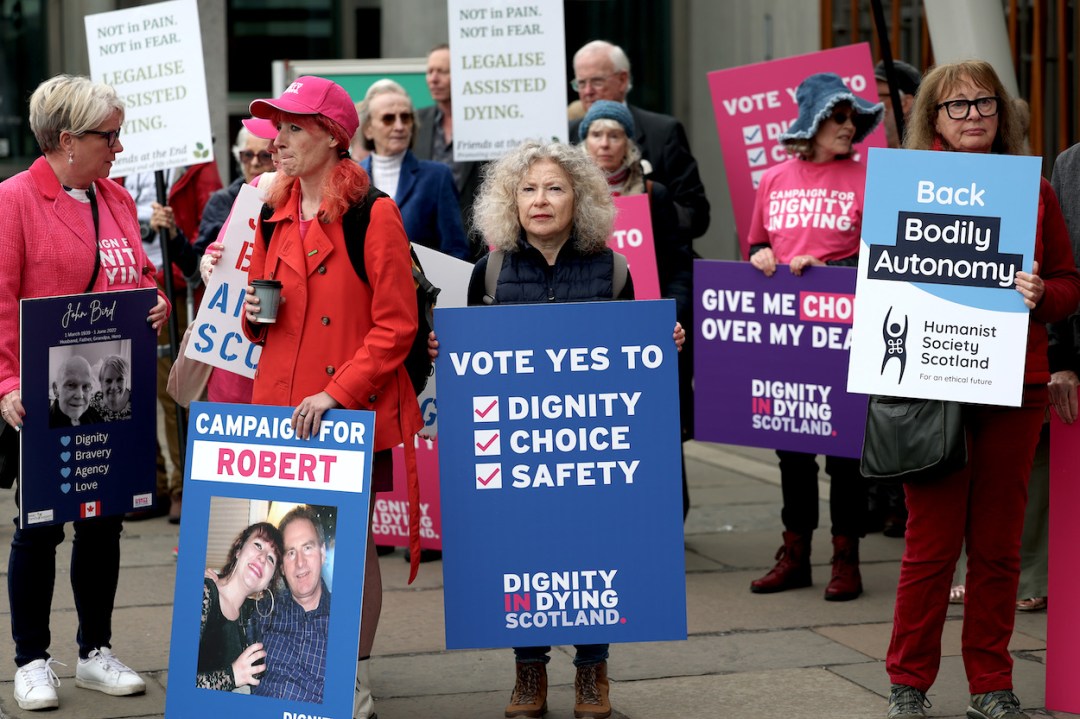
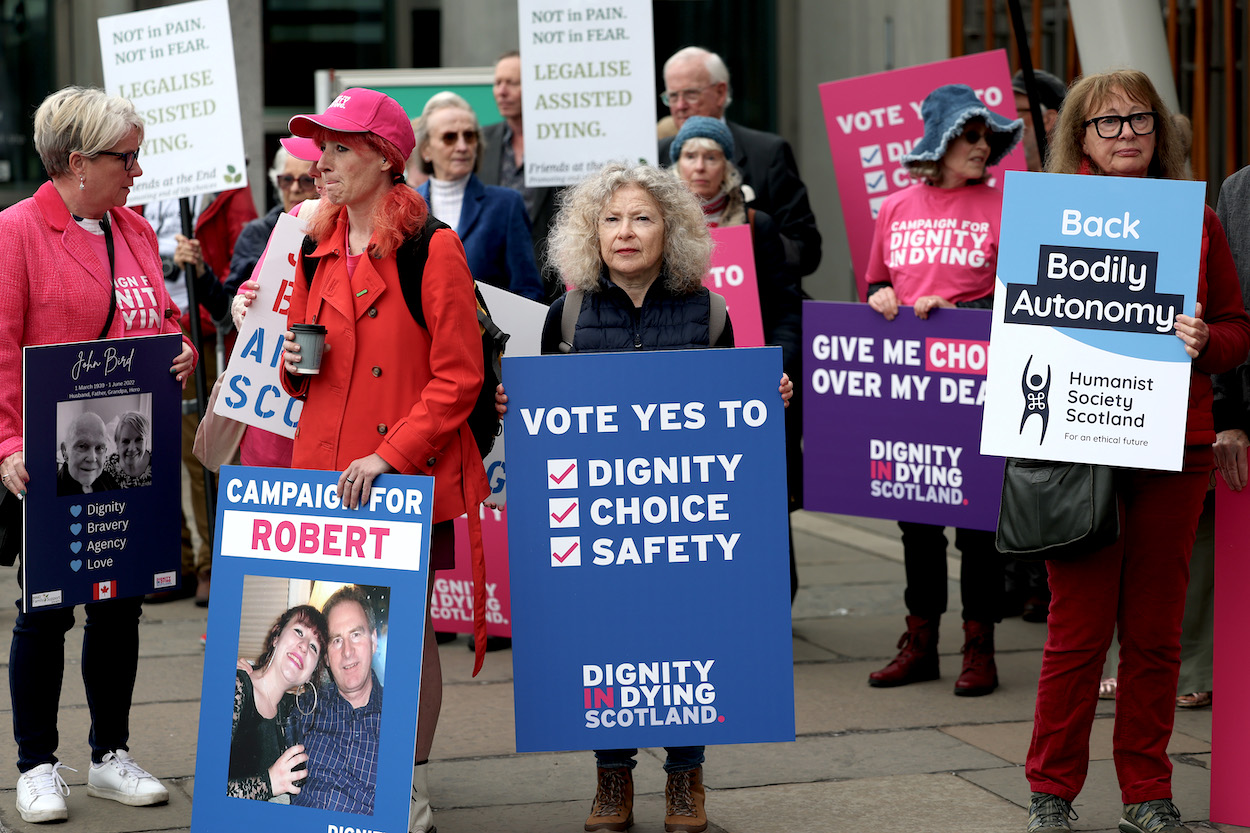
The Scottish Parliament is on the brink of passing a bill that would see Catholic hospitals and care homes shut down. The Bishops’ Conference of Scotland says it is ‘deeply disappointed’ by the rejection of an amendment to the Assisted Dying Bill that would have given institutions a right of conscientious objection. If the bill becomes law, it will mean that a Catholic hospice or care home would have no right to exempt itself from participation in the assisted suicide of one of its residents. The bishops state that assisted suicide is ‘fundamentally incompatible’ with the ‘guiding values’ of Catholic institutions, and raise the prospect of hospices and nursing homes having to ‘decide between acting contrary to their foundational values or closing’.
The closure of these facilities would introduce unconscionable disruption, stress, uncertainty to the lives of gravely ill and elderly people, and could well cause a further deterioration in their health. Places in secular hospices and care homes would also have to be found and paid for. This would be objectionable not only in practical terms but philosophically, too. It would represent a brazen incursion of the state into the policies and decision-making of faith-based institutions. The interference in religious conscience and practice would be without precedent in the almost 200 years since Catholic emancipation in Scotland in 1829.
Those unfamiliar with church doctrine might mistake this for empty rhetoric, a last-ditch attempt to scupper the bill. While the bishops would very much like to see this legislation put to sleep, this is no mere tactic. Opposing assisted suicide, which the church considers a form of euthanasia, is pivotal to the Catholic commitment to the sanctity of human life. The moral integrity of life is inviolable, with killing permitted only in a just war, and no exception is made for euthanasia. On the contrary, the church is as implacably opposed to assisted suicide as it is abortion.
Paragraph 2277 of the catechism states that ‘an act or omission which, of itself or by intention, causes death in order to eliminate suffering constitutes a murder gravely contrary to the dignity of the human person and to the respect due to the living God, his Creator’. In his 1995 encyclical Evangelium Vitae, Saint Pope John Paul II addressed the moral duty of Catholics in relation to euthanasia, instructing them ‘under grave obligation of conscience not to cooperate formally in practices which, even if permitted by civil legislation, are contrary to God’s law’. He continued that ‘cooperation can never be justified… by appealing to the fact that civil law permits it or requires it’, because an individual ‘has moral responsibility for the acts which he personally performs’.
Not only that, but a Catholic who knowingly, willingly and habitually participates in assisted suicide arguably places himself at risk of being denied Holy Communion, the sacrament central to the Mass and to Catholic life. Canon 915 says those ‘obstinately persevering in manifest grave sin are not to be admitted to Holy Communion’, while Canon 916 holds that anyone ‘conscious of grave sin is not to celebrate Mass or receive the body of the Lord without previous sacramental confession’.
The Assisted Dying Bill is first and foremost an attack on human life and the dignity and worth of sick and vulnerable people, but it is also an onslaught against religious liberty. To support this legislation is not only to facilitate murder but to use the law to compel others to facilitate it too. It is pointing a gun at Catholic institutions and ordering them to cooperate in the killing of people they exist to care for.






Comments