Ireland

Irish football is suffering from a Palestinian purity test

From our UK edition

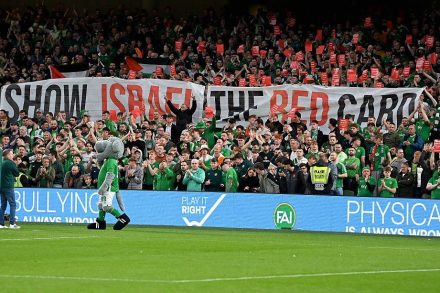
How did Ireland get here? As Ireland's footballers huddle in a Hungarian hotel deciding whether to play Israel tonight, it is worth asking who put them there. The quiet city of Debrecen in eastern Hungary has become the centre of the footballing world. Outside the team hotel, the world's press is camped, cameras trained on the doors. Inside, Ireland's team is locked in a meeting with FAI officials, deciding whether to play a match against Israel in the UEFA Nations League. Nobody outside quite knew what was going on. Training was called off with barely a moment's notice. The pre-match press conference, a UEFA obligation, was postponed by WhatsApp message. Then came the reports: the team was split. Gavin Bazunu and four others did not want to play.
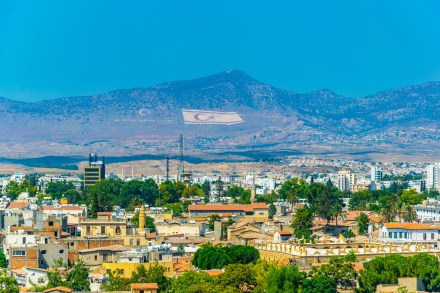
My poolside revelations

From our UK edition

Lying by the rooftop pool of the Hotel Sun in downtown Lefkosa, I felt like a cowboy about to stir from slumber beneath his hat to cause a scene. I had turned into someone in an Elmore Leonard story. My view was a mountain range in full panorama with one hill entirely painted in the red and white flag of the Turkish Republic of Northern Cyprus. The poolside music was country and western. Several times a day it mingled with the call to prayer coming from the minarets along the main drag. In this frontier society where West meets East, I felt like anything was possible. I lay by the pool, watching the scene from under my baseball cap, listening to ‘The Yellow Rose of Texas’ and ‘Don’t It Make My Brown Eyes Blue’, the first song I loved as a child.

Can Trump and Ireland’s President get along?

From our UK edition

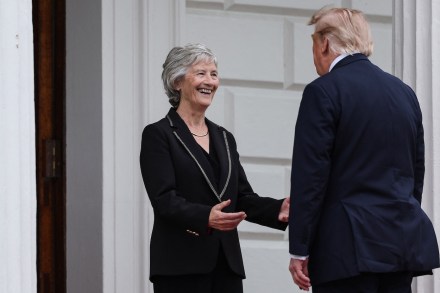
I realised I was sat next to the Irish President when she sent back her sandwich for being too spicy. I had just climbed Errigal, the tallest mountain in Donegal, on a blustery day, and had stopped at a cafe nearby in the Gaeltacht, the part of Donegal where the Irish language is predominant. It was clear that the small group next to us had done the same – wearing leggings, trainers and zip-up workout gear – and my boyfriend could understand their discussion about how windy the mountain had been. Then, as it became clear a chicken wrap was being sent back – ‘I’m so sorry’ in Gaeilge – I looked up and realised that the apologetically polite voice came from Catherine Connolly.

My dog’s an accident waiting to happen

From our UK edition

‘My apologies again for you nearly losing your leg,’ I said to the young Frenchman as he and his family left. ‘And for making you take your pants down on the driveway.’ The Frenchman laughed nervously. ‘No. No. Thank you for a perfect stay,’ he said, and I think he might have meant it. He was an earnest young Parisian who was diligently trying to enjoy every experience of his travels, no matter how appalling. He and his pretty wife and their adorable two-year-old son had been quietly going around West Cork looking at ‘la nature’ when one day they came back from an outing to the beach earlier than I expected, and Dave the idiot dog was running loose. He hurled himself on the man as he got out of his car.

The Northern Ireland Troubles Bill only serves the IRA

From our UK edition

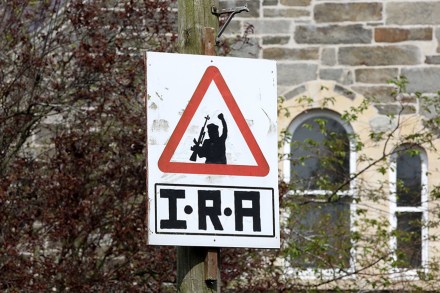
More British military personnel were killed during the Troubles than in Iraq and Afghanistan combined. As well as soldiers, innocent members of the public, MPs, police officers and the royal family were all targets. The Good Friday Agreement ended the armed campaign, but the fight to rewrite how the Troubles are remembered has continued. Warfare has become lawfare. When I resigned as armed forces minister in June, defence funding dominated the headlines, but the Northern Ireland Troubles Bill was the other reason I stood down. The Good Friday Agreement was a defining Labour achievement. Mo Mowlam walked into the Maze to talk to people most of the country would not have stomached sharing a room with. Peace required everyone to do things that were politically excruciating.

How Ireland succumbed to ‘radical chic’

When a law student from Co. Kildare was stopped this summer on suspicion of transporting a bomb across the Irish border for use by dissident republicans, her solicitor said she had not been aware of what was in the bag and that she had been ‘manipulated’. Yet the 25-year-old’s arrest highlighted an alarming revival in Irish republicanism – and the role being played by a younger, well-educated, middle-class generation. During the Troubles, much of Ireland mercifully avoided the pull of radicalism. There was always a certain degree of quiet sympathy for the IRA in predictable sections of the media and academia, but popular support for Sinn Fein, the Irish Republican party, in the 26-county Republic remained negligible throughout the worst years of terrorism.

Help! The Germans are invading

From our UK edition

The Germans stampeded into the house, overwhelming me with the element of surprise. ‘Incoming!’ I shouted through the main staircase window into the farmyard to alert the builder boyfriend, who was haying the horses. A car was unloading two couples – double the amount of guests I was expecting. They came at me all at once and piled up the stairs, and I ran behind protesting that there were too many of them. ‘It is no problem! They sleep with us!’ said the woman who had booked, as she and her very tall husband and their two friends crowded into Room 4. An en suite double, Room 4 is very comfortable and rated five stars, but I doubt you could fit two extra Germans in there. Two extra Chinese maybe. The BB came running and looked fit to burst.

The mawkish madness of Dobby’s ‘grave’

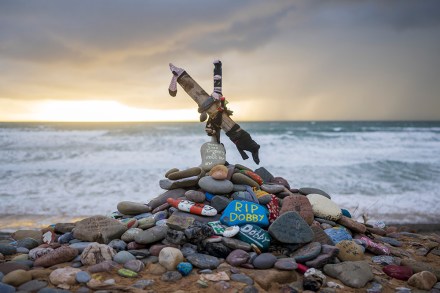
I don’t know how many readers have visited the grave of Dobby the house-elf, but any who have should immediately be sectioned and have their subscriptions to The Spectator canceled. This strong course of action occurs to me after reading one of those stories that can make you laugh, cry and smack your head into your hands all at once. It relates to a “memorial” which apparently sits on Freshwater West beach in Pembrokeshire, Wales. The area is run by the National Trust – a charity which used to look after the UK’s heritage sites. The beach in question was where filming took place for Harry Potter and the Deathly Hallows.

The mawkish madness of Dobby’s ‘grave’

I don’t know how many readers have visited the grave of Dobby the house-elf, but any who have should immediately be sectioned and have their subscriptions to The Spectator cancelled. This strong course of action occurs to me after reading one of those stories that can make you laugh, cry and smack your head into your hands all at once. It relates to a ‘memorial’ which apparently sits on Freshwater West beach in Pembrokeshire, Wales. The area is run by the National Trust – a charity which used to look after our nation’s heritage sites. The beach in question was where filming took place for Harry Potter and the Deathly Hallows.

My Jersey Shore summers

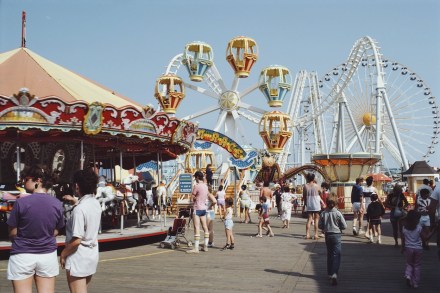
Sea Isle City, New Jersey It’s August 3. My mother’s birthday. Standing in the surf, my youngest son this morning said to me: “What would you do if you could breathe underwater and live there under deep pressure the rest of your life?” “I would eat more fish, I think.” “You could explore the Mariana Trench,” he corrected me. My brother-in-law Matt came down with his two sons to join us. The boys splashed and hollered in the rough sea. The red flag was put up by the lifeguards today. The fathers talked about how much easier it got each year.

I’m sick of pretending to be Irish

From our UK edition

The French socialist must have burst her bladder getting a litre of percolator coffee down her to stop the Dutch couple getting any, but she managed it. She was more than a socialist, actually. I think she was one of those continental communists. ‘Why can’t we all just ’ave what we need an’ live in peace, uh?’ she asked me at one point, with the obvious answer, ‘Because you hate everyone and pilfer everything,’ but I couldn’t say that and I didn’t want an argument with her because she was pretty feisty. Pretending to be Irish for two weeks was wearing me out but I kept it up because I feared she would boil over if she found out I was Crème anglaise.

Will my French guests get revenge for Agincourt?

From our UK edition

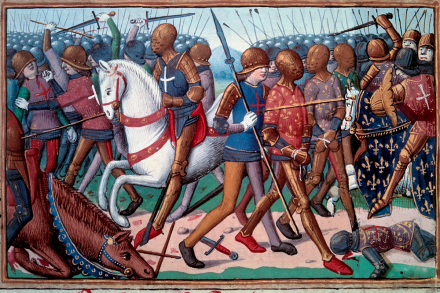
The French couple did not speak much English so I rattled on in my best French, thinking I was doing a fine job. She asked the usual question, how long had we lived in this lovely house? And I assumed she was assuming we were Irish and it had been in our family for generations. Guests always like to think this and I don’t like to completely disabuse them of it. They’ve come to West Cork for an authentic experience so I massage the Englishness out of the BB and me as best I can, on a customer service basis. My usual shtick poured forth, therefore, in my best French. And my best French ought not to be too bad. I once lived in France, in a village near Orléans. I was 18 and had fled home at the first opportunity, as young people used to do in those days.

The past yields up its secrets: The Red Mouth, by Sheila Armstrong, reviewed

From our UK edition

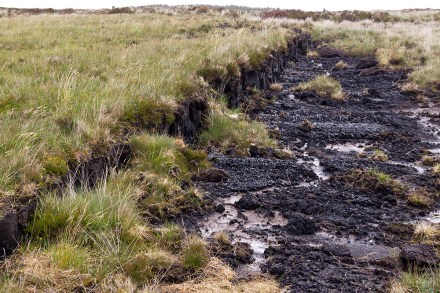
Sheila Armstrong’s strange and beautiful novel has 12 chapters, each named for a month of the year – though not always the same year or even the same decade. The author plunges us into archaeology, history, geology and complex human relationships. Time is fluid here: we might encounter an obscure neolithic weapon or stumble on a beer can left by a thoughtless 21st-century rambler. Occasionally Irish words dance across the page. The Red Mouth – an beal rua – introduces us to a group of strangers whose lives are linked by an Irish peat bog that yields long-buried evidence of past lives: an antler from an extinct species of deer, or an Iron Age woman, throat slashed, a rope around her neck, body curled into the shape of a question mark.

Small, skewed pictures that cast a spell: the art of Mollie Douthit

From our UK edition

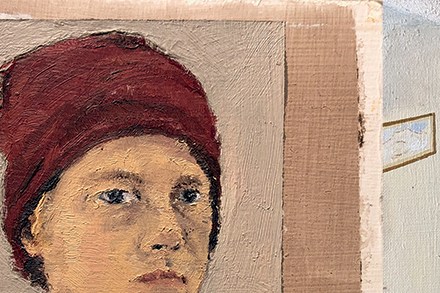
In this clever, moving mosaic of a book, Sara Baume tells us she originally wanted to be an art critic and that she wrote exhibition catalogue copy. It has served her well, as Opening Night is an evolved form of that genre – including 39 excellently reproduced images of paintings by the subject, and one extra – but it is also a form of memoir. By that I do not mean ‘life writing’ or ‘autofiction’, as it is a work of remembering and memorialising, even if that involves recording the gaps and lapses. The lacunae operate like an undercoat: the occluded thing that changes how you see. Just before the pandemic, Baume states in the opening sentence: ‘I met Mollie’s paintings before I met Mollie.

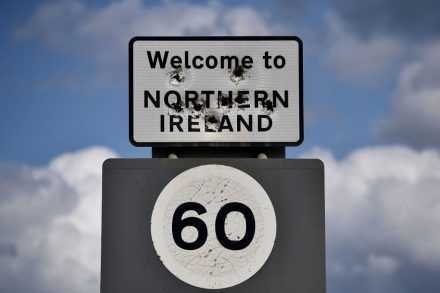
Northern Ireland has been the biggest loser from Brexit

In the decade since the vote to leave the European Union, arguably no issue has consumed more energy, column inches, political capital and careers than how to solve the problem of Northern Ireland. It was on that narrow, jagged border between North and South that the substantive skirmishes took place between the UK and EU on what their future relationship would look like. While Michel Barnier and Lord Frost arguing the toss over the finer points of agri-food regulation may lack the luster of the Battle of the Boyne or the romantic connotations of 1916, it was no less significant a moment in Northern Ireland’s history.

northern ireland

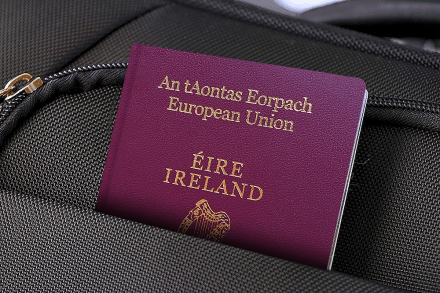
Once we Brexiteers get our Irish passports, we can go anywhere

“There’s a flat rat under the mat!” I shrieked, and wondered whether that was the sort of jaunty phrase that could be used for elocution lessons. I had lifted this mat by the main staircase to hoover the floor beneath it and there it was, a perfectly flat rat in the shape of a cartoon dead beast beneath this mat. I began laughing uncontrollably, because if you’ve ever seen a flat rat under a mat you will know that it is intrinsically funny, whatever your views on rats. You will laugh even if you don’t like rodents, or indeed if you like them way too much. Even if you are a member of the Rat Preservation Society, when you see one flattened paper-thin, stuck to your floorboards, I challenge you not to burst out laughing, while jumping up and down.

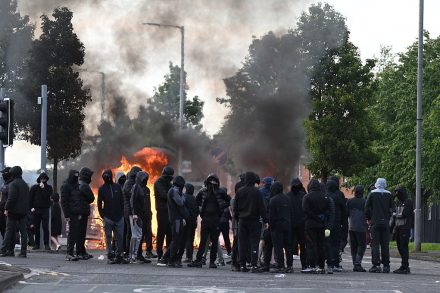
Why is it mainly loyalists rioting in Belfast?

Monday’s alleged attempted beheading in North Belfast was not the first time an act of brutality has taken place in the area. During the Troubles, it was one of the most violent and dangerous parts of Northern Ireland. Robert Curtis, the first British soldier to be killed in the Troubles, was shot by the IRA in New Lodge. North Belfast was also the grim stage for many of the brutal sectarian killings carried out by the Shankill Butchers. In North Belfast, the loyalist ceding of ground to nationalists has been compounded by the impact of immigration It is a deeply deprived part of the city and the population shifts and turmoil of the late 1960s and early 70s turned it into an ethnic and confessional maze.

loyalist

Portrait of the week: Belfast burns, Sullivan resigns and the Iran ceasefire cracks 

From our UK edition

Home A horrible video circulated on social media of a man on the ground in a Belfast street being stabbed in the head. His life was saved by bystanders, one with a hurling stick; a Sudanese man, aged 30, who had arrived from Dublin and been granted leave to remain, was charged with attempted murder. In reaction, houses were set on fire and a bus and cars were burnt; in east Belfast, 100 masked men kicked in doors and broke windows, saying they were ‘getting the foreigners out’. J.D. Vance, the American Vice-President, blamed the death in Southampton of Henry Nowak on ‘the mass invasion of migrants’. David Lammy, the Justice Secretary and Deputy Prime Minister, said he had phoned Mr Vance and told him he was wrong.

Ireland is desperate for its own George Floyd moment

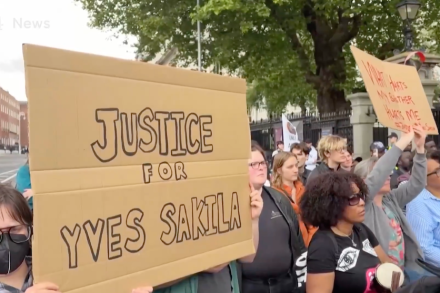
Ireland is in the midst of its own "George Floyd moment." At least, that’s how a string of international headlines have portrayed the death of Yves Sakila, a Congolese shoplifter who was pronounced dead in hospital after being restrained by security guards, one of whom appeared to kneel on his head or neck. The circumstances of the 35-year-old’s death are being investigated, but, as yet, there is no evidence it resulted from racism or excessive force. Court records show Sakila had a history of theft, and a post-mortem reportedly found no signs of foul play or visible injuries on his body. That has not stopped activists and parts of the establishment from co-opting a personal tragedy to fuel a campaign of racial grievance.

We’ve lost our only anti-vaxxer friend in the village

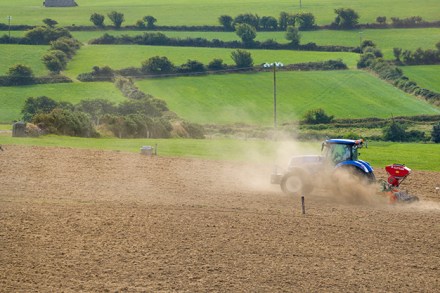
‘Can I go now?’ said the farmer I was talking to over my gate, and he looked so scared I felt a bit ashamed of myself. I had flagged him down as he went by in his rickety blue tractor that’s so old it looks like Noah used it to load hay onto the Ark. I told him I hadn’t seen him for a while. He usually waves or comes in for a chat. He has been our favourite neighbour since we moved to West Cork. As he owns the land above us where our water well is situated, that’s all to the good. We went out of our way to befriend him from the get-go, but after deluging him in home-baked fruitcakes and offers of dinner, for he lives alone, we realised he was our sort of person anyway.