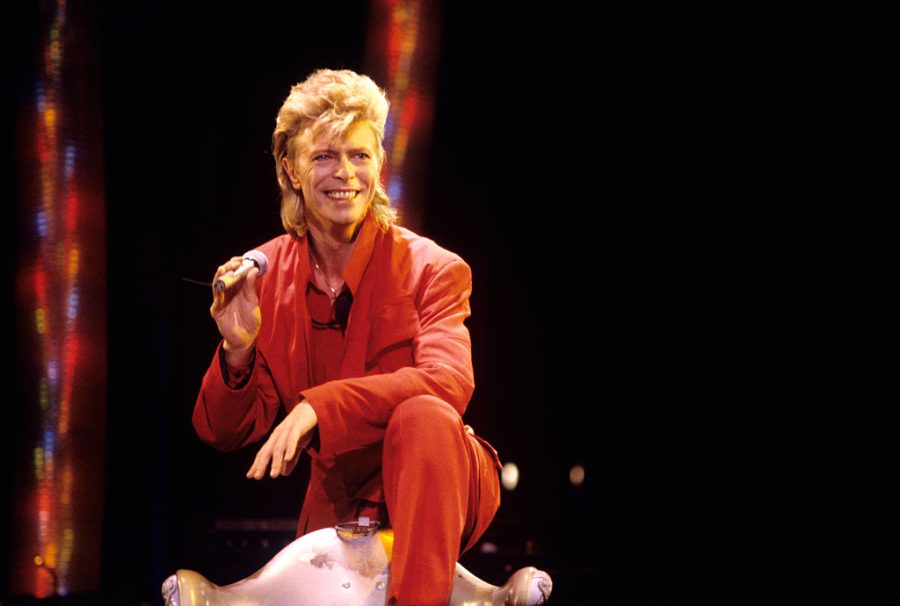
Like many artists lionised by their admirers beyond comprehension, David Bowie – who died nearly a decade ago on 10 January 2016 – was a flawed, capricious figure who got it wrong, especially in his latter-day career, as often as he got it right. And he knew it, too.
The one-time Thin White Duke was at his lowest professional and personal ebb in 1988, having formed a failed hard-rock band called Tin Machine, which promptly imploded after releasing two unsuccessful albums. When its first eponymous record slunk out, the music critic Jon Wilde sorrowfully wrote ‘Hot tramp! We loved you so. Now sit down, man. You’re a fucking disgrace.’
This sense of betrayal – of Bowie having let not just his present-day fans down, but all of those who had supported him since his Space Oddity or Ziggy Stardust eras – went deep to the heart of many. But the artist formerly known as David Jones shrugged. As he once put it:
Bowie’s death canonised him, preserving his genius in aspic forever
It’s an honest, healthy approach for an artist to work only for yourself. I’ve suffered badly when I’ve pandered to the marketplace.
The reason why David Bowie still matters today, a decade on from his premature death aged 69, is because he was cleverer, and therefore more interesting, than everyone else around him. This cleverness didn’t manifest itself in the usual fashion that rock stars like to show off their intelligence – you can enjoy his albums without needing a Cliff’s Notes to parse all the lyrical allusions. It manifested itself in the way in which he tore apart preconceptions about what pop music ‘should’ or ‘could’ be in a way rivalled only by the Beatles.

During his imperial phase of the Seventies and early Eighties, he was releasing breathtakingly accomplished, brilliantly varied albums at the rate of about one a year. If you wanted psychedelic folk, sweeping orchestral balladry, ersatz plastic soul, proto-electronica or intense hard rock, you could find it all, often on the same album and occasionally in the same song.
Bowie was a musical genius who could play virtually every instrument, sometimes picking it up by ear alone, and an offbeat, witty lyricist. He was the missing link between Noël Coward’s very English sensibility (who else would start a song like ‘Life on Mars’ with the lyric ‘It’s a god-awful small affair’?) and subsequent social commentators such as Brett Anderson and Alex Turner. He offered hilarious, Wildean quotes to interviewers that, for my money, are just as good as anything that Morrissey came out with, without the preciousness or the self-consciousness – ‘genius is pain. Oh, dear me’.
Still, only the most blinkered Bowie aficionado would not accept that, post-Let’s Dance, he stuttered and staggered. He produced some stunning albums in the Nineties, including the barely heard Buddha of Suburbia and the prophetic, icy Brian Eno collaboration Outside, but it was the era of Britpop and the Spice Girls, not of the former rock ‘n’ roll messiah. Growing up, I thought of him as another rich, white, middle-aged man, a bit like Sting or Phil Collins, producing music for other rich, white, middle-aged men. He was yesterday’s news, and the papers no longer wanted to know whose shirts he wore.
The Bowie comeback began in earnest with his performance at Glastonbury in 2000, which has often been heralded as the greatest gig ever played at that festival – not least by its co-organiser Emily Eavis. It then continued into such acclaimed Noughties albums as Heathen and Reality, which brought him to a new fanbase and renewed media attention. An on-stage heart attack in 2004 led to a decade away from the spotlight. But when he returned with 2013’s triumphant The Next Day, his re-emergence was treated with both awe and joy by those who had long ago given up any hope of hearing from him again. When he produced 2016’s even better Blackstar, he seemed to have returned not just to the form of his heyday, but to have surpassed it. And then he had the temerity to die.
Death has traditionally been seen as a dodgy career move for most musicians, but in Bowie’s case it canonised him, preserving his genius in aspic forever. As we approach the anniversary of his passing, it is easy to trot out the usual platitudes about ‘the master of reinvention’, ‘the prophet of the internet’, ‘the shape-shifter himself’, etc. But that’s all they are: platitudes. Instead, if we want to understand why millions still idolise Bowie, all we need do is look at what he did. We can listen to the music, watch the films, stream his interviews on YouTube and, if we are so inclined, visit the V&A museum’s David Bowie centre, the permanent home of his archive.
Not everything he attempted worked, and it would be absurd to pretend it did. But at his best, Bowie wasn’t just a great rock star, but a great cultural figure, in all his contradictory, quixotic and finally thrilling talent. He’ll be listened to as long as recorded music still exists, with his songs argued about and discussed by new generations who haven’t even been born yet. I expect we’ll be debating his virtues in another ten, twenty, fifty years. David Bowie was, indeed, unafraid of blowing his own cover, and laughing at himself. And, ten years on from his death, we should love him for it, all over again.






Comments