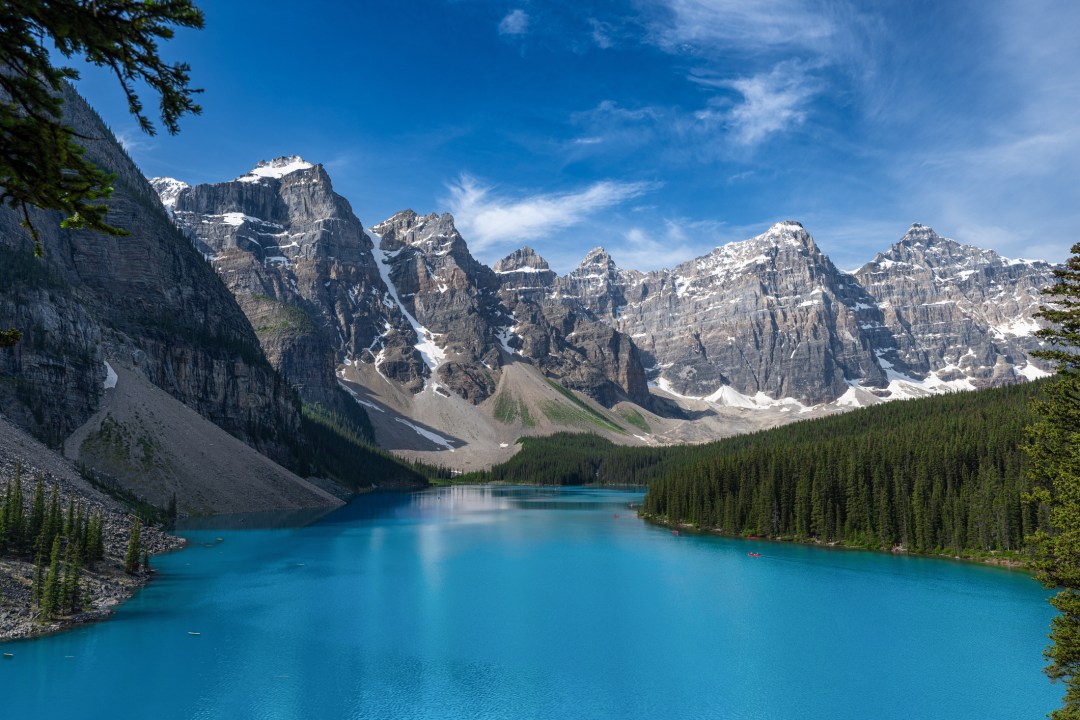
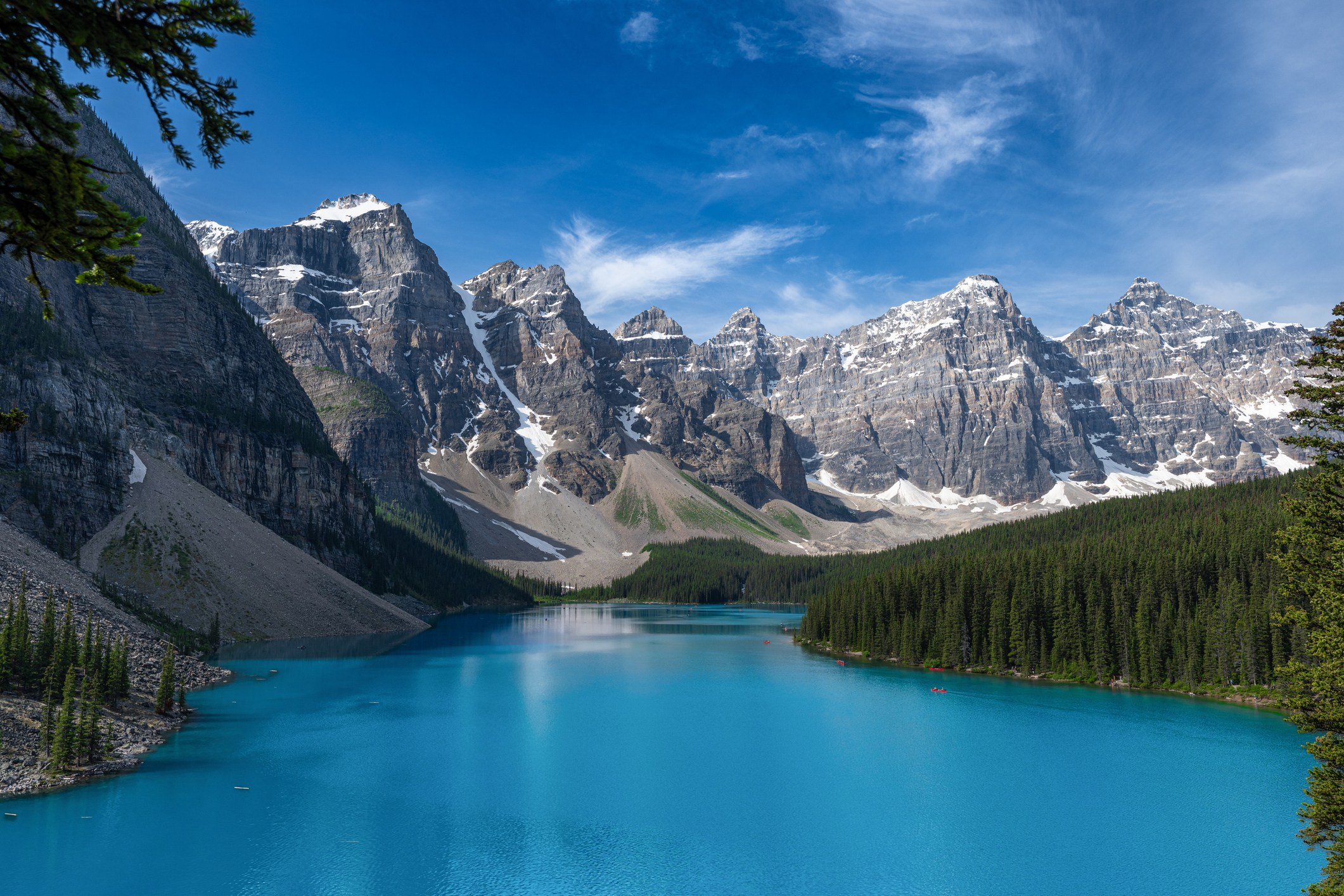
If Donald Trump wants to make Canada the 51st state, I suspect it’s for the wrong reasons. I just got back from a family holiday. We started in Vancouver, then drove to Whistler, before flying to Calgary and taking the Trans-Canada Highway – past places with names like Bearspaw and Dead Man’s Flats – into the Canadian Rockies and Banff National Park.
I was telling a friend about the trip a few days ago and actually welled up when I was describing the deep azure hue of Lake Louise; the vastness of the forests and the astonishing beauty of the wildlife – from chipmunks to grizzlies – that seems to co-exist peacefully with the comparatively tiny human population. It was nature on a scale that made human beings feel refreshingly incidental. The furthest thing you could possibly imagine from Manhattan.
But the less obvious thing that I relished about Canada was the jovial men of a certain age and their tireless appetite for conversation with strangers. Everywhere we went, they seemed to be waiting to chat. No agenda, just a puppyish desire to engage in a verbal volley of interesting pleasantries.
Only Canada has an abundant supply of semi-retired men with hiking boots and opinions on freshwater fish
At first there was a globetrotting sociologist whom I encountered while waiting to cross a suspension bridge – a popular tourist attraction – at the height of the season. He was standing in front of me in the sluggishly moving line. All it took to catalyze conversation was a split second of direct eye contact. “Hello,” he said, beaming. And the conversation had begun.
In the ensuing 30 minutes we discussed world politics, jazz music, parenting and traumatic brain injuries. Time flew. I introduced him to my in-laws, my daughter, my husband – and I met his clan too. He later tracked down my email address, in a way that somehow felt entirely Canadian rather than remotely alarming, and sent me some travel tips for the remainder of our trip.
A few days later, I was out hiking with my sister-in-law and our children when a lanky-limbed man who could’ve passed for a Boy Scout leader overtook us and then immediately looked over his shoulder with the nonchalance of someone preparing to explain where to find the nearest public toilet. “The crow met me as I got off the bus just now,” he told us, confidence ablaze, face entirely earnest, and not bothering to break his stride. “And thank goodness it did,” he elaborated before we could respond. “It offers me divine protection against the bears.”
That one was, admittedly, a shorter conversation, but unparalleled in its good-natured obscurity. There was no hint that he expected us not to believe him. He simply regarded this as critical local knowledge and it was his solemn – nay, god-given! – duty to convey it widely and enthusiastically.
There were others: a waiter from Manitoba with unexpectedly forceful opinions about freshwater fish; a Québec sommelier who mounted an impassioned defense of natural wine; cashiers, park wardens and fellow hikers who all seemed happy to drift into conversation without any obvious purpose beyond the pleasure of it.
Don’t get me wrong, I’ve made my fair share of spontaneous acquaintances in New York City, but here, these types of interactions often carry an edge – a sales pitch, a complaint, a performance, or just some of the city’s exhausting nervous energy. Canada’s version felt different. People simply seemed to assume that a stranger might be worth talking to for no other reason than that they might have something unexpectedly interesting to say. And generally the conversations weren’t one-sided in the way they so often can be in New York. Questions were asked. Unfashionable though it may be, answers were actually listened to. The crow guy was an exception. In fairness, though, he wasn’t really looking for conversation so much as disseminating crucial health and safety advice.
We spend so much of modern life trying to optimize every minute and curate every interaction that talking without an agenda can feel a bit quaint. But there’s something so civilized about it. You emerge knowing a little more about the world than you did ten minutes earlier – about jazz or brain injuries, or indeed about the cosmic protections that the crow could offer you against the mighty bear – having expected nothing more than to stand in a line or cajole your kids to hike the last mile uphill without moaning.
Trump may think Canada’s greatest assets are its minerals and water. He’s wrong: many countries have natural resources, but only Canada has an abundant supply of semi-retired men with hiking boots, opinions about freshwater fish and 30 minutes to spare for a natter. What a gift to a tourist from New York City who’s constitutionally incapable of minding her own business.






Comments