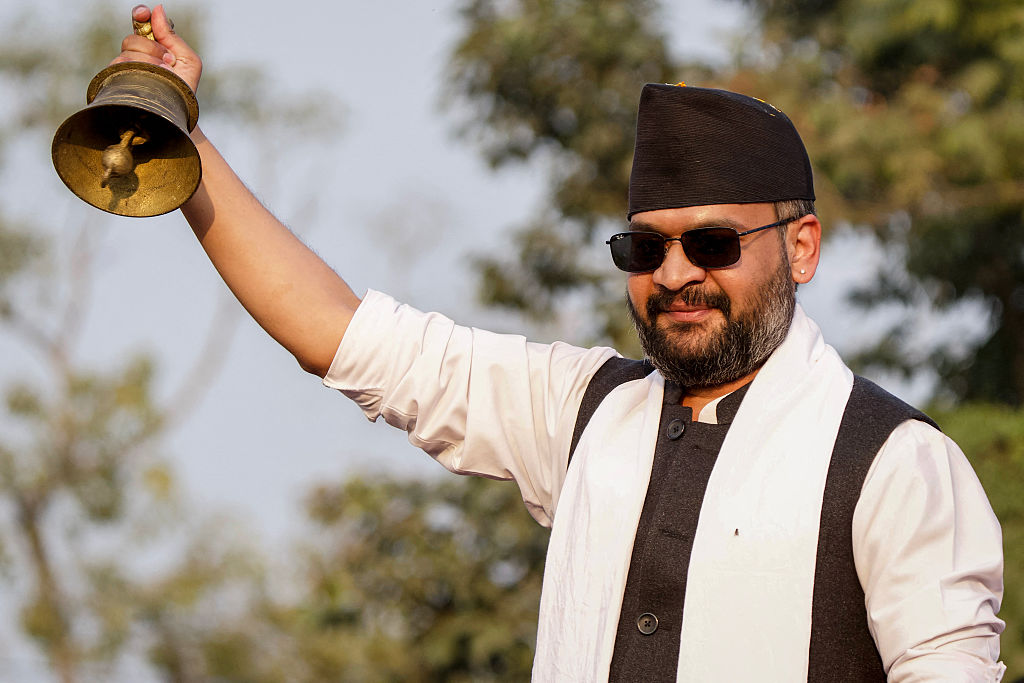
Balendra Shah does not look like your typical Nepali prime minister, and in many ways, this is precisely the point. The 35-year-old rapper-turned-mayor has just been propelled to the country’s highest office. Known for his reluctance to speak to the press and his brisk, almost nonchalant, style, ‘Balen’, as Nepalis affectionately call him, has a formidable task ahead. He is expected to eliminate corruption, create jobs and restore faith in the state.
Unemployment hovers at 20 per cent, and the most popular career path for young Nepalis is to leave the country
That is no small task in a country long governed by what might politely be called seasoned politicians. The average age of Nepal’s prime ministers hovers in the late sixties, with some well into their seventies. Longevity is a big part of Nepali politics. Surya Bahadur Thapa, who served multiple terms – as many prime ministers tend to do – first took office in 1979 at the age of 35 and was returned to power more than two decades later, at 75. In Nepal, power has a habit of recycling itself.
The landslide that catapulted Balen to power did not begin with him, but with a system that had run out of steam. For decades, the country had been dominated by the familiar faces of the Nepali Congress and its rivals who rotated in and out of office.
Balen’s rise to power was rapid. Just weeks before the March elections, he joined the Rastriya Swatantra party (RSP) as its prime ministerial candidate, while its founder, the television presenter-turned politician Rabi Lamichhane, himself not without controversy, remained party chairman. It was a calculated move, but also an obvious one. As mayor since 2022, Balen had already made a name for himself by doing something unusual in Nepal: getting things done. He cleared illegal structures, tackled Kathmandu’s sanitation problem and, perhaps most importantly, gave the impression that someone was in charge, which apparently was enough for a young electorate.

Nepal is a country with a median age of just 26. Unemployment hovers at 20 per cent, and the most popular career path for young Nepalis is to leave the country. Roughly 1,200 people depart each day in search of work, most heading to the Gulf. Remittances prop up the economy and account for a significant share of GDP, but the long-term cost is hard to ignore. A country cannot indefinitely export its workforce and expect to thrive.
Given this, Balen’s appeal is obvious. He is young, self-made and performs a careful balancing act between modernity and tradition by pairing his dark sunglasses with the traditional Nepali topi. He speaks the language of a generation that has grown tired of being governed by old men who are more interested in filling their own coffers than in creating prospects for anyone else.
The Gen Z protests of September 2025 marked the turning point. Sparked by prime minister KP Oli’s decision to block 26 social media platforms, they quickly escalated into something larger: the rejection of a political class seen out of touch and unaccountable. On 8 September, thousands took to the streets and by the following day, the country was ablaze. Police opened fire and killed 19 protesters. What began as peaceful demonstrations gave way to widespread unrest. Government buildings, including the prime minister’s office, were torched Dozens more died on 9 September.
Oli resigned under pressure, and an interim administration promised elections within six months, which they duly delivered. Oli was later arrested alongside former home minister Ramesh Lekhak over their alleged role in the crackdown.
Balen has been slick in how he communicates. Rather than delivering a conventional speech ahead of his swearing-in, he released a rap calling for unity, which was certainly unconventional. He understands his audience, but more importantly, the power of not appearing to try too hard.
‘He’s not going to try to be beloved, he’s going to do things his way,’ says Ben Ayers, an American journalist and long-time resident of Nepal. ‘He is very smart about the media. Things in Kathmandu improved under his leadership, but he was criticised for being too heavy-handed. That is likely to continue, and that’s what the public wants.’ And therein lies the paradox. Nepal’s young voters have rejected the old order because it was too weak, too corrupt, too slow and too self-serving. What they want instead is decisiveness. Balen’s reputation for acting first and explaining later may yet prove to be his greatest asset, or his greatest liability.
For now, Balen enjoys a genuine mandate for change which carries both pressure and risk. The question is not whether he will act, but how far he will go and how long the public is prepared to wait. For if there is one thing more fragile than Nepal’s political system, it is the hope now invested in him. And hope, as it turns out, is a difficult thing to govern, especially for a man who has built his career on doing things his own way.




Comments