
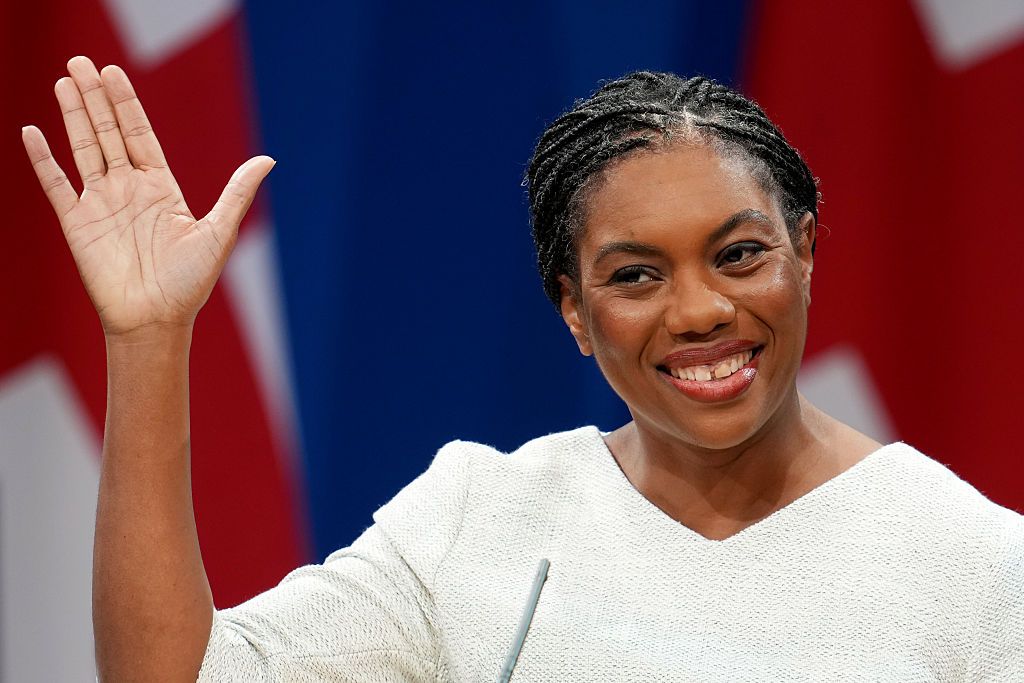
Three moments united the room at the Spectator’s Parliamentarian of the Year awards on Wednesday evening. There was plenty of roasting, of course, notably Michael Gove taking the mickey out of both Andrew Griffith and Robert Jenrick, something conspicuously enjoyed by Nigel Farage and Zia Yusuf. But even in a room full of bitter partisan divisions, Farage won universal acclaim for his speech accepting the main award on behalf of Ann Widdecombe and warmly saying how British politicians can have fun together even when they disagree. There was also widespread amusement when our host joked about the old boob whisperer, Zack Polanski, making ‘a giant tit of himself’. But nothing brought people together like David Lammy noting: ‘I haven’t mentioned the Lib Dems yet and I think I’m going to keep it that way.’
There is no higher insult on the right than branding Tory wets Lib Dems in all but name
The ability of the yellow peril to get under the skins of the other parties is legendary. Reform UK finds them a nuisance in council by-elections and Tories have always bemoaned the way that the Libs campaign in some parts of the country as nicer Conservatives and in others as more radical than Labour. There is no higher insult on the right than branding Tory wets Lib Dems in all but name. However, the Tories demonstrably don’t regard Lib Dem voters this way – indeed wealthy southerners who don’t much like the smell of Reform or the tax and spend of Andy Burnham’s Labour are their top targets at the moment. Reform officials were delighted to stumble across an internal Tory document the other day which explained that they had to, in the words of Lynton Crosby, ‘go duck hunting where the ducks are’: ‘The main focus of campaigning is no longer just about identifying strong supporters and getting them to the polls. It’s about identifying soft voters – and persuading them, persuading them and persuading them again.’

I would have been more excited about this ‘leak’ if every senior Tory I spoke to at the party conference hadn’t already told me the official strategy was to talk tough on the economy to win back these Lib Dems, to overtake Reform in the polls, and then to peel off the third of Reform supporters who just want to back the leading party of the right.
The problem for Kemi Badenoch, as I explained in my magazine column this week, is that the return of Brexit to the forefront of political debate makes this much more difficult. Brexit not only divides existing Tories between sovereignty-ists on the right and economy-first centrists, it also means Badenoch has to woo a group of voters who were predominantly Remain voters in 2016 (as indeed were a third of existing Tory voters).
To combat the jibe from the right that Badenoch has surrounded herself in the shadow cabinet with a bunch of Remainers, she today showed how she will enforce a proper conservative orthodoxy on the next generation of Tory MPs. All candidates, she announced, will sign a covenant ahead of the next general election committing them to supporting leaving the ECHR, staying out of the EU, and scrapping net-zero targets. Boris Johnson made clear you had to back his approach to serve in his cabinet and kicked out 21 MPs who would not, but this level of control has never been asserted ahead of an election before. ‘This is a non-negotiable commitment that must be made by all candidates including current MPs who want to stand again.’
This is not, she claimed, ‘a purity test’ but a solemn pledge to the people. ‘Every Conservative MP after the next election will know exactly what they are there to do,’ Badenoch said. ‘Not just what they are there to oppose, but what they are there to achieve. A smaller, more effective state. An economy that rewards hard work and enterprise. A country that controls its own borders and makes its own laws. This covenant is our guarantee to the British people. Our guarantee that the Conservative party knows what we stand for, and that we know what we need to do. Our guarantee that you can trust us to deliver.’
It’s an interesting moment to impose this degree of ideological consistency. None of the three things she wants her MPs to sign up to would be supported by the vast bulk of the voters that her own aides tell us she wants to win over. Luke Tryl, of More in Common, showed me some interesting polling which highlights the way Badenoch’s economic strategy could work, but also how perilous this covenant could be. He asked Tory-curious voters on the left (in the Lib Dems and the Greens) and those on the right (now backing Reform) about a huge raft of potential Conservative policies. On £50 billion of welfare cuts, abolishing stamp duty and other economic measures, there was almost no difference of opinion between the two groups of potential voters. But leaving the ECHR and scrapping net zero are very different; indeed they are the two most divisive policies. There is 70+ per cent net approval from right wing Tory-curious voters to the ECHR withdrawal plan, but it is close to zero for potential Tory voters to Badenoch’s left. Scrapping net-zero targets gets around 50 per cent net approval on the right but is pushing net negative 70 per cent on the left. The good news for her is that the ECHR policy is not actually a net negative, but the numbers highlight the challenge of different audiences.
And, bluntly, it is not as if the Tories are overburdened with a surfeit of good candidates. One recent selection led to a 21-year-old emerging victorious, a situation which has raised alarm bells in a party which routinely teases Labour for recruiting those with no experience of the private sector. It won’t be easy to attract the kind of credible business and private-sector people who often target a career in Tory politics if they are told what to think on everything. But the revival of Reform (largely thanks to Burnham’s incontinent Brexit babbling) means Badenoch is wedged uncomfortably between the rock of trying desperately to show that her MPs are not Lib Dems in disguise and the hard place of wooing Lib Dem voters. Perhaps she is hoping that, as the Tories risk becoming the third party after the next election, that her team will be able to sell different messages to different people. But that only works if no one is paying attention – and that is not a good place for a potential party of government to be. No wonder Farage was looking so pleased with himself on Wednesday.



Comments