While Americans anxiously watch the price of gasoline tick higher as the war in the Middle East squeezes the global oil supply, the conflict has highlighted another energy vulnerability that could prove just as costly: Taiwan’s dependency on foreign natural gas.
At first blush, energy issues an ocean away seem peripheral to American interests. They are anything but. Though the effect on the American economy won’t be immediate, energy insecurity in Taiwan is a looming disaster.
Qatar, the source of 30 percent of Taiwan’s natural gas, has been effectively bottled up
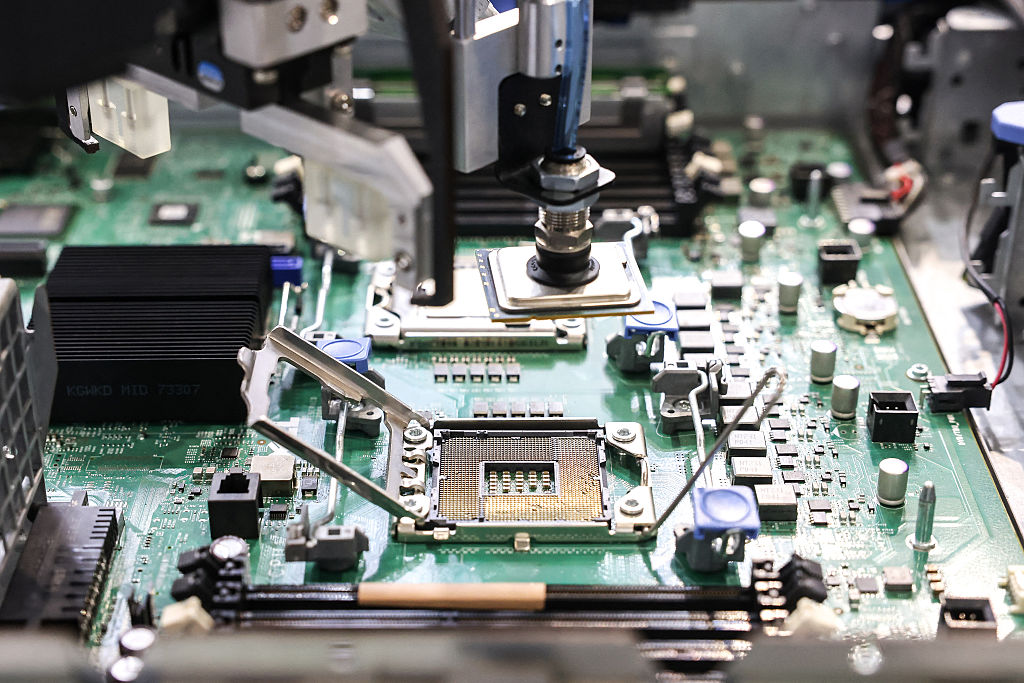
The reason is that AI – in fact, virtually all modern computing – is highly reliant upon the steady production of semiconductors in the world’s only true hub, Taiwan. Due to the AI boom and the chip appetite it whets, America is on track to import goods worth $300 billion from Taiwan this year – up from $200 billion last year and $100 billion in 2024. Despite the 2022 CHIPS Act effort to onshore semiconductors, the technological cutting edge remains in Taiwan. And the devices and machines Americans, our businesses, and our military use need Taiwanese output more than ever.
Yet, as the latest Middle East crisis reveals, that output is at risk due to the Taiwanese power sector’s over-indexing on natural gas, which now provides about half of its generation.
Taiwan, an island without domestic supply, is wholly dependent on just-in-time maritime imports via liquefied natural gas (LNG) tankers to fuel its turbines. Due to the inherent storage challenges with gas, Taiwan keeps only about 11 days’ supply on hand. This is economical in peacetime. In wartime it is untenable.
With missiles flying above it (and mines allegedly laid within it), the Strait of Hormuz has become a nearly-no-go zone. Qatar, the source of 30 percent of Taiwan’s natural gas, has been effectively bottled up and global supplies have plummeted 20 percent in a little over a week.

Taiwan’s Minister of Economic Affairs Kung Ming-Hsin has assured the public that a power shortage is not imminent, but a Hormuz crisis isn’t the contingency that should worry Taiwan and its technology customers most. The real threat is in the Taiwan Strait.
With only 11 days of its primary electricity source on hand, Taiwan would have very little chance to withstand the blockade that China has been practicing for years. As Germany experienced in the wake of Russia’s invasion of Ukraine, natural gas import dependency vitiates geopolitical leverage. While wargamers ponder how Taiwan’s defenses would hold up against an amphibious Chinese assault, the simpler play for China would just be to stop the LNG tankers, starve Taiwan’s power sector, and wait for it to concede. This problem is self-imposed.
Since 2010, the prevailing political party in Taiwan, the Democratic Progressive Party (DPP), has waged a relentless campaign against the island’s own energy security. Nuclear power once supplied over half of Taiwan’s electricity; coal was its secondary source. With her promise of a “nuclear-free homeland,” however, former President Tsai Ing-Wen introduced a plan that culminated under her DPP successor Lai Ching-Te with the elimination of the last remaining nuclear generation from the grid and natural gas’s ascension over coal last year. Whereas its gas supply will last less than two weeks, nuclear fuel and coal can be stored for months, or even years.
In some contexts, such as ours in a country blessed with a resource bounty, natural gas is a superb power option. When a country lacks the hard power to guarantee the delivery of imports, it is a liability. One would have thought that the economic weapon deployed by Russia to compromise Europe’s options in 2022 would have been enough to convince the DPP of the danger of natural gas dependency. It wasn’t – and the party pressed ahead with its pollyannaish agenda.
With America becoming ever-more-linked with Taiwan’s tech exports, let’s hope the crisis at the Strait of Hormuz convinces Taiwan’s power brokers to choose a more secure energy future.


Comments