Semiconductors

How Iran could end the AI boom

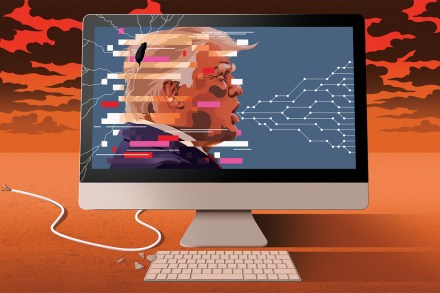
While Americans anxiously watch the price of gasoline tick higher as the war in the Middle East squeezes the global oil supply, the conflict has highlighted another energy vulnerability that could prove just as costly: Taiwan’s dependency on foreign natural gas. At first blush, energy issues an ocean away seem peripheral to American interests. They are anything but. Though the effect on the American economy won’t be immediate, energy insecurity in Taiwan is a looming disaster. Qatar, the source of 30 percent of Taiwan’s natural gas, has been effectively bottled up The reason is that AI – in fact, virtually all modern computing – is highly reliant upon the steady production of semiconductors in the world’s only true hub, Taiwan.
Semiconductors

Is the AI boom already over?

Is artificial intelligence a flash in the pan? Is the boom in tech shares, which exploded with the rise in public awareness of AI, doomed to go the way of other investment bubbles over the centuries? The answer to the first question is almost certainly no, and the answer to the second very likely yes. Investment bubbles do sometimes involve assets which have little intrinsic value, yet it is remarkable how often they begin as an entirely rational reaction to some new invention or development – an invention which outlasts the collapse of the speculative bubble, as if nothing had happened. You only have to look at a share chart and you would assume that railways went out of fashion in the 1840s, when a mad speculative umbrella collapsed.

AI

Have America’s chips controls backfired?

From our UK edition

57 min listen

Beginning in the first Trump presidency and expanded under Joe Biden, the US has taken a strategy of technologically containing China through restricting its access to cutting edge semiconductors. As Chinese Whispers has looked at before, these chips form the backbone of rapid advances in AI, telecoms, smartphones, weaponry and more. Washington’s aim was clear: to widen the technological gap between the two powers But has this strategy worked? Lately this has become a hot topic of debate as Chinese tech companies such as Huawei and DeepSeek have nevertheless made technical strides. Some even argue that the export controls have spurred on Chinese innovation and self-reliance. In this episode of Chinese Whispers, two very informed and smart guests debate this issue.

Stalemate over Taiwan is the best we can hope for

From our UK edition

The United States of China, anyone? The idea that a federal China might be able to accommodate within it a relatively autonomous Taiwan is one of the more radical solutions mooted to the thorny problem of Taiwan’s status. The difficulty, of course, is that neither the Chinese Communist party nor Taiwan’s leaders would find such an outcome remotely acceptable. The CCP will not countenance a loosening of its control over mainland China; the Taiwanese, for their part, see in Hong Kong’s recent sad trajectory a vision of their own future should their politicians ever accept an offer of special status within China.

Fear and complacency in Taiwan

On a recent trip to Taiwan as a guest of its Ministry of Foreign Affairs, I knew that war with an increasingly belligerent China is a daily possibility. Chinese ships are in constant circulation in the Taiwan Strait. Chinese aircraft unceasingly fly near the island, getting close to Taiwanese air space. Beijing’s increasingly threatening language about forced “unification” seems to bring a catastrophic attack closer. Genuine fear fluttered in the wake of Nancy Pelosi’s visit in August last year when China launched three days of drills that paid no regard to what they called the “imaginary” median line, which divides Chinese from Taiwanese territory.

Taiwan

Joe Biden has jolted China

From our UK edition

The chip war between China and America is heating up, with an increasingly assertive Joe Biden battling with Xi Jinping as he enters his third term as Chinese leader. The US last week further restricted China’s access to advanced American know-how, in what were some of the most stringent export controls for decades. Xi didn’t mention semiconductors in a speech on Sunday marking the opening of the Communist party’s twice-a-decade congress in Beijing, but he did pledge that China would ‘resolutely win the battle in key core technologies’. To compete with the US, China will need better tech. These new export controls will make Xi’s vision much harder to achieve.

America’s chip war with China

There is a joke in Taipei that if China invades Taiwan the best place to shelter is in microchip factories, the only places the People’s Liberation Army can’t afford to destroy. The country that controls advanced chips controls the future of technology — and Taiwan’s chip fabrication foundries (“fabs”) are the finest in the world. Successful reunification between the mainland and its renegade province would give China a virtual monopoly over the most advanced fabs. Given that Xi Jinping has made clear his intention to take control of Taiwan by 2032, it is no wonder that the American government is worried about the concentration of cutting-edge semiconductor technology on the island.

semiconductors