Chips

Jensen Huang’s return is a victory for visionary talent

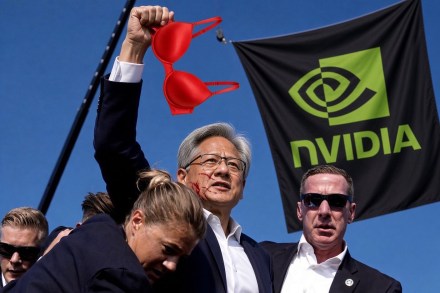
The share price had fallen too far. The clamor from the staff for his return was too great to ignore, the support from Donald Trump was ratcheting up the pressure, and none of the other potential candidates had anything like the same level of expertise. There were probably lots of reasons why the board of Nvidia, the chip giant, felt today that it had no choice other than to bring back its chief executive Jensen Huang after ousting him a little over a week ago. And yet there was a larger explanation for his sensational comeback. A huge company can’t be run by committee, nor can trillions of dollars of assets be left at the mercy of politically correct corporate rules. Sure, Huang had his flaws, no one would deny that. But in the end, the company needed its visionary leader.
jensen huang

The too-cozy arrangement between Donald Trump and Nvidia

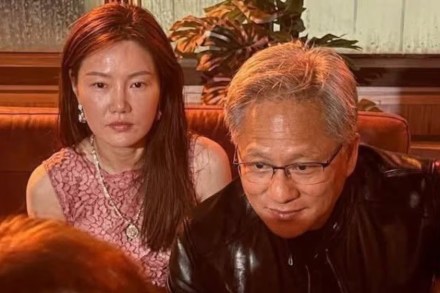
Jensen Huang has been removed from his position as CEO of Nvidia, the corporate giant that sells the chips the United States counts on to beat China in the artificial intelligence race. American intelligence agencies, the New York Times reported, determined that a woman close to Huang had been recruited by China’s spy agency, the Ministry of State Security, to collect intelligence on him. Officials who saw the intelligence believed the two were having an affair. She also worked for one of his company’s biggest customers in Asia. Alice Huang was an executive at Megaspeed, a Singapore company that rents out the use of Nvidia’s AI chips to Chinese firms. Its Malaysian affiliate bought at least $4.

Illustration

China is the real loser from the Jensen Huang affair

The pictures will be all over the internet. Social media will be buzzing with memes, the Netflix dramatization is probably already being scripted, while even the usually sober financial press will have something a lot racier than tariffs and currency swaps to write about. The affair between the Nvidia CEO Jensen Huang and the Chinese “honeytrap” agent Alice Huang makes for a great story, and one that will dominate the headlines for weeks. And yet all the speculation should not obscure one important fact. The real loser from the affair will not be Huang himself, nor will it be Nvidia. It will be China – because the operation has backfired spectacularly.  It is a story ripped straight from the pages of a spy thriller.

Jensen Huang

How Iran could end the AI boom

While Americans anxiously watch the price of gasoline tick higher as the war in the Middle East squeezes the global oil supply, the conflict has highlighted another energy vulnerability that could prove just as costly: Taiwan’s dependency on foreign natural gas. At first blush, energy issues an ocean away seem peripheral to American interests. They are anything but. Though the effect on the American economy won’t be immediate, energy insecurity in Taiwan is a looming disaster. Qatar, the source of 30 percent of Taiwan’s natural gas, has been effectively bottled up The reason is that AI – in fact, virtually all modern computing – is highly reliant upon the steady production of semiconductors in the world’s only true hub, Taiwan.

Semiconductors

Morris Chang: the microchip mogul caught between Biden and Xi

From our UK edition

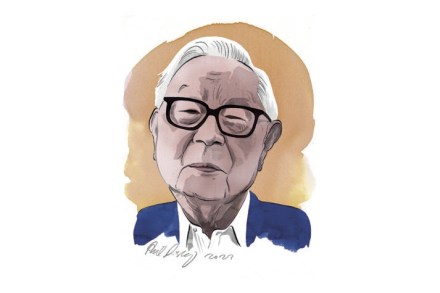
At the centre of the world’s tech sector sits a Taiwanese chip tycoon most people have never heard of. Morris Chang is the founder of the Taiwan Semiconductor Manufacturing Company, the world’s biggest chipmaker. He became rich and powerful by making chips the rest of the world can’t live without. And as the world’s semiconductor industry is being reshaped by Chinese and US efforts to control the future of chip technology, Chang finds himself courted by the world’s most powerful governments but also under pressure amid an escalating geopolitical clash. The tale of Morris Chang is not only a story of visionary entrepreneurialism and technical brilliance Though TSMC is far from a household name, almost everyone uses its chips each day.

Joe Biden has jolted China

From our UK edition

The chip war between China and America is heating up, with an increasingly assertive Joe Biden battling with Xi Jinping as he enters his third term as Chinese leader. The US last week further restricted China’s access to advanced American know-how, in what were some of the most stringent export controls for decades. Xi didn’t mention semiconductors in a speech on Sunday marking the opening of the Communist party’s twice-a-decade congress in Beijing, but he did pledge that China would ‘resolutely win the battle in key core technologies’. To compete with the US, China will need better tech. These new export controls will make Xi’s vision much harder to achieve.

America’s chip war with China

There is a joke in Taipei that if China invades Taiwan the best place to shelter is in microchip factories, the only places the People’s Liberation Army can’t afford to destroy. The country that controls advanced chips controls the future of technology — and Taiwan’s chip fabrication foundries (“fabs”) are the finest in the world. Successful reunification between the mainland and its renegade province would give China a virtual monopoly over the most advanced fabs. Given that Xi Jinping has made clear his intention to take control of Taiwan by 2032, it is no wonder that the American government is worried about the concentration of cutting-edge semiconductor technology on the island.

semiconductors

Why is Trump protecting a microchip company with close ties to China?

The United States and China are locked in a battle for technological superiority. President Trump has blacklisted tech giant Huawei over concerns the company will leverage its control of 5G networks to spy on behalf of the Chinese Communist party. The crackdown shows the administration is acutely aware of the national security implications of outsourcing network and chip technology. But the concerns don’t end with foreign-owned companies. Qualcomm, US-owned and the one of the world’s largest chip companies, has developed an intensely close relationship with China, potentially making it a trojan horse for communist influence. Qualcomm has been on Trump’s radar.

qualcomm