They say there are old soldiers and bold soldiers but very few old, bold soldiers. Well, Tim Spicer is pretty old, and there’s no question about his boldness. In a long life spent running towards, rather than away from, danger and adventure, he has consistently put the daring into derring-do. I discovered this when working for him in Iraq in 2004, just as al-Qaeda was doing its worst. He never seemed happier than when terrorists were aiming an RPG at him.
To his unflappable soldierly credentials and a buccaneering ability to make a fortune from private security we must now add a late-career talent with the pen. In A Dangerous Enterprise (2021) he told the story of the little known secret second world war flotilla operating from Devon. Last year’s A Suspicion of Spies introduced the world to the similarly neglected life of the spymaster Wilfred ‘Biffy’ Dunderdale, a friend of Ian Fleming and the real-life James Bond.
An Axe and Four Balloons continues the intelligence and special operations archaeology, and is a genuinely page-turning biography of another man curiously unstudied by history. The Scottish aristocrat David Stirling is traditionally credited with founding the elite Special Air Service, though in 1984 he himself cited five co-founders, among them the man Spicer reveals here.

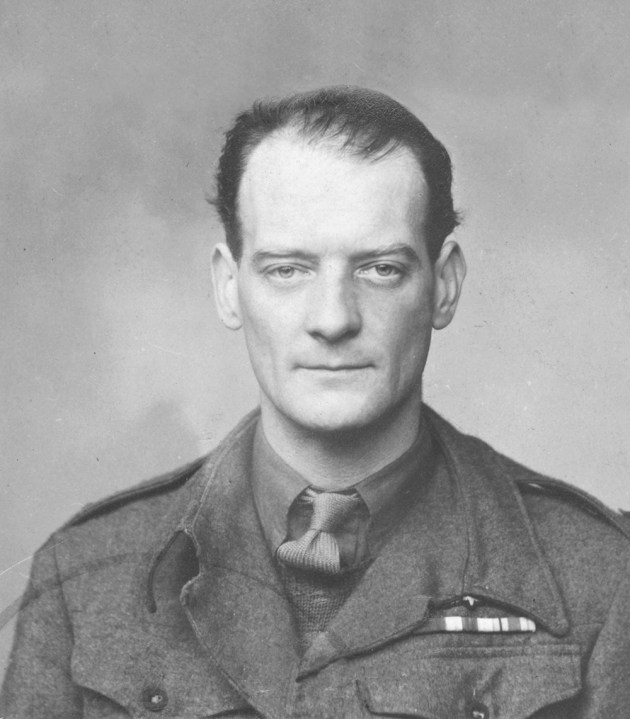
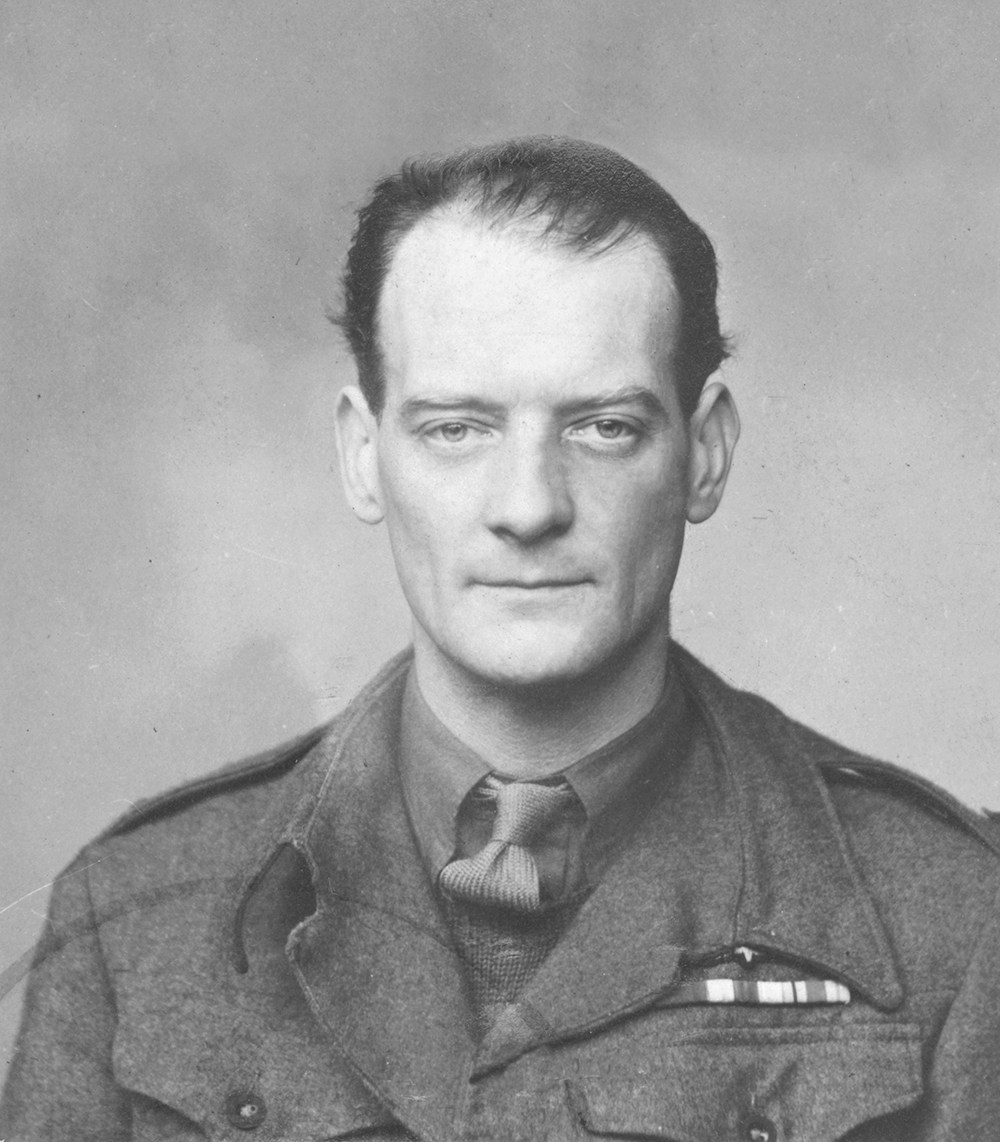
Brian Franks is a biographer’s dream. He combined vast stores of charm (honed at Eton and around the bar at White’s), personal courage on the battlefield and political adroitness off it with a gregarious ability to glide through high society, for several decades gladhanding royals, toffs, artists, writers and celebrities as the immaculately turned out boss of the Hyde Park Hotel. What Churchill said of Simon Fraser, the 15th Lord Lovat and commander of the Special Service Brigade on D-Day – ‘He was the most handsome of men to slit a throat’ – might just as easily have applied to Franks.
A special forces pioneer, he was also a superb talent spotter. Though the lazy line about the SAS having been recruited in the bar of White’s has more than a kernel of truth about it, the reality was more far interesting – dare we say diverse – than that.
In fact it was not unlike the GHQ Liaison Regiment, an unorthodox special reconnaissance unit nicknamed ‘Phantom’, which Franks briefly commanded after a stint in the Middlesex Yeomanry and evidently loved. We needn’t ask why. It was a glorious miscellany of mavericks and misfits. Franks’s childhood friend and future film star David Niven, who also served in Phantom, left a memorable description of his squadron: ‘Journalists, a Frenchman, a weightlifter, the assistant bursar at Eton, a concert pianist, an amateur steeplechase jockey, a gay interior designer, garage mechanics, bookmakers, stockbrokers and burglars.’ The SAS followed suit, with a greater smattering of grandees. After the abrupt departure of David Stirling’s brother Bill, two days before D-Day, Franks assumed command of 2 SAS in the summer of 1944.
Spicer is in his element reeling off the many special forces operations with which Franks was involved. At the heart of his story is Operation Loyton, which began in August 1944 and was intended to maximise mayhem and confusion behind German lines to allow General Patton’s 3rd Army to cross the River Meurthe, push through Vosges and into Germany. SAS success here came at a high price. Of the 92 men who took part, 31 were captured, tortured and executed in cold blood in yet another Nazi war crime. French villagers were transported en masse to concentration camps. But perhaps even more impressive than the SAS battlefield heroics in the Vosges mountains, hemmed in by overwhelming numbers of German forces, was Franks’s unbending determination to seek justice and track down his men’s killers. Remarkably, only one ultimately evaded his efforts.
In addition to France’s Croix de guerre and Légion d’honneur, Franks was awarded a DSO for Loyton, the citation praising his courage, initiative, coolness and cheerfulness, ‘an inspiration to all under his command without which the men could not have carried on’. The decorations followed his Military Cross from 1943, when, as brigade major of the Special Service Brigade, he displayed ‘complete disregard of personal danger’ during the capture and holding of Termoli, on the Adriatic. No wonder his men adored him.
Entertainingly, Evelyn Waugh emerges as something of a shit in these pages – ‘curt, condescending and abusive’ towards the soldiers – to the extent that he was considered a mission-threatening liability by fellow officers.
After the high jinks of a very good war, Franks sashayed back to the Hyde Park Hotel, which became a social and operational hub for the special forces and intelligence officers. Surely his finest achievement, pushing against the dead hand of British officialdom, was ensuring the SAS lived on beyond the war. Had it not been for Franks, Stirling conceded, ‘we would have been consigned to oblivion’. In the words of George Bernard Shaw: ‘The British soldier can stand up to anything except the British War Office.’
Action-packed and manfully researched, An Axe and Four Balloons is an absolute humdinger. The title comes from a mysterious letter Franks sent his parents from prep school in 1918: ‘Dear Mummy and Daddy, I hope you are well. Please send me an axe and four balloons…’



Comments