Heroism

Steve Austin and the age of the antihero

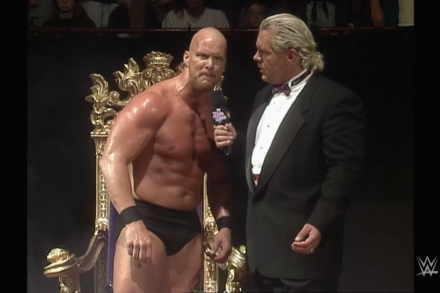
Having been fired from World Championship Wrestling, Steve Austin entered the World Wrestling Federation with the godawful gimmick of 'the Ringmaster’. He looked no more memorable than a Big Mac. Austin knew that something had to change. He wanted to adopt an edgier, more cold-blooded character. The WWF’s creative team, displaying the genius that had inspired 'Mantaur’, a wrestler who dressed up as a Minotaur, and 'the Gobbledy Gooker’, proposed such names as 'Otto Von Ruthless’ and 'Chilly McFreeze’. According to wrestling legend, Austin was at home when his wife told him to drink his tea before it turned 'stone cold’. Stone Cold Steve Austin was born. He quickly flourished.

stone cold steve austin

Whatever happened to the heroes?

Thomas Carlyle, in ‘Heroes, Hero-worship and the Heroic in History,’ divided heroes into six categories in order of human greatness as he conceived it: the hero as divinity, as prophet, as poet, as priest, as man of letters and as king, the heroic ruler of men who in Carlyle’s own description is the actual philosopher-king. In the modern world, kings have been replaced by prime ministers, presidents, strongmen and dictators; that is to say, by politicians of one sort or another. No one with the qualifying virtues of such a man would descend to the moral level of a tyrant, while no mere politician is endowed with the wisdom, gifts and virtues either of a kingly philosopher or a philosophic king, whom no democratic electorate would elevate to the office anyway.

heroes

The changing face of war and heroism

On War and Writing by Samuel Hynes is hardly about war at all. There is little about combat here, or the actual business of fighting and killing — what Shakespeare wryly called ‘the fire-eyed maid of smoky war/ All hot and bleeding’. Hynes is an august scholar of English literature and particularly the literature of 20th-century warfare. But he also served as a bomber pilot in the Pacific during the second world war, and has written an engaging, plain-spoken memoir of his service called Flights of Passage, published in 1988. His two vocations, he explains in the introduction to his new book, are ‘professor’ and ‘pilot’, and here the professor not the pilot is at the controls.