
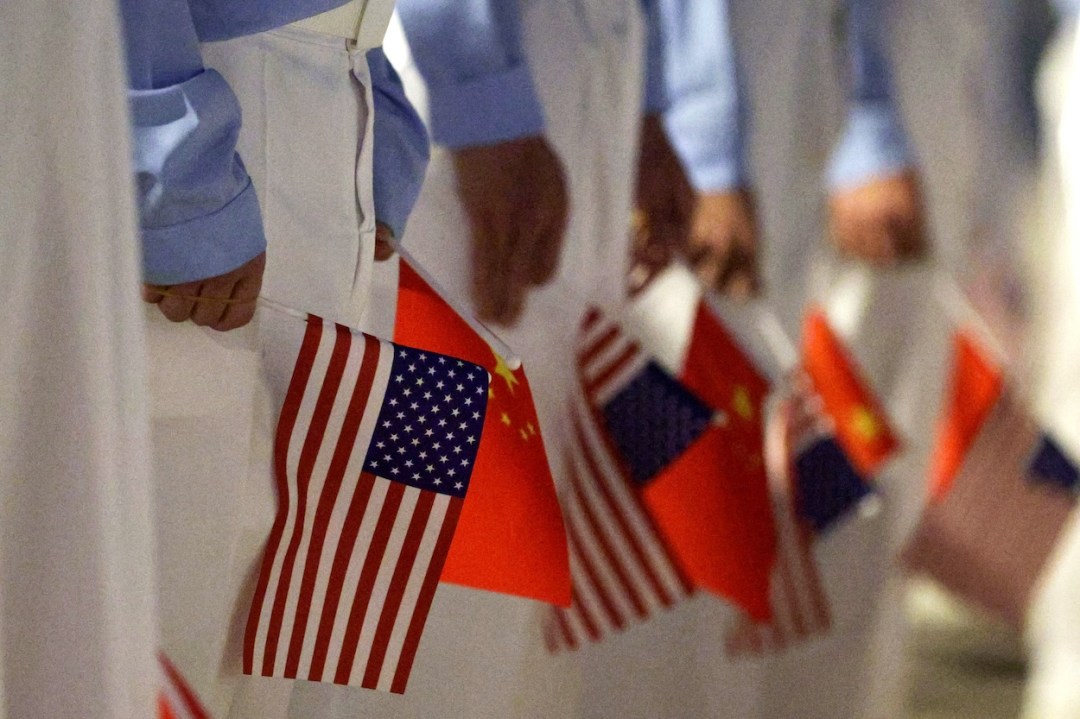
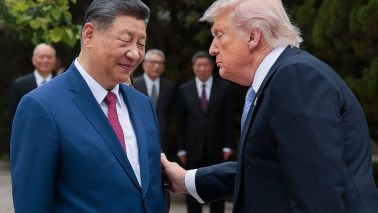
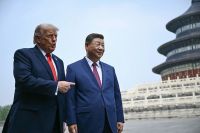
President Donald Trump struck a conciliatory tone during his trip to China. He returned from his Beijing summit with Xi Jinping yesterday full of praise for the “great leader,” who is, in Trump’s estimations, “an incredible guy.” The summit was “very successful, world-renowned, and unforgettable,” according to the President, who insisted that “a lot of different problems were settled.” But there’s one problem that hasn’t been addressed: the growing number of Chinese operations on US soil.
China’s espionage and influence operations are extensive
Last week Eileen Wang, the mayor of the southern Californian city of Arcadia agreed to plead guilty to acting as an illegal agent of China. She was once regarded as a rising political star, named “woman of the year” in 2024 by Californian Congresswoman Judy Chu, who applauded her “strong voice, leadership, and dedication to serving her community.” Her plea came just two days before a New York man was found guilty of acting as a Chinese agent, having been accused of operating a “secret police station” on behalf of Beijing.
The latest cases are “just the tip of the iceberg,” according to Michael Lucci, the founder of Armor Action, a conservative group that monitors threats from China. While the Washington DC based Center for Strategic and International Studies warned last week that Beijing has “aggressively ramped up its offensive irregular warfare activities against the United States.”
China’s espionage and influence operations are extensive. They range from attempts to intimidate dissidents living in the US to the peddling of Communist party propaganda, the recruiting of members of the military to steal state secrets to the theft of artificial intelligence know-how and the smuggling of top-end chips to train AI models. Late last year, a Chinese national even pleaded guilty to bringing a biological pathogen into the US. Multiple Chinese-linked biolabs have been found across the country, often in residential areas and with garages filled with potentially deadly viruses.
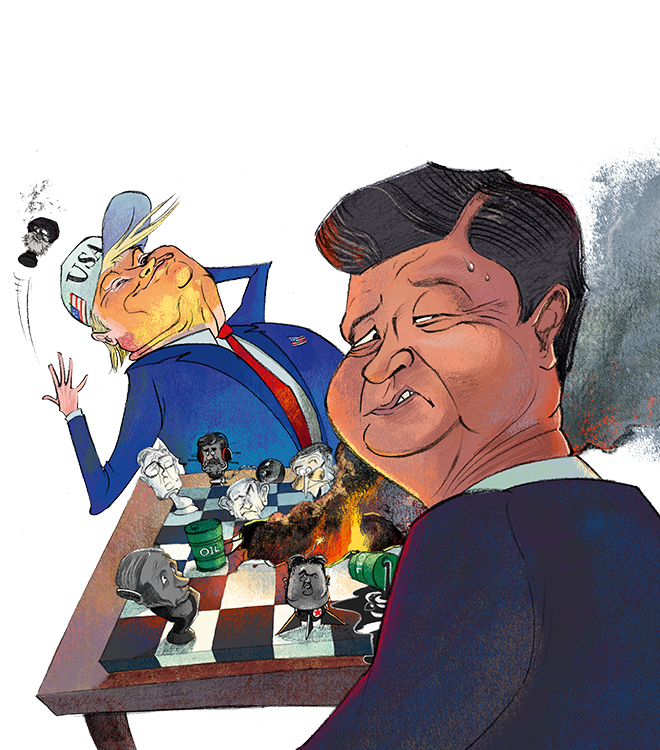
Eileen Wang, who could face as many as ten years in jail, ran a website called the US News Center, which described itself as a source of news for Chinese Americans living in Arcadia, but was accused of pumping out CCP propaganda. The Department of Justice said a Chinese government official sent Wang pre-written articles via the WeChat messaging app, a Chinese phone application widely used in the Chinese diaspora. One article identified by the DoJ denied allegations of well-documented abuse of ethnic Uyghurs in Xinjiang province.
In the New York case, federal prosecutors alleged that during a visit to China in 2022, Lu Jianwang was tasked with opening an unofficial “police station” on behalf of the Chinese government in the city’s Chinatown. He began by offering apparently innocuous services to Chinese nationals, such as help in renewing drivers’ licenses, while using this as a cover to locate a pro-democracy activist living in the US. According to Safeguard Defenders, a human rights group, China operates more than 100 of these centers in at least 50 countries, instruments of what they call “transnational repression” against opponents. Lu faces 30 years in jail.
On the eve of Trump’s China summit, Beijing was accused of massive intellectual theft from American AI labs, through a process called distillation – whereby China illicitly trains its smaller AI models on the output of larger (and expensively developed) US models. “The US government has information indicating that foreign entities, principally based in China, are engaged in deliberate, industrial-scale campaigns to distill US frontier AI systems,” according to a memo written by Michael Kratsios, director of the White House Office of Science and Technology Policy.
US prosecutors also claim to have busted an international smuggling ring that funneled advanced chips worth billions of dollars to China in defiance of export controls. The smugglers allegedly set up an extensive and lavishly funded network of front companies to get round US restrictions on the sale of chips.
Last year, the FBI revealed details of a Chinese espionage operation dubbed Salt Typhoon, whereby Beijing’s cyber spies burrowed deep inside the systems of more than a dozen of America’s largest telecoms companies, picking off high-value targets and accessing call logs and text messages. They had even compromised the “lawful intercept” system that US police and intelligence agencies use to implement court-authorized surveillance. It was the most extensive and ambitious Chinese cyber espionage operation ever exposed.
Chinese espionage is like an enormous vacuum cleaner, hoovering up technology and information on a colossal scale. It utilizes multiple intelligence-gathering techniques, both formal and informal. And it has been at the heart of China’s decades long program of economic and military modernization.
Chinese espionage is like an enormous vacuum cleaner, hoovering up technology and information on a colossal scale
Under Xi, China has become more ambitious and brazen. While all states seek to exert influence – it is, after all the stuff of all diplomacy – China’s operations are mostly clandestine, operating in the shadows, usually through front organizations and individuals. It methodically targets politicians, influential businesspeople and academics who might be useful to the party. Overseas Chinese individuals and organizations have been a particular target.
After Eileen Wang agreed to plead guilty in Arcadia, assistant US attorney Bill Essayli said: “This plea agreement is the latest success in our determination to defend the homeland against China’s efforts to corrupt our institutions.” But is America really doing enough to counter these Chinese threats? Democrat Senator Mark Warner, vice chairman of the Senate Select Committee on Intelligence, last year warned that a politically-driven purge of the FBI is damaging the Bureau’s ability to take on Beijing. A quarter of FBI agents have been redeployed from counterterrorism, cyber and espionage to immigration roundups.
Concerns have also been raised about the state of the US’s digital defenses. David Mussington, a former head of Infrastructure Security at the US Cybersecurity and Infrastructure Security Agency, the agency tasked with protecting America’s most critical systems, has warned that while adversaries are pouring money into enhancing their cyber abilities, the Trump administration has gutted CISA. Its budget has been cut by nearly half and a third of its staff has been fired.
“We made some fantastic trade deals,” Trump said as he left China. Yet little of the detail has been released, while national security seems not to have been mentioned at all. Beijing’s operations on American soil are only going to intensify until its leaders decide to act.


Comments