Julius caesar

What would Lincoln do?

If Americans are feeling gloomy as the nation’s 250th birthday approaches, they might look back to what Abraham Lincoln thought about the condition of the country in 1838 to get some perspective on present discontents. That was the year a young Lincoln, then just a state senator, delivered a speech at the Young Men’s Lyceum in Springfield, Illinois, on “the perpetuation of our institutions.” Lincoln perceived trouble ahead, but not exactly of the sort that would lead to the Civil War. He was already concerned about the lawlessness arising from racial strife, and there’s a hint of his future insistence upon the truth of the Declaration of Independence’s assertion that “all men are created equal.

lincoln

Was the left right about Emperor Trump?

Everyone wants to be an American, right? Or to enjoy our way of life anyway. So it would seem as millions continue to risk life and limb to get into the United States illegally, while others make monumental sacrifices to become naturalized. Still, things may get easier for people wanting a taste of America if President-elect Donald Trump’s imperial dreams come true.Left-leaning outlets have been panicking for a while now over the possibility that a second Trump term would result in an American Empire of sorts. Trump’s reign would be eerily similar to Julius Caesar’s, Politico warned ahead of the 2020 election; the pair’s similarities are “uncanny,” the Globalist declared in October 2024.

What America should heed from Julius Caesar’s assassination

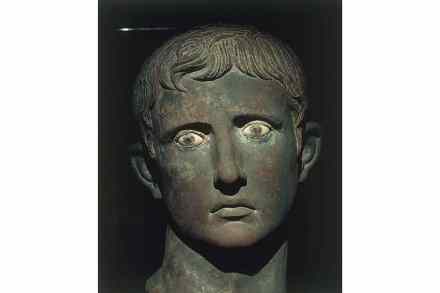
It being the Ides of March, I thought it might be worth reflecting briefly on the most famous event that occurred on this day: the assassination of Julius Caesar in 44 BC. One of the great ironies surrounding that bloody event is that, for all of the upheaval it occasioned, it failed utterly in its stated purpose. The conspirators sought — or said they sought — to overthrow a dictator and restore the Republic.  “The Republic,” “the Republic,” “the Republic”: that was the phrase they uttered ad nauseam. But the Roman Republic, devised to govern a city state, was overwhelmed by the cosmopolitan responsibilities of empire. By Caesar’s day, the Republic was a tottering and deeply corrupt edifice.

ides of march caesar

The Roman Empire’s years of glory

The Roman emperor Domitian began life as a spare. At the end of the first century CE, while his brother Titus was the heir to their father Vespasian, the younger boy’s “sense of resentment and frustration had festered,” writes Tom Holland. “Rather than stay in Rome, where his lack of meaningful responsibility was inevitably felt as something raw,” Domitian moved away with a wife whom his family disliked, “doomed forever to be a supernumerary,” paranoid, attracting gossip, avoiding any company in which “innocent mention of baldness” might be viewed as “mockery of his own receding hairline.” In most judgments by posterity this Prince Harry of the early empire fulfilled all this lack of early promise. Big brother Titus became emperor only briefly.

Roman

Shakespeare is getting trigger warnings

Hark, groundlings: Shakespeare, after decades of being found to be Problematic, is now being reclaimed as the wokemeister-in-chief. New York’s Shakespeare in the Park company returned to Central Park this summer with a staging of The Merry Wives of Windsor, adapted by the Ghanaian-American playwright Jocelyn Bioh. The action, traditionally located in the white-supremacist purlieus of 17th-century Windsor, is now transposed to 116th Street in Harlem. The cast is mostly black, the script has been updated to contain references to Black Lives Matter and the Bronx, and Jacob Ming-Trent portrays the portly knight-about-town Falstaff as a wannabe gangsta. The critics love the production.

shakespeare

Eliminating Qasem Soleimani was Donald Trump’s Middle East farewell letter

In July 55 BC, in the midst of his campaigns to civilize Gaul, Julius Caesar was troubled by the Germans. They would cross the Rhine, wreak havoc, and then disappear back across the mighty river, whose depth and swift currents made the Germans regard it as an impregnable barrier. To teach them that it wasn’t, Caesar had his engineers construct a bridge across the Rhine. As Caesar recounts in Book IV of his commentaries on the Gallic War, they did this in an astonishing 10 days. Caesar and his troops crossed over, stayed for a few days in German territory, 'burned all their villages and other buildings, and cut down the grain in their fields'. They then crossed back over and destroyed the bridge.

qasem