Hunting Alice Bell began with an angry mob (is there any other kind?) outside a court building in 2012 brandishing misspelled placards and screaming at the eponymous Alice, who’d been convicted of providing a false alibi for her serial-killing former boyfriend. They were also, of course, having the time of their lives.
We then cut to the present, when the fun of angry mobdom was flourishing online. After serving 18 months, Alice had been granted lifelong anonymity, but a masked man called True Crime Buster was now racking up the likes by ‘revealing’ that she was living in his hometown as Fran Da Silva – and urging his followers to ‘make her pay’.

Soon, Fran (Alexandra Roach) – a happily married leisure-centre administrator with a baby – was besieged by blokes in balaclavas who gleefully scorned her denials. (In their defence, denying she was Alice is exactly what Alice would do.) She was also suspended from work and treated with suspicion or flat-out cruelty by the authorities.
Hunting Alice Bell is by David Baddiel and Guardian film critic Peter Bradshaw – and presumably their idea is that all this should be horrifyingly plausible. Well, horrifying I’ll definitely give them. The ‘plausible’ part, though, felt less nailed-on. Would the police really take such a firm no-smoke-without-fire line on the mob’s behaviour? Would social services really insist her baby be removed to her mother-in-law’s?
Then again, perhaps the programme is best seen – and certainly most enjoyed – not as realism, but as a dark, rompy parable of online madness. In other words, my advice would be to answer the above questions with a brisk ‘let’s just say “yes”’, get that disbelief suspended and let yourself be swept along by a nicely twisty thriller with a large side-dish of troubling contemporary issues.
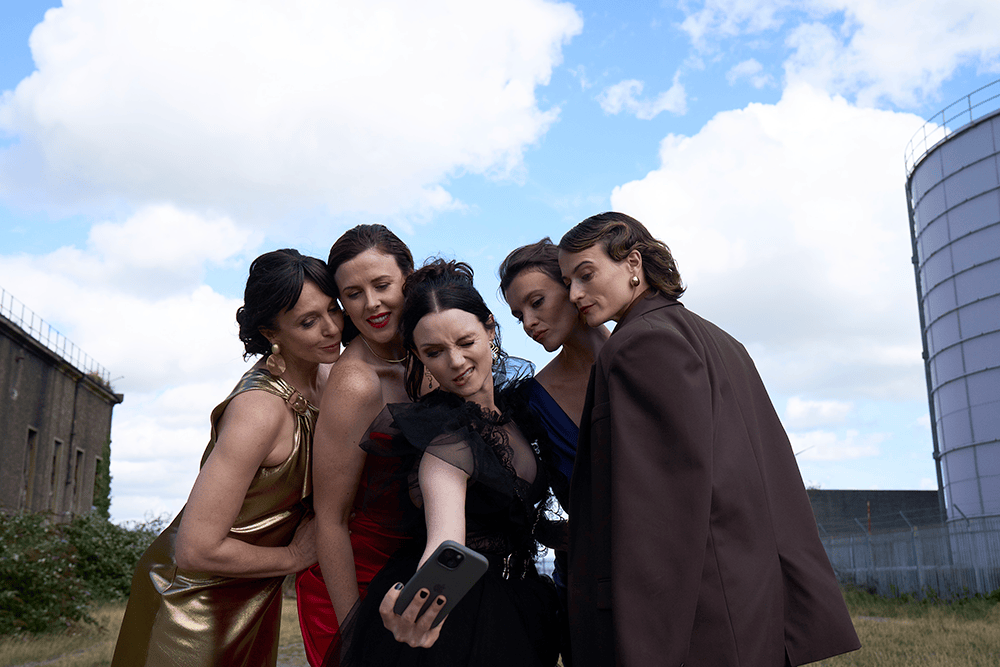
Indeed, the longer the show went on, the handier this tactic became. By episode two, Fran had made contact with four other women from around the country who were in the same boat, and the quintet had formed the ‘Not Alice Bells’ group to fight back against their persecution. Their self-appointed leader, Vanessa, is a high-flyer in PR (or was until the rumours about her being Alice spread), and therefore says things like ‘toxic misogyny is so now’. She also arranged a TV interview where the group were roundly patronised as fuss-makers by a senior copper – until Fran described his remarks as ‘total cocking bollocks’.
Where appeals to common sense had failed, the fact that this clip went viral instantly did the trick: True Crime Buster was arrested, the police provided Fran with round-the-clock protection and her baby was returned. Again, this didn’t feel terribly likely; but, again, my advice would be to ignore the implausibility and, this time, feel the deft irony – that the fatuous tyranny of online clicks was the only thing that could get Fran out of the trouble caused by the fatuous tyranny of online clicks.
And so to this week’s biggest twist: apparently one of the five women really is Alice. Why she’d join the group seems a particularly stern test of our disbelief-suspension skills. Yet, this development also has the neat effect of making us into a mob, hunting Alice Bell and having a cracking time as we do so.
After two episodes, I’m still not sure the show has decided what it wants to be, with its various elements feeling jumbled together rather than coherently combined. What I do know, however, is that I’m much looking forward to the rest of the series.
Morgan once more pulls off the nifty trick of making an intelligent show out of endless dumbness
Cunk on Cinema is Diane Morgan’s latest appearance as the brainless Philomena Cunk. As ever, all her intonations and gestures are spot-on pastiches of a serious TV presenter – the one problem being that most of what she says is, well, total cocking bollocks.
But only – and this is the cunning bit – most of it. Occasionally, she stumbles into things that might actually be true; or, at any rate, worth a ponder. Buster Keaton, for instance, ‘maintained a deadpan face even while his life collapsed around him – like we all fucking do’. Battleship Potemkin is one of cinema’s ‘unwatchable masterpieces’ because ‘what it lacks in superheroes, car chases and love scenes, it makes up for in black-and-white shots of people shouting’. (Full disclosure: I’m quoting pretty randomly here, as virtually every line is flawless.)
Weirdly, too, buried amid Cunk’s malapropisms and wild misunderstandings is what might almost be described as a proper history of cinema, with Morgan once more pulling off the nifty trick of making an intelligent show out of endless dumbness.
Sometimes, in fact – and this is the other cunning bit – it’s not easy to tell which category is which. Is it stupid or clever, for example, to say that LA became the centre of film-making because it ‘had a free overhead lamp called the Sun’?






Comments