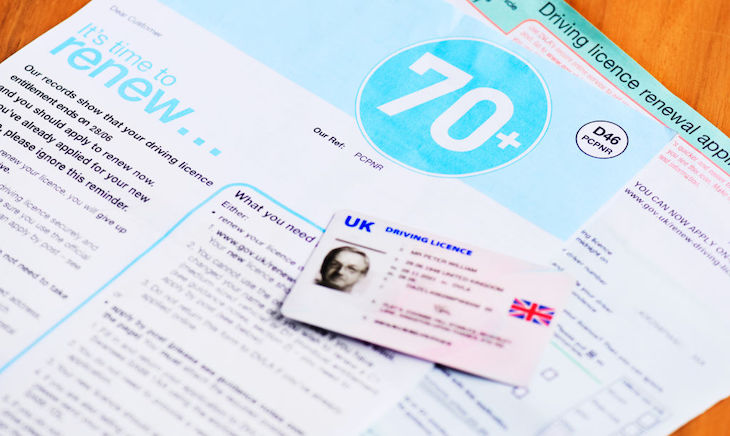
Drivers over the age of 70 will soon need to have their eyes checked every three years in order to keep their licence. This is elementary common sense. For want of a kinder word, older motorists in Britain are a menace. Elderly drivers are responsible for a large number of accidents and fatalities. Almost one in four (24 per cent) of drivers killed on Britain’s roads were aged 70 or older. To make Britain’s roads safer, a crackdown on old, dangerous drivers is long overdue.
Older drivers who cannot see properly stay on the roads in denial
Casualties from accidents involving older drivers increased by 12 per cent, while those caused by all other age groups fell by 45 per cent between 2004 to 2023, according to the Office for National Statistics. Traditionally, it is young men who are disproportionately dangerous on Britain’s roads. As Britain becomes an older society, it is the elderly who are now causing plenty of danger to their fellow drivers and pedestrians.
Poor eyesight is not the only reason for this, but it is a significant one. At present, once you’ve got your driving license it’s effectively yours to keep. Drivers of any age are not required to prove their skills or health once they are allowed to legally drive. In theory, people who become unfit must tell the Driver and Vehicle Licensing Agency (DVLA). But it’s easy to avoid doing so; it’s also easy for older drivers not to notice – or refuse to see – how their declining health is affecting their ability to drive safely.
Older drivers who cannot see properly might stay on the roads in denial – or they might actively lie about their capacity to drive. But in either case, until they have an accident or are stopped by the police, they remain a big danger. Thankfully, this situation should soon change: as part of a series of road safety reforms announced today by the government, motorists aged 70 and above will no longer be allowed to self-report visual diseases.
This shake-up has, understandably, provoked a backlash from elderly drivers. The reasons why are understandable. People need to travel. Many fear isolation if they give up their means of transport. Driving is more convenient than buses or taxis. Owning a car ensures independence. It gives a sense of self-worth. It’s a right that, once won, is hard to surrender. Giving up your car keys seems like a punishment for something you didn’t do, besides growing old and becoming a danger to others.
But, understandable though these reactions are – at least psychologically – the rest of the country must not be held hostage by old drivers who should not be on the road. There were an estimated 1,579 fatalities on Britain’s roads last year. There is no good reason why driving should be so lethal. As driver assist systems in cars improve, and as self-driving limps closer, we should see the effects in the numbers of deaths and injuries on the roads. At the moment, progress on this is too slow. There is no doubt that removing old, dangerous drivers from the roads would make things far safer.
We all have personal experience with elderly relatives refusing to face the facts about what a danger they are. Many people I know kept driving long after it became a terrible palaver. Despite opticians making increasingly pointed statements that perhaps now was the time to give the car up for good, they refused to listen. The law as it stands says that people in that position should notify the DVLA. But it does not make them. This is a problem – and a situation which costs too many people their lives.
Mandatory eye tests, with a proper reporting function, would diminish the extent to which elderly people who can’t see remain on the roads in good faith – and diminish the extent to which they can lie about being able to see, too. Those who end up losing their licence under this road safety shake-up will no doubt complain. But the rest of us should be grateful that our roads will be safer as a result.




Comments