
Society has always had an issue with women aging. As cosmetic surgery becomes cleverer, more subtle, and more widespread across women in the public eye, it can feel taboo to allow the smile lines to stay, the grey hairs to amass. To not seek to dye, to slim, to trim, to tighten, to pull, to tweak, to cover up – no, to defy! – the physical symptoms of the inexorable human process of getting older. Men mature like fine wine; women decay like compost. Or so we’re led to believe.
But even in that context, the decision of a certain classic British brand to give their older, maternal (cartoon!) figure a ‘glow-up’ which, essentially, amounts to making her look considerably younger, feels like we may have entered the twilight zone.
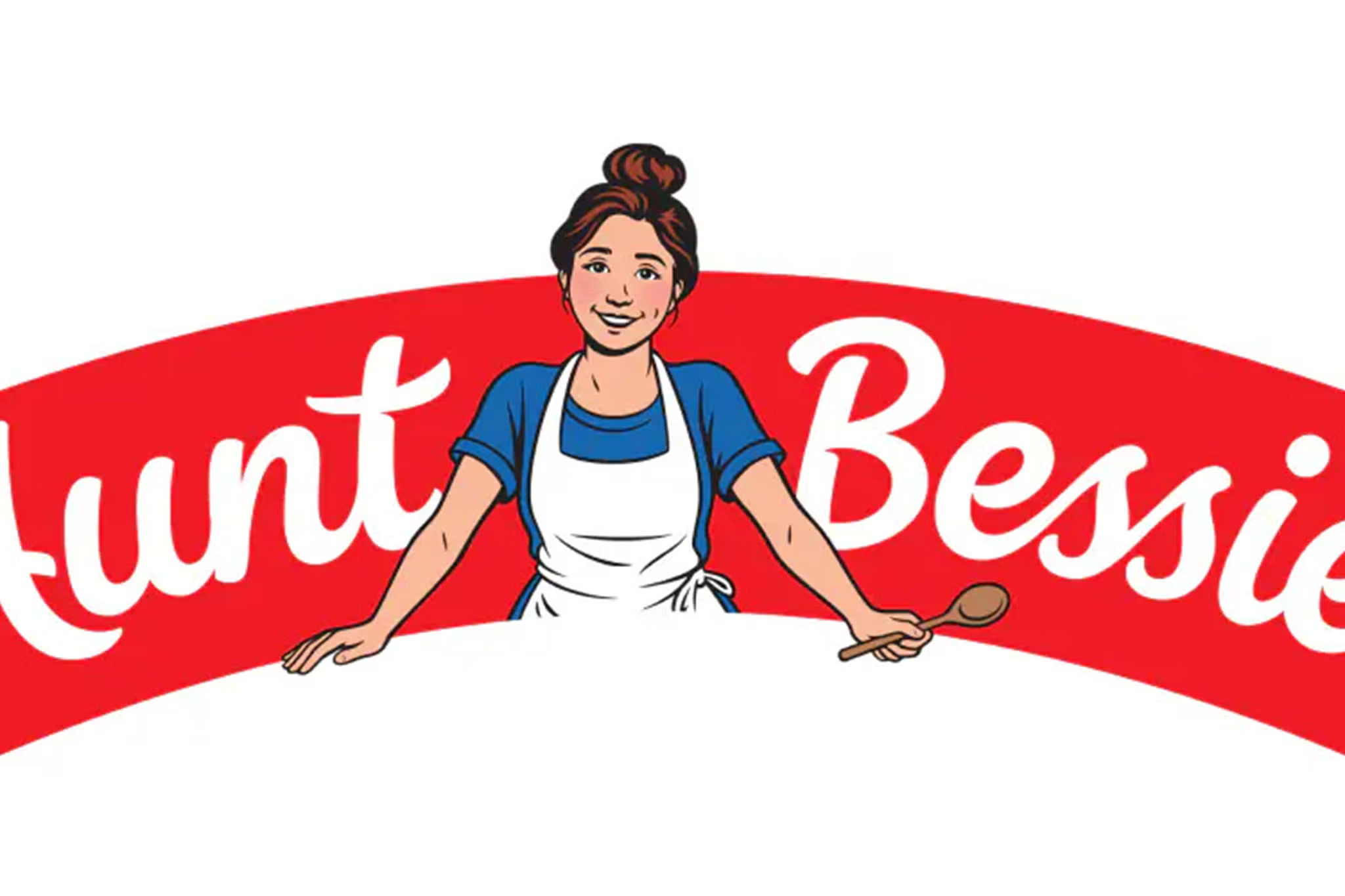
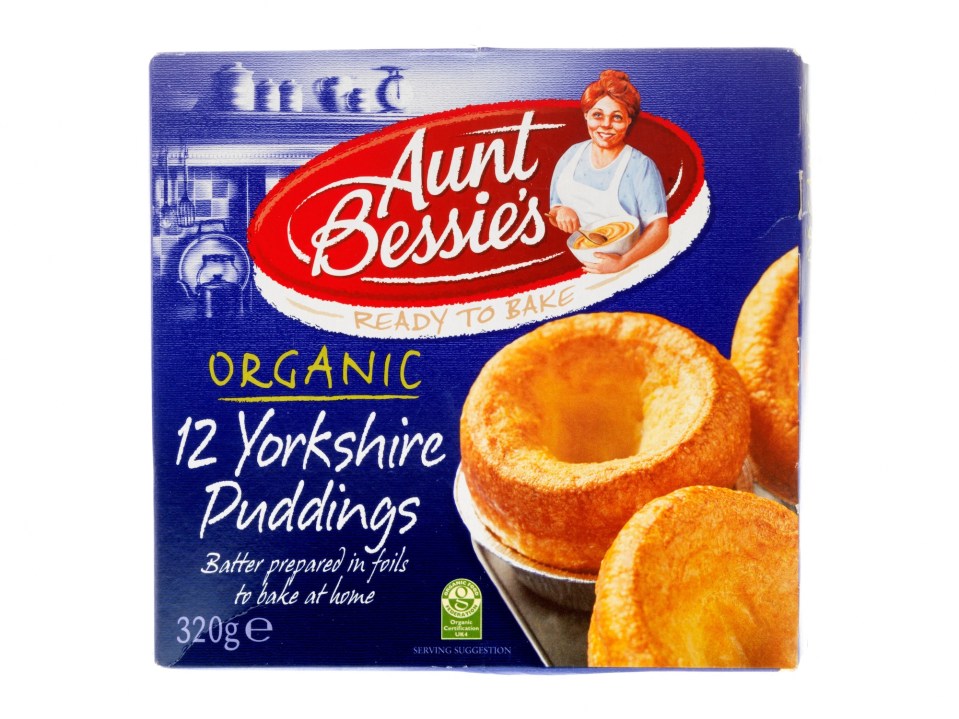
That’s right, Aunt Bessie, long-time Aunt of the nation, provider of roast-saving, zero-effort, shove-’em-in-the-oven yorkshire puddings has gone all Dorian Gray on us. While her original portrait sits in an attic somewhere, presumably getting even older and more repulsive, the new-and-improved Aunt Bessie is looking distinctly younger.
That’s really the only change: Bessie’s glow-up – save for her now holding a spoon, rather than a bowl and a spoon – means that she looks considerably younger.
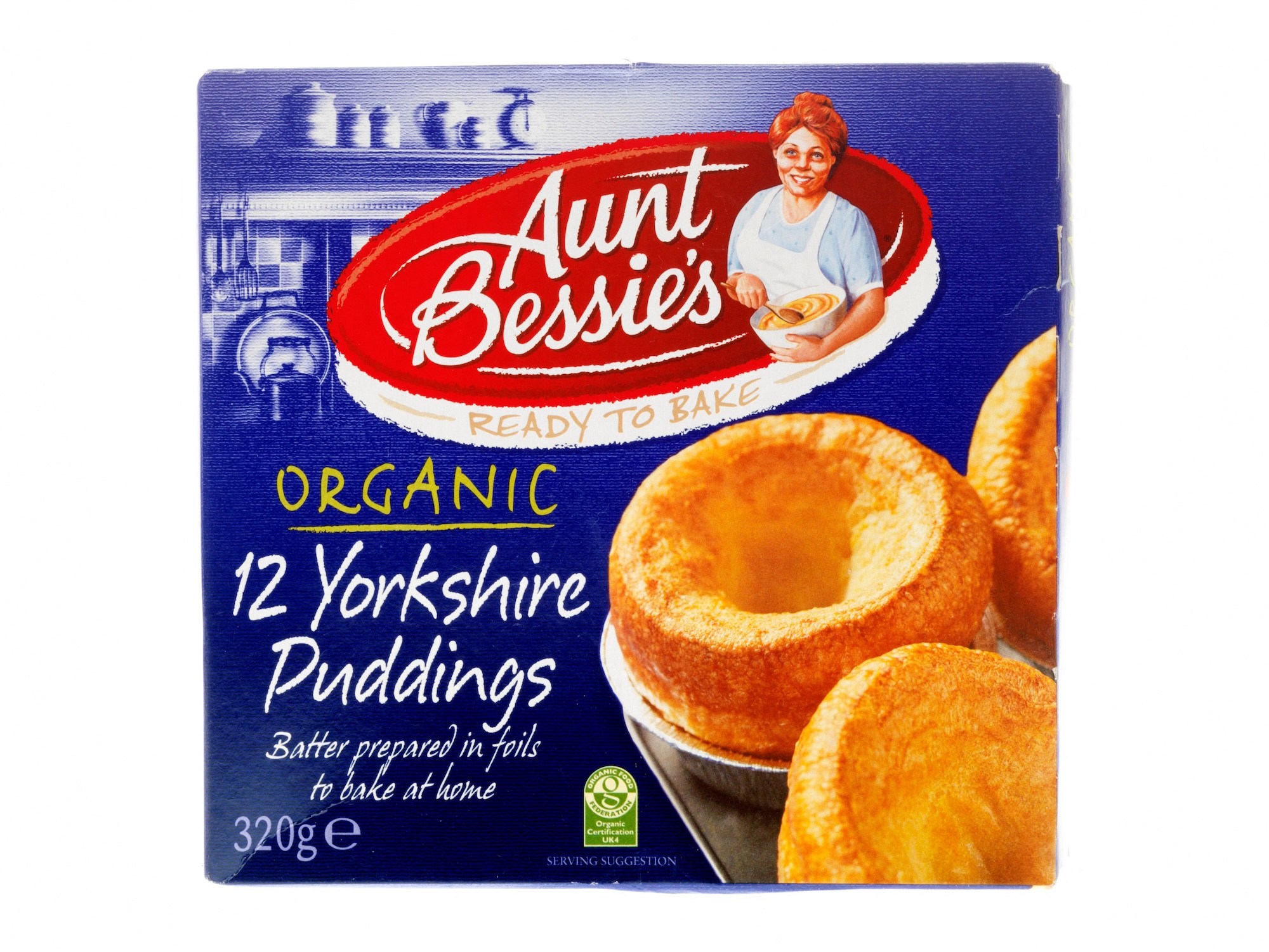
As a brand, Aunt Bessie’s isn’t as old as it feels – which was, perhaps, rather the point of the mature-looking Bessie in the first place. The frozen yorkshires were first created for Butlins in 1974 by a Hull-based manufacturing firm. In 1995, when they began supplying supermarkets (a brief stint where they just made the puds for Iceland came first), a separate food manufacturing division was set up, under the name Tryton foods. Quickly, they realised that ‘Tryton’ suggested ‘bathrooms and showers or inter-continental ballistic missiles’ more than it did hot fat and batter. So the ‘Aunt Bessie’s’ name was born. And with it, the Aunt Bessie cartoon we’ve all become used to: an older woman, hair tied up, arms clasped around a mixing bowl. The character connoted familiarity, home cooking, comfort and heritage.
The brand’s statement on the matter is somewhat equivocal: they call Aunt Bessie ‘a national treasure who has been part of the family for decades, so we thought it was about time she received the glow-up that she deserves. Her arms are wide open because that’s what we’re all about, welcoming people to the table, no matter what day of the week.’ No mention then of the Benjamin Button-ing of Aunt Bessie; don’t take your eyes off her arms! But even at a glance, it’s clear: the eye wrinkles are gone, the cheeks are flushed, and the face and form are slimmer. And this, really, is what rankles: it’s not just that it feels inexplicable to change a household brand after 30 years, it’s not even that the change is to make the familiar older woman significantly younger. It’s the disingenuity of referring to it glibly as a ‘glow-up.’
What was wrong with the old Aunt Bessie?
Does this matter? Really? It’s not like Aunt Bessie is a real person. Call me hypocritical, but I didn’t feel outrage when they sexed-up Captain Birdseye in the TV adverts, making him younger and more rugged (and he was based, in part, on a real person, Clarence Birdseye, the non-seafaring non-captain creator of the brand and innovator in frozen food); I have no feelings on the changes in Tony the Tiger over the years.
But this one feels personal, not least because it seems pointless. What was wrong with the old Aunt Bessie? Were the company hoping to appeal to the youth by showing them a cartoon illustrated woman they might find more relatable? Are they concerned that Generation Z would otherwise be buying up frozen yorkies in their dozens if only the sweet woman on the packaging was close to them in age?
Whatever their reasoning, the new, younger, brighter-eyed and bushy-tailed Aunt Bessie seems here to stay. Aunt Bessie’s, which is now owned by Birds Eye, apparently makes 20 million yorkshire puddings a week. That recipe has remained unchanged since 1974. But as of today, the same cannot be said of Aunt Bessie.





Comments