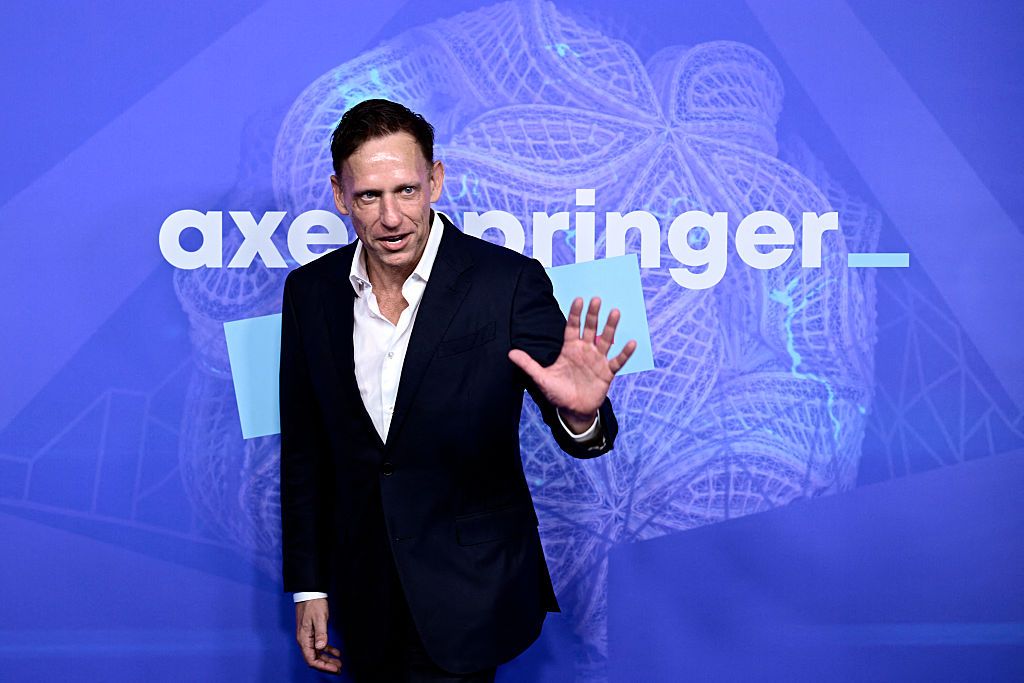
In Trump World, there are whispers that one of the boss’s biggest failings is his choice of personnel. Some claim that Donald Trump’s appointees are toadies, disasters or novices, and that they drag down the effectiveness of policies that make sense for America. Peter Thiel, the billionaire tech chairman of Palantir, has criticized on Trump’s ill-chosen apprentices.
In a podcast interview with Axel Springer CEO Mathias Dopfner, Thiel laid out a harsh view of Trump’s second term compared to his first:
I think the two administrations made opposite mistakes. The first administration brought in all these people who couldn’t agree, and it was just all this internal fighting. The second administration, I think overcorrected for the mistake of the first term with all these loyalty tests. You got an administration staffed by not very smart, but very loyal people.
There’s no doubt that at key moments, Thiel has been highly influential within MAGA. He was one of the few Silicon Valley figures to back Donald Trump back in 2016 – he was a major donor and spoke at the GOP convention – but since then, he has blown hot and cold on Trump personally.
Donald Trump constantly describes his approach to staffing as being ‘straight out of central casting’
However, Thiel scored big when Trump was searching for a 2024 running mate. He had introduced his former employee, J.D. Vance, to Trump at Mar-a-Lago in 2021 and patched over Vance’s earlier searing criticism of Trump. The next year, Thiel’s $15 million donation to a Vance super PAC helped propel the 38-year-old first-time candidate into a US Senate seat in Ohio. In 2024, he privately urged Trump to name Vance as his running mate. With Vance now installed as Trump’s Vice President, Thiel has a direct pipeline to the frontrunner for the GOP presidential nomination in 2028.
All of which makes Thiel’s recent comments to Dopfner meaningful. Can anyone familiar with the record of Cabinet secretaries Pete Hegseth (Department of War), Kristi Noem (Homeland Security), Lori Chavez DeRemer (Labor) and Todd Blanche (Justice) disagree that much with his conclusion?
Donald Trump constantly describes his approach to staffing as being “straight out of central casting.” He wants people to look, sound and fit a traditional stereotype of the role they are filling. Often the image doesn’t match up with the hoped-for substance.
Former Trump aides tell me his approach often leads to the spotty results you’d expect from Central Planning rather than Central Casting. His endorsements in key Senate races are seriously endangering Republican control of that body.
Darline Graham, the political novice and sister of the late senator Lindsey Graham, was hauled across an August primary finish line by a Trump endorsement. But she currently leads her Democratic opponent by just one or two points in the Ruby Red state of South Carolina. Texas Attorney General Ken Paxton, has been an undeviating follower of Trump, but for the last two months not a single poll has show him leading in a state which has only elected Republicans in every US Senate race since 1994. Paxton has been mired in so much ethical sleaze that one Texas Republican congressman told me, “You could walk through his deepest integrity and not get your ankles wet.”
The Republican party has prided itself on opposing DEI “bean counting” and exalts meritocracy in the economy. The irony is that it has too often watched Trump fall into the trap of promoting clueless or venal loyalists to the top positions.
A former Trump White House official told me that Thiel’s analysis is spot on. “In the first term, the Oval Office was fairly open and people would disagree with the president. That very rarely happens now, and almost no one contradicts him no matter what he wants to do or name after himself.”
Donald Trump came to power vowing to “drain the Washington swamp” of its soft corruption and favor seeking. As Democrats will demonstrate if they seize control of oversight hearings in one or both houses of Congress next month, the water may have changed color from blue to red under Trump, but its fetid quality remains the same.
“If something is broken, you fix it,” Donald Trump frequently said during all three of his presidential campaigns. In next month’s midterm elections, the danger Trump faces is that too many voters will conclude the system is still broken and a partial way to fix it is to limit his authority.
Republicans, who have largely looked the other way as Trump’s bull-in-the-china-shop approach has alienated independent voters, will have to debate if that remains a sound strategy in the run-up to the 2028 elections.




Comments