
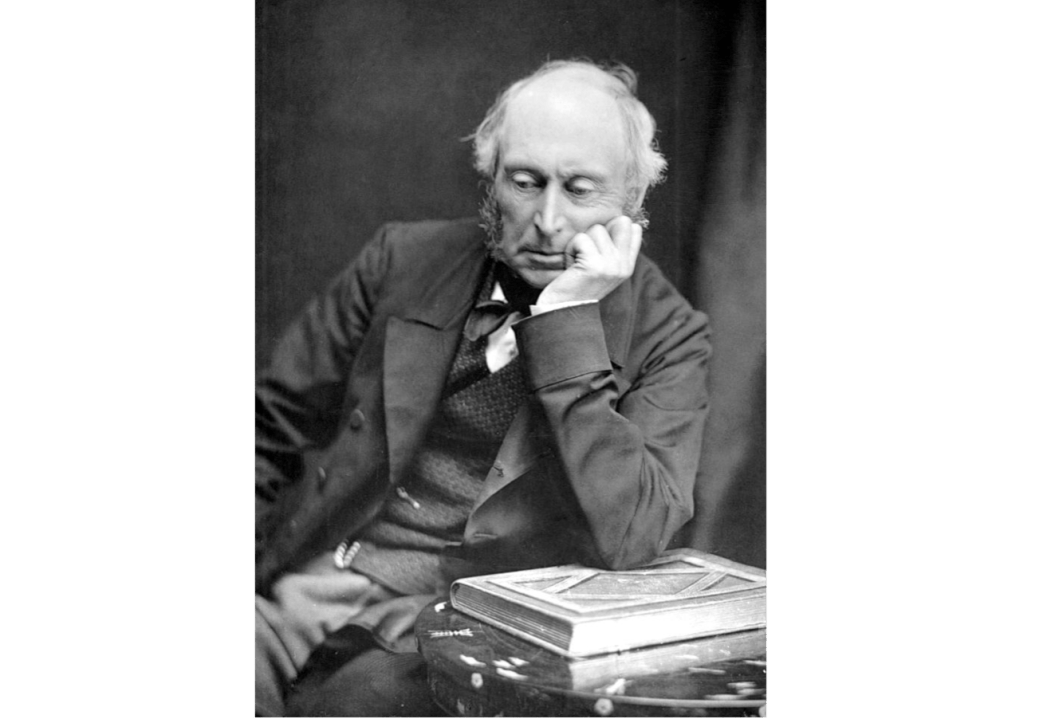
Even if you are not from the north-east of England, you may be aware of William Armstrong. The son of a wealthy Newcastle corn merchant who became the city’s mayor, he had a passion for engineering and innovation of all kinds. In particular, he invented a breech-loading field gun with a rifled barrel which was lighter, more accurate and had a longer range than the weapons the Royal Artillery possessed in the 1850s. He gave the patent for the Armstrong Gun to the British government and was knighted in 1859, then received a peerage in 1887; he also made a lot of money.
We are increasingly demanding the condemnation of public figures not just for what they did, but for what they failed to do
Like many wealthy Victorian industrialists, Armstrong believed strongly in philanthropy and public benefaction. He donated Jesmond Dene, a wooded river gorge, along with Armstrong Park and Armstrong Bridge, to the city of Newcastle upon Tyne. He was president of the Literary and Philosophical Society of Newcastle and the Institution of Mechanical Engineers. A donation of £11,500 (worth around £10 million today) paid for the Hancock Museum of Natural History, while a bequest of £100,000 (about £75 million in 2026) funded half the construction of the Royal Victoria Infirmary. And for more than 20 years he supported and funded the establishment and development of Newcastle’s College of Physical Science, later renamed Armstrong College, which grew into the University of Newcastle upon Tyne.
Overall, Armstrong donated the equivalent of more than £100 million – but one major beneficiary is now asking questions about the ethics of that money. The University of Newcastle is facing calls to rename the Armstrong Building, one of its oldest buildings, and the dreaded word ‘slavery’ has entered the conversation.
Was Armstrong a slave-owner, you ask with crestfallen disappointment? Well, no: he was born in 1810, three years after parliament had passed the Slave Trade Act 1807 which prohibited ‘the African Slave Trade and all manner of dealing and trading in the Purchase, Sale, Barter, or Transfer of Slaves, or of Persons intended to be sold, transferred, used, or dealt with as Slaves’ within the British Empire. Armstrong was a young solicitor when the Slavery Abolition Act 1833 did away with the very institution of slavery in British territories. Neither he nor his family owned land or slaves in the Caribbean.
But Armstrong made and sold guns. Worse, his Elswick Ordnance Company supplied arms to both the Union and the Confederacy during the American Civil War. Now Dr Fionnghuala Sweeney, a reader in American and Black Atlantic Literatures at Newcastle, has found evidence that he supplied more guns to the Confederacy than had previously been thought – and found no evidence the company sold to the Union.
She argues that Armstrong ‘must have been loading these huge guns on the Tyneside docks on to ships that he knew and possibly everyone knew’ were being sold to the Confederate States. Moreover, it is evidence that Armstrong’s commercial affairs helped to erode ‘Newcastle’s radical emancipatory tradition [which] had been eclipsed by military industrialism that had supported the Confederacy and was now underpinning the rise of imperialism’. Therefore, there should be a ‘rigorous’ discussion about renaming the Armstrong Building – though it is hard to imagine Dr Sweeney supporting the status quo.
There are two issues at stake here, in the particular and in the general. The former is a matter of accumulated detail. There is no suggestion that Armstrong had a direct or personal commercial or financial involvement in slavery or the slave trade. He was not a plantation owner or a trader in sugar or tobacco. Nor is it revelatory new evidence that his company sold weapons to the Confederate States during the American Civil War.
From the first months of the conflict in 1861, Britain had declared its neutrality and recognised the Confederacy as a belligerent party – which was not the same as granting formal recognition as a state or exchanging ambassadors. British businesses remained free to trade with both sides, but overall the UK economy took a severe hit. The virtual cessation of the import of cotton from the southern states led to an acute shortage by 1862, resulting in a brutal depression in the north west and the Lancashire cotton famine which may have caused 24,000 excess deaths due to economic deprivation.
It is also worth pointing out that Armstrong had no personal financial interest in Elswick until 1864: the company had been created to avoid any conflict of interest while Armstrong was working for the War Office as engineer of rifled ordnance. Meanwhile, the Civil War came to a close in April 1865, and so there was very little overlap with Armstrong. Still, for some that association is already too close.
More broadly, where does this end? Dr Sweeney uses a sinister phrase. She laments finding ‘no evidence that Armstrong or his business partners ever expressed anti-slavery views or were involved in anti-slavery or related networks’.
This is the heart of the matter. We are increasingly demanding the condemnation of public figures not just for what they did, but for what they failed to do and even how they thought. To a 19th-century industrialist, ‘involvement in an anti-slavery network’ would have been nonsensical. Armstrong might also have thought that Britain was doing its bit by funding the Royal Navy’s West Africa Squadron, which from 1808 to 1867 patrolled from Cape Verde to Benguela, intercepting suspected slave ships and freeing enslaved Africans.
But no. Armstrong did not think or act like a modern progressive activist, and the vast sums of money he spent on what is now Newcastle University and all the other causes cannot wash away that sin.
To be helpful, I have a compromise to suggest. The university should add up all the money it has received directly or indirectly from Lord Armstrong, calculate the interest accumulated over the last 125 years, and return that sum to the Armstrong family. After all, a wrong is a wrong at any time, and they were clearly wrong to accept his bloodstained philanthropy to begin with. Then his name can be removed with a clear conscience. Does that sound reasonable? No, I thought not.




Comments