Edward Hopper was once asked what he was ‘after’ in his paintings. At first he didn’t respond. Then, ‘on further interrogation’, he answered, emphatically and with some exasperation: ‘I’m after ME.’ Many artists could probably respond in the same way. The puzzle is how this shy, taciturn, solitary man revealed his inner self in pictures of such subjects as a row of shops in Manhattan, a gas station on a lonely road or an ornate 19th-century house beside a railroad track.
The answer, perhaps, is that Hopper’s paintings possess what Tracey Emin calls ‘the thing’. That is, they have a pulsing, disquieting inner life, though where it comes from is hard to say. A new biography, Edward Hopper: A Life by Louis Shadwick (Yale, £30), takes the reader closer to Hopper the man and artist than any writer has reached before. It is painstakingly researched and stylishly written. Even so, there are mysteries that no outsider can fully fathom, an example being the ceaseless friction of Hopper’s marriage. Probably no one except the two participants really knew the truth about that.

The British painter Michael Andrews (1928-95) once described his own idiom as ‘mysterious conventionality’ (a bit like Hopper’s). His subjects were often unremarkable – the shadow of a balloon on the sand, a crowded room, the Thames at low tide, tropical fish in a tank – but something makes them both enigmatic and beautiful.
During his lifetime, Andrews seemed an eccentric individualist. Thirty years on it is apparent that, unexpectedly, he has developed a posthumous following. Hurvin Anderson is one leading contemporary painter who has visibly been affected by his work. Up until now there has been no book-length study of Andrews, so the scholarly, comprehensive and beautifully produced Michael Andrews: Painter of Masterpieces by Christopher Lloyd (Modern Art Press, £30) is extremely welcome.
Artist’s books – that is, publications conceived by artists rather than ones about them – are an underrated category, perhaps because they lend themselves to solitary consumption and are tricky to exhibit. But among them are masterpieces, such as Henri Matisse’s Jazz. One of the wackiest is Andy Warhol’s Index (Book), a compendium of whimsy, drollery, deadpan nihilism, inconsequentiality and off-the-wall nuttiness.
Interspersed with black-and-white photographs of the people who hung around the Factory, as Warhol’s Manhattan studio was known, are such features as a full-colour pop-up paper facsimile of a tin of Hunt’s tomato paste, a bright red concertina which also pops up, and a removable piece of paper printed with the words ‘Andy Warhol’. The reader is instructed to immerse the latter in warm water, whereupon it dissolves and the letters float away.
What does it all mean? Warhol would no doubt have delighted in replying: ‘Nothing.’ On the other hand, the Index (Book) is full of the essence of Andy. Intact copies of the original from 1967 are hard to find. But Phaidon offers a handsome facsimile at £49.95, complete with all of Warhol’s wheezes.
In his later years, Pablo Picasso discovered an unexpected interest in floor coverings. To be specific, in linoleum or lino. This was invented in Chiswick in 1855 and rapidly rolled out across the corridors of the world. Consequently, as Ella Ravilious argues in Linocuts: A History (Thames & Hudson, £35), it has tended to be looked down upon as a medium for art. Nonetheless, as this volume abundantly illustrates, it has been used to great effect by numerous artists around the world – not least of them Picasso.
Sometimes the linocut is confused with the woodcut, wood being a more respectable seeming material. As Holly E.J. Black writes in The Story of Print-making: A Global History of Art (Yale, £25) the woodcut is the most venerable of print media. The oldest illustration is a Chinese scroll dedicated on 11 May 868.
In Renaissance Europe, woodcuts were soon augmented by other media: engraving on metal, etching, aquatint, mezzotint, lithography – and still they appear. The late David Hockney (a surprising omission from this study) invented several himself and liked to stress that each had its characteristic limitations but offered its own possibilities. Lino-cutting forced an artist to be bold, whereas in an etching you had to do what you could with fine lines.
Magritte’s reverse mermaid has the legs and lower body of a woman and a herring-like head
This concise and information-packed survey contains pioneering chapters on Japan, Mexico and South Africa and gives due attention to that often forgotten figure, the master printmaker. Picasso’s linocuts owed much to one of these, Hidalgo Arnéra of Vallauris.
The reputation of Martin Battersby (1914-82) requires resurrection from near total oblivion. In his heyday, Battersby had considerable success in the frontier territory where art meets interior decoration, creating stylish murals with touches of 18th-century pastiche, camp humour and surrealist fantasy. All of these seem to have been dismantled or painted over, but some smaller paintings survive. Mostly they are trompe l’oeils –domestic still lifes cunningly executed so that the unwary may think they are looking at the real thing. Martin Battersby: The Art of Deception by Martin Pel (Yale, £30) provides a detailed and richly illustrated biography of this intriguing figure.
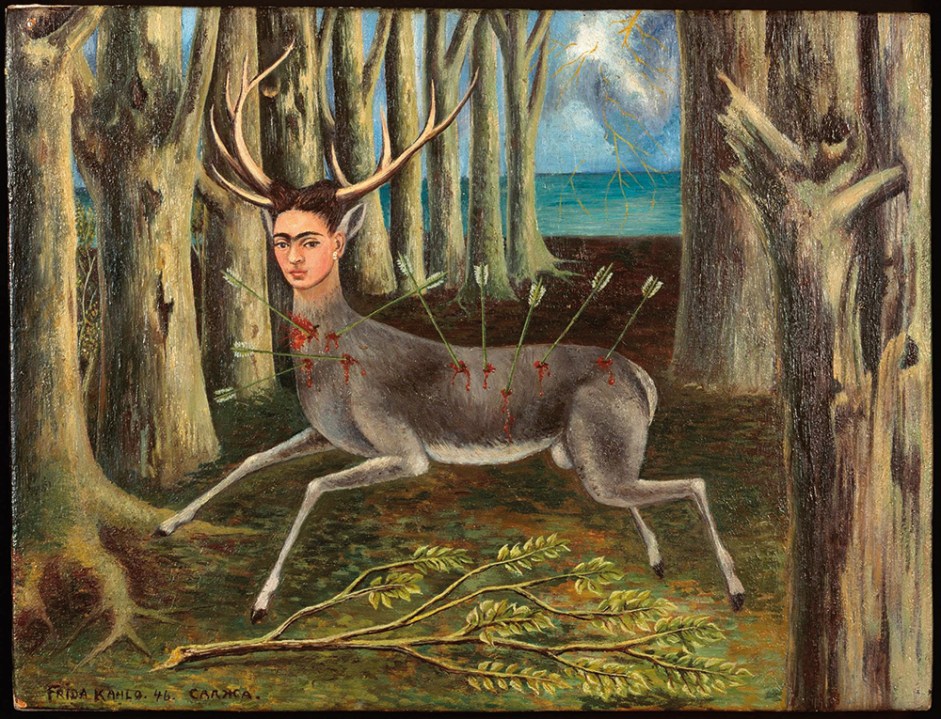
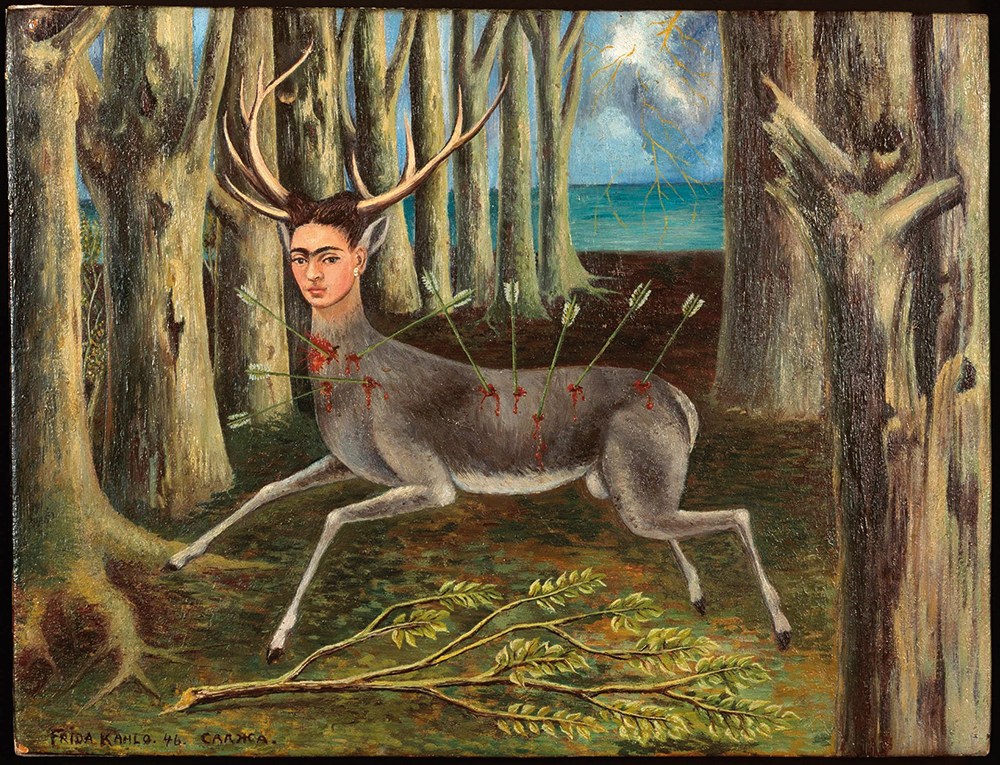
The Surrealist Menagerie: Strange Beasts & Fantastic Visions (Thames & Hudson, £25) by the late Desmond Morris is an exercise in what might be termed the zoology of art. In this entertaining volume, Morris categorises paintings according to the species they depict. Of course, surreally speaking, some creatures are much more abundant than others. There are flocks of birds, which the Surrealists loved to paint (none more so than Max Ernst) and swarms of insects. Surreal fish are less plentiful but include some fine specimens, such as Magritte’s reverse mermaid with the legs and lower body of a woman and a herring-like head. But who would have guessed that ferrets make only a single appearance in surrealist art, in a work by Leonora Carrington in which the lithe little creatures scurry around a maze without entry or exit (which might be a metaphor).
Predictably, there are herds of surreal horses too. ‘Few animals,’ writes Tiggy Maconochie, ‘have left a more significant mark on art history than the horse.’ Her compilation, Blacks and Bays, Dapples and Greys: All the Pretty Horses in Art and Photography (Rizzoli, £62.50), certainly bears out that contention. Just about everybody is included, from prehistory to contemporary celebrities, with the emphasis on the latter.
The equine parade kicks off with Rod Stewart plus mare and foal in 1970, and continues via Delacroix, Stubbs, Géricault, Kate Moss, the Elgin marbles (as photographed by Cartier-Bresson) and Tracey Emin – who also contributes a foreword – riding on the beach at Margate in a cowboy hat. This is a book for browsing, but it is nicely done; and, after all, there is a place for flicking through the pages of an illustrated book.


Comments