Andy warhol

Why Alice Neel remains a vital presence

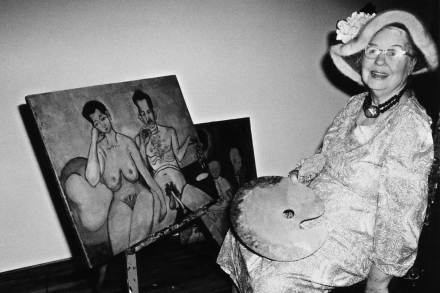
There is no portrait by Alice Neel quite as radical as her own. The artist was one of the first octogenarian women to exhibit a nude of herself with 1980’s “Self-Portrait.” In the painting, Neel grasps her paintbrush and sits exposed at the edge of a blue-and-white striped armchair. There’s no doubt about it; this is a woman of conviction who demands, “Look at me, in all my senescent glory: my silver hair, wrinkled face, sagging breasts, this is a life lived and here are its marks.” It’s only in the last decade or so that Neel has risen from relative obscurity to be acknowledged as one of the twentieth century’s greatest portraitists.

Neel

You had to be there

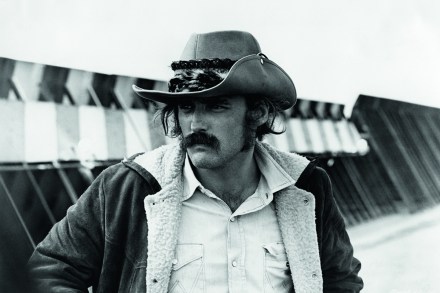
Do you worship Dennis Hopper? Do you get your kicks from sagas dedicated to the lives of the rich and famous? And do you eat up rehashed accounts of the far-out West Coast zeitgeist in the 1960s? If so, Mark Rozzo’s Everybody Thought We Were Crazy is the book you’ve been waiting for. Rozzo starts in medias res: it’s November 1961, and Bel Air is burning. As the firestorm approaches, Hopper and his unlikely wife, blue-blooded poor-little-rich-girl Brooke Hayward, grab her kids and abandon their house — but not before Hopper grabs a Milton Avery painting and throws it in the back of the car.

rozzo

Is Andy Warhol really an artist?

A lawsuit on the work of Andy Warhol is going to the Supreme Court. In 1984, Vanity Fair commissioned Warhol to alter a photograph Lynn Goldsmith took of Prince in 1981 for Newsweek. Warhol cropped the original photo, overlaid it with purple and orange, outlined parts of Prince’s face, and added shading to accompany an article by Tristan Fox titled “Purple Fame.” Goldsmith apparently only learned in 2016 that Warhol had altered her photograph when Vanity Fair republished Warhol’s work in a story on Prince’s death along with the other 15 pieces Warhol created from the photo for his private collection called “Prince Series.

I remember Halston

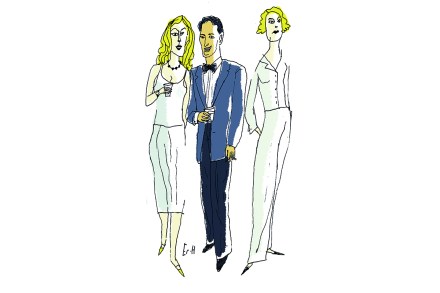
'Imperious’ comes to mind in describing the great American fashion designer Halston. ‘Perverse’ does too; ‘grand’, ‘haughty’, ‘intimidating’ also fit. But, once you got to know him, it was apparent that he was a sweet and clever boy from the corn fields of the Midwest putting on a show for the big city sophisticates he sought to impress — and impress them he did. I met Halston in the summer of 1971 when I was brought to a party at the fashion illustrator Joe Eula’s by Andy Warhol, who had made me editor of his new magazine Interview the previous fall at age 22. Halston terrified me.

halston

In the soup

Ah, autumn, season of mists and mellow soupfulness, as the poet Keats didn’t quite say. In southern England, where Keats was inspired to write his famous ode to summer’s red-and-golden aftermath, fall mists may stick around all day; but in New England, they burn off with the morning sun, giving way late in the day to heady breezes that blow clean through the soul. It was Geoffrey Chaucer who brought the word autumn into the English language. As sure as ‘Aprill with his shoures soote’ leads ‘folk to goon on pilgrimages’, so October cries out for vigorous outdoor activity followed by autumnal soup.

soup

Last of the red-hot lovers

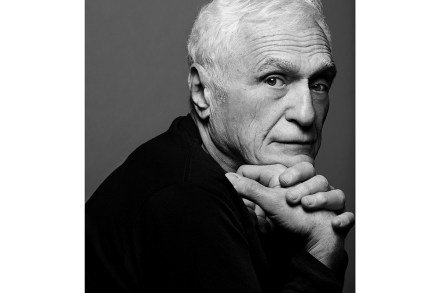
John Giorno’s breakthrough work, he explains in his richly salacious telltale memoir of the Sixties New York art scene, was ‘Pornographic Poem’. In 1964, Giorno took phrases from mimeographed erotica and reconstituted them as homosexual lyric poetry: ‘I shivered/ looking up / at these erect pricks/ all different/ lengths/ and widths/ and knowing/ that each one/ was going up/ my ass hole.’ ‘Pornographic Poem’ is a ‘readymade’ or ‘cut-up’ that follows Andy Warhol, Robert Rauschenberg, Jasper Johns and William S. Burroughs — all of them artistic appropriators, and all of them Giorno’s lovers. These revolutionary artists are Giorno’s ‘great demon kings’.

john giorno great demon kings

Magus of mass production

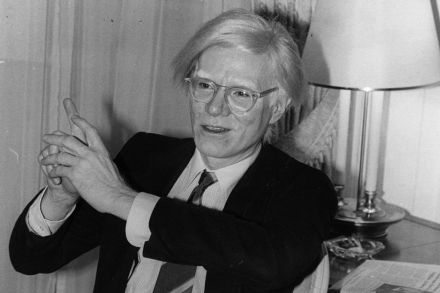
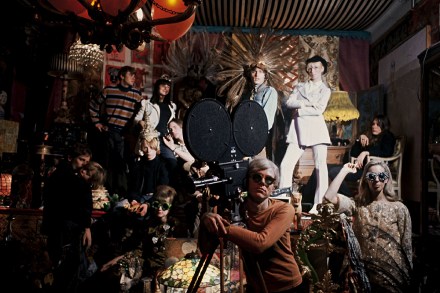
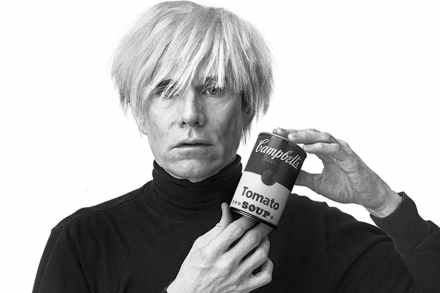
‘If you want to know all about Andy Warhol,’ the artist said in the East Village Other in 1966, ‘just look at the surface: of my paintings and films and me, and there I am. There’s nothing behind it.’ This quotation re-appeared in 2002 on the US Post Office’s commemorative Warhol stamp. It’s fabulously fitting for a stamp that reproduced a self-portrait, but when scholars recently compared the audiotapes of the interview with the printed version, the passage wasn’t on the tapes. Warhol sometimes invented interviews from whole cloth. He answered questions with a gnomic ‘yes’ or ‘no’ or, refusing to speak at all, allowed proxies like his ‘superstar’ Edie Sedgwick to answer for him.

warhol