Edward hopper

Edward Hopper’s America

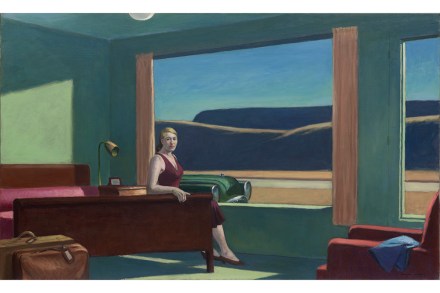
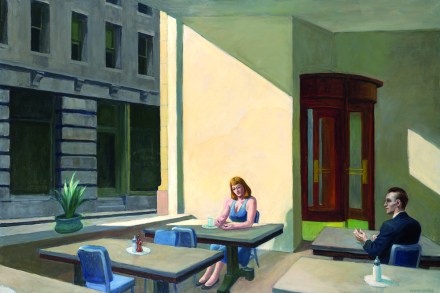
With a new show at the Whitney, Edward Hopper’s New York; a new documentary film from director Phil Grabsky, Hopper: An American Love Story; and a recent exhibition organized by the Virginia Museum of Fine Arts and the Indianapolis Museum of Art, the work of one of the most popular yet seemingly inscrutable American artists of the twentieth century is receiving a great deal of renewed attention. In his paintings, Hopper’s hard-edged realism, impressionistic plays of light and passages of intensely saturated color compete for attention. What has always captured the public imagination is the relative isolation of the figures that appear in his work. Search for articles about Edward Hopper online, and many will describe his art as an exploration of loneliness.
hopper

How Algernon Newton made great art out of empty streets and dingy canals

From our UK edition

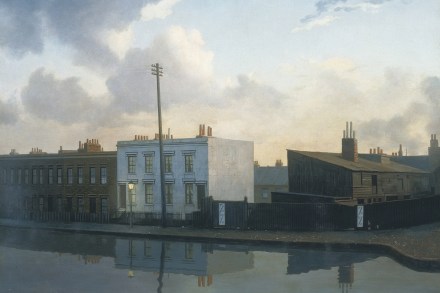
Quite late in life Walter Sickert paid his first visit to Peckham Rye. He was excited, apparently, because he had often heard about it but never actually been there. Evidently Sickert had a sense of London as an unknown city, full of potential. And he was far from being the only artist fascinated by the hidden recesses of this vast urban labyrinth. Algernon Newton, another case in point, was equally fascinated by unfashionable byways of the metropolis. For Sickert it was music halls and dingy bedrooms in Camden that seemed full of visual possibilities; for Newton it was terraced streets and urban water courses, their banks empty of people. Not for nothing was he dubbed ‘the Regent Canaletto’.

A motel room of one’s own

This article is in The Spectator’s November 2019 US edition. Subscribe here. To gauge a man’s character, note how he spends a month in Paris. Edward Hopper, according to the catalog of his 1933 retrospective at New York’s Museum of Modern Art, lodged with a ‘respectable French family’, studying French and ‘avoiding bohemia’. Asked if he met any painters during his visits, he responded, ‘No, I did not know anyone. Gertrude Stein was on the throne when I was there.’ Hopper knew it wasn’t his scene. Isolation was a persistent theme in Hopper’s art and life. Was he dogged by isolation or did he pursue it? ‘Did anybody really know this silent, non-communicative man?

hopper