‘Light literature’ has the potential to tell us more about the society that produced it than any number of more consciously cogitative productions. You can deduce a lot about the furious social mobility of the 1830s by reading the period’s terrible ‘silver fork’ novels describing proceedings in ducal drawing rooms. Fantasies of opulent misbehaviour abroad in the 1950s – Richard Mason’s The World of Suzie Wong and the James Bond novels – reveal a great deal about people’s desires in a nation tired of bad food, bad sex and restrictions on spending.
The dreams of the Edwardians during the most solid and commanding of eras ventured into contrariness, like a CEO addicted in private to sexual humiliation. The ghost story was at its peak, as was the school story of outwitted authority and bad behaviour. The power of the British Empire led to endless fancies of destruction at the hands of aliens from outer space, supernatural forces or, most often, the Germans.
The Edwardians loved the bad-taste joke and toying with propriety, not just relishing Hilaire Belloc’s Cautionary Tales (still much loved) but Harry Graham’s now rather forgotten and startlingly unfunny Ruthless Rhymes for Heartless Homes:
Making toast at the fireside
Nurse fell in the grate and died.
And, what makes it ten times worse,
All the toast was burned with Nurse.
Most strikingly, the light literature of the period seized on the mythological figure of Pan, and novel after novel, such as Arthur Machen’s The Great God Pan, depicted madness, sexual outbursts and the surfacing of a pagan god in ordinary settings. It was also a time when writers with a specifically homosexual vision of existence found large and enthusiastic readerships. The contrary and perverse were in the air.
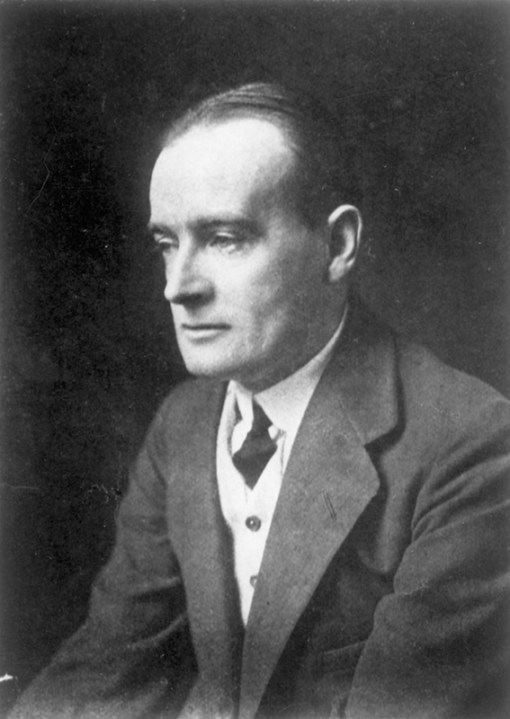
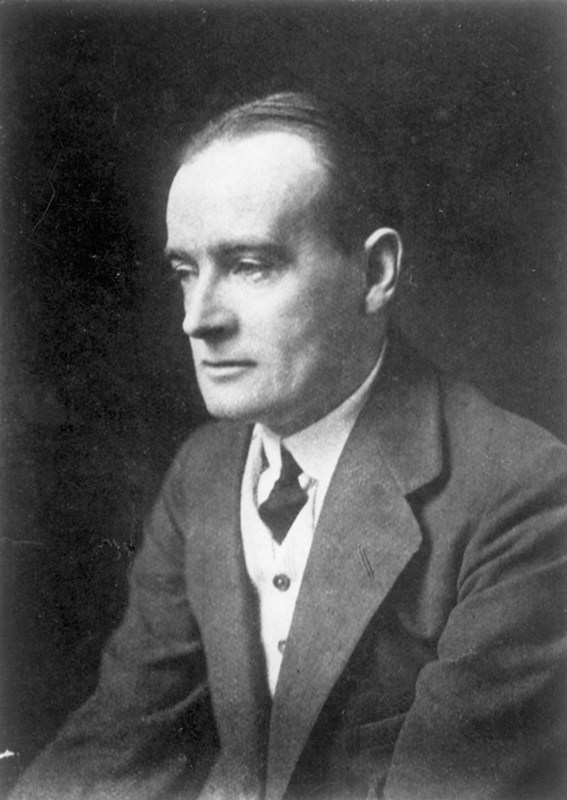
Oliver Soden has written two previous biographies of artists devoted to exquisitely elaborated silliness. His exemplary life of Michael Tippett and his surprisingly revelatory one of Noël Coward showed great patience with the irresponsible spirit. He is therefore the perfect biographer of that evasive individual H.H. Munro, who wrote as ‘Saki’ – an author who is easy to enjoy and difficult to follow. The book is necessarily speculative in places, but always makes clear where guesswork is involved. The fact is that Munro, and after his death his beloved sister, did a great deal of incineration of anything incriminating.
Munro made a habit of befriending the sort of people who wrote nothing much down. Weirdly for someone who lived at the heart of things, he scarcely connected with the writers of his time, even if they liked his work. A few bundles of letters survive, so some deductions are possible from a correlation of known movements and recurrent situations in the stories. An appointment diary from Munro’s travels in Russia in 1904 bears a cryptic squiggle every two or three days – a sexual encounter? There was a long and impenetrable friendship with a man called Rothay Reynolds, of devout religious beliefs and dubious private behaviour that got him sacked from the Daily Mail. Like Munro, he had an obsession with ballet. The two invited Nijinsky to tea in 1911, on which occasion the dancer got under a table to stare at an Aberdeen terrier: ‘It is the devil,’ he pronounced. And a heart-shaped locket, set with a turquoise, was discovered among Munro’s niece’s effects in the 1980s, engraved with the words: ‘Hector, with best love, Cyril.’ It now seems to have disappeared and we have no idea who Cyril was. It is not a lot to go on.
‘Saki’ survives as a group of extraordinary stories of terrible behaviour. Small children arrange for the savage murder of their dull aunts. Werewolves appear and kill passing children, played for laughs. Cats learn to talk and dispense unforgivable truths. A pogrom is staged in an English village; a pair of wiseacres in a country house game, asked to impersonate historical figures, take on Ferdinand and Isabella and expel two genial Jewish fellow guests, driving them 30 miles and abandoning them on a bleak moor.
The work is uneven. Of the novels, The Unbearable Bassington is too patchy in tone, and When William Came is an invasion fantasy that suggests Saki was petering out towards the end. But at his best he produced a mood of savagery – of acts, often committed by heartlessly fey young men, that delighted the age, produced endless imitations and even now manage to thrill.
The reality was very unlike the languid denizens of the fictional house parties, and one of the best things about Soden’s biography is its tracing of Munro’s lively, hard-bitten life as a foreign correspondent. The contrast could be striking. In the same week that the short story ‘Reginald on Besetting Sins’ appeared in the Westminster Gazette, ‘Hector Munro was being held at gunpoint in Salonica railway station’. He reported on the 1903 murder of the Serbian King Alexander I by factions that would lead directly to the assassination of the Archduke Franz Ferdinand a decade later.
Toughness of character was evidently a family trait. When he found himself in St Petersburg in 1905, just as a revolutionary movement was being put down by cavalry charges, direct shooting and sabres, with anything up to 4,000 people killed, Munro immediately wired his sister Ethel to come and see the fun. ‘The next two days were very exciting,’ she later reported. ‘The Cossacks were doing some killing on their own account and murdered some unfortunate students… When the excitement had simmered down we did a lot of sightseeing.’
Children arrange the savage murder of their dull aunts. Cats learn to talk and dispense unforgivable truths
The experiences covering outbreaks of violence have an unmistakable Saki air and certainly contributed to the characteristic insouciance of manner. On New Year’s Eve, 1905, in a grand St Petersburg restaurant, a student refused to stand for the orchestra playing the Tsarist anthem and was challenged by a man at the next table. One shot the other in the hand; a rapier was drawn; and a champagne bottle was smashed and used as a weapon, wounding the Tsarist, who shortly afterwards killed the student. ‘The murdered student’s corpse, presenting a frightful spectacle, remained on the floor for more than an hour… Several parties resumed their supper.’
Munro’s own death is surprising, and suggests that his insouciance and cynicism had run its course. As soon as possible after the outbreak of the first world war, he enlisted illegally – at 43 he was over age – and spent much of his remaining energy promoting the ideals of fighting. It would act, he thought, as a kind of national purging, ridding the culture of all those Clovis Sangrail-like aesthetes he had been inventing. In the trenches, Munro proved to be the sort of homosexual who thrives in a masculine atmosphere, and he seems to have been much loved by his men. It might have gone further, with one of them at least.
Soden does an excellent job of excavating just how long for soldiers such as Munro the atmosphere of the Pals brigades, of a splendid adventure, like Richard Jefferies’s Bevis on a spree, endured. Munro wrote after some months on the front line of ‘the fun and adventure of the whole thing. One’s companions make it jolly.’ His last words appear to have been: ‘Put that bloody cigarette out.’ They called attention to him, and he was neatly shot in the back of the head. Nobody knows where his body fell.
Soden traces this extraordinary veiled personality through what materials there are and never pretends to know more than is established. I commend him for acknowledging, and resisting, the temptation to write a ‘Quest for Saki’type book, explaining the frustrating paths and mis-steps of research.
I think it is fair to say that with a few exceptions, such as ‘The Lumber-Room’ and ‘Sredni Vashtar’, Saki’s stories delight most of us when young and are the sort of polished literature of bad taste that we will probably grow out of. It doesn’t matter: he is a brilliantly cryptic witness to his time, and in this excellent book the sources of that witness are richly suggested.





Comments