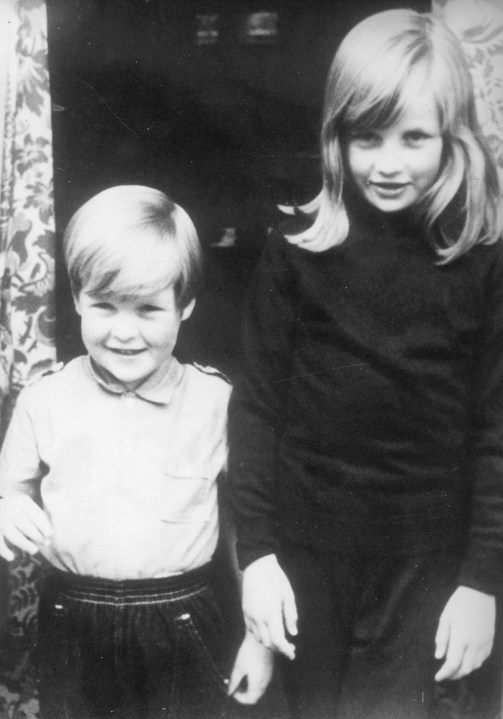
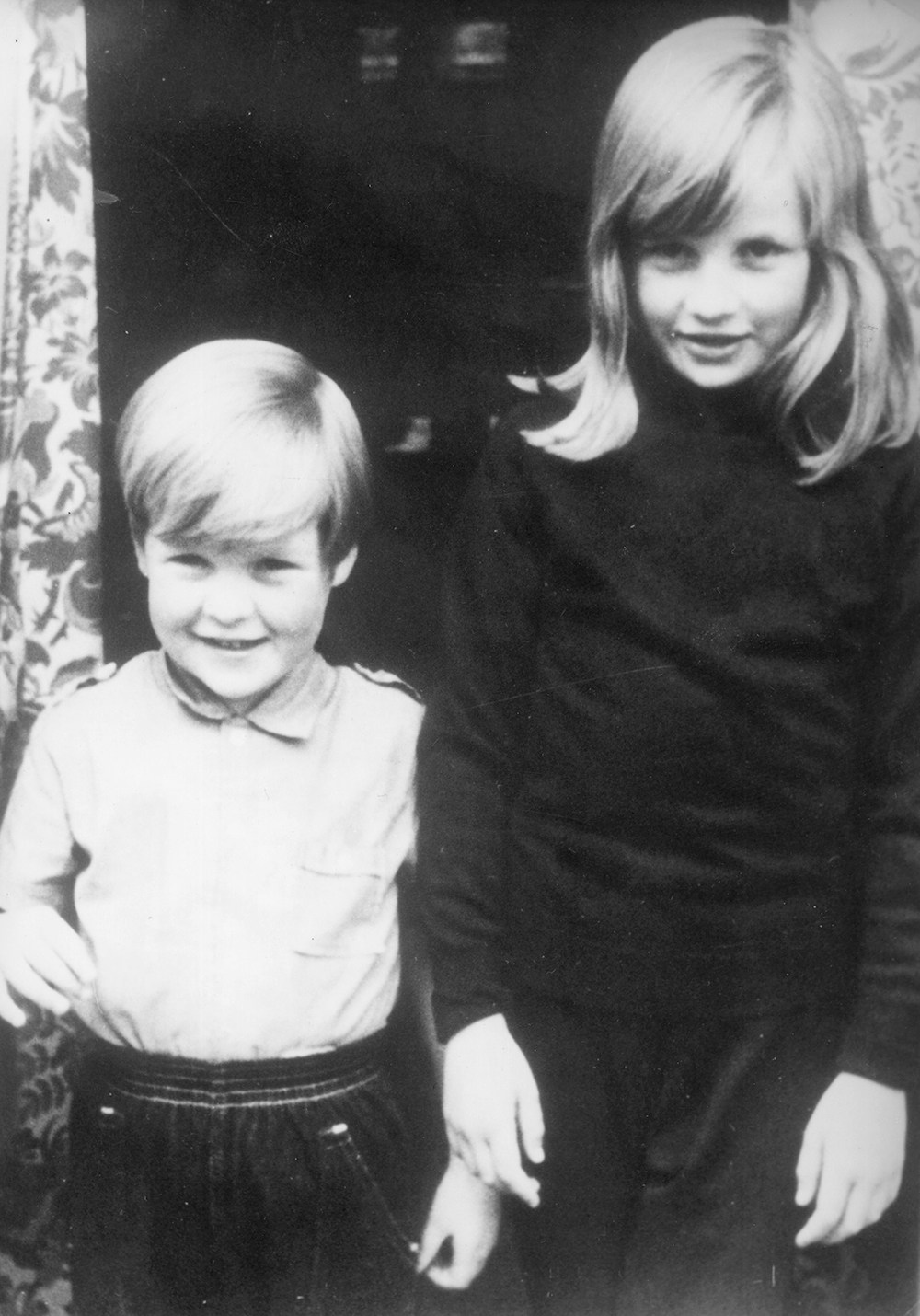
Bedroom size matters to the Spencers. Among the countless festering resentments aired by Charles Spencer in his blame-throwing book supposedly about his sister Diana but really just as much about himself, is that when their new stepmother Raine began her reign at Althorp in 1976, she made Diana and Charles sleep in tiny attic bedrooms in the 90-room house while her own children ‘had the run of the grandest guest rooms’.
What a Harry-like complaint, I thought, recalling Prince Harry’s childhood bedroom-size gripe in Spare. I jotted it down in the section on ‘accusations and score-settling’ in my notes. It became a long list.
We’re all familiar now with the ‘giddily elated’ accusation and the ‘we’ll forget her soon enough’ attribution, both directed at the King, who is portrayed throughout the book as snooty and emotionally cold. ‘Giddily elated’ is a clever pairing of words, crafted to portray a toxic combination of giggly frivolity and tin-hearted callousness. ‘Like a lottery winner’, tacked on at the end, suggests a scratch-card punter whose Saturday night crossed fingers have reaped a £1 million bonanza. And this is how Spencer describes the then Prince of Wales on the day after the death of the mother of his sons.

‘Sticks and stones may break my bones, but words will never hurt me,’ goes the playground chant, but it’s nonsense. Words can be murderous barbs. Spencer lobs them across these pages, aware, surely, that the King will not be in a position to respond in detail to the unverified accusations – among them Diana’s casual assertion that he was ‘in love with his valet’. The King’s brief ‘recollections may vary’-style rejoinder was as much as he could allow himself, as sovereign. So the accusations hang in the air; Spencer tours the US repeating them, and the mud sticks.
The triviality of some of these long-held gripes is impressive in its way. When one of the royal children – Spencer doesn’t say which, but can we guess? – came to tea at Park House on the Sandringham estate in the 1960s, he ‘played roughly with my treasured pop-gun and broke the string on it, before casting it aside’. Horrid – and, the implication is, typical royal family, much less gentlemanly and good-mannered than the noble Spencers, whose ancestral home, Diana remarked, could ‘knock Highgrove into a cocked hat’.
Of the book’s 384 pages, 112 describe things that happened after Diana’s death. So those pages are not really ‘about’ Diana, whatever the title suggests. They are mostly about Spencer’s speech at her funeral, the one thing for which he is (justifiably) famous. That speech! He bangs on and on about it: how he decided it had to be him and no one else who delivered it; how he agonised over it; reworded it; didn’t read it aloud at the rehearsal for fear he’d be obliged to edit it; was praised by Tony Blair the next day for it; received sacks of mail thanking him for it. In one of many self-portrayals of his own sweet younger brother self, he describes how, aged four, he began honing his speech-giving talents when he stood on a table in the new village hall and declaimed: ‘I declare this hall open.’
I loved his depictions of his and Diana’s early childhood at Park House, sliding down the bannisters under the benign and loving eye of their sad father (their mother had fallen in love with Peter Shand Kydd and left the marriage in 1966, when Diana was five and Charles two). There was a nest of side tables at the foot of the sofa on which the children had their TV suppers. The Wedgwood plates had etchings of African animals on them. If the animal on the main plate and side plate matched, Diana would exclaim: ‘I’ve got a pair!’ They loved going to the piano in their grandmother’s drawing room and seeing how slowly they could get the metronome to swing.
That pin-sharp detail – the memory that it was much more fun seeing how slowly you could make the metronome swing than how quickly – reminds us what a good, observant writer Spencer can be when he’s not spraying poison. He recalls how Diana, assuming the wife-and-mother role in that motherless household, made sure all the curtains were properly and neatly closed each evening. The sweetest photograph of them both is beside the swimming pool in their tight little swimming trunks adorned with sewn-on swimming achievement badges.
The accusations hang in the air; Spencer tours the US repeating them, and the mud sticks
But the raw anger is never far away. One of its many facets – besides the fury about King Charles’s infidelity, Martin Bashir’s ‘litany of lies’, the tabloid press’s intrusions and William and Harry being made to walk behind their mother’s coffin – is the simple one that Diana was failed, before her adulthood even began, ‘by an inadequate and amateur education’. ‘I will never forget her screech of pain, and her violent sobbing, on opening her O-level results,’ Spencer writes. ‘It was agony for her to see on the print-out that she had not passed any of them.’ The failure of Riddlesworth Hall and West Heath to equip her to pass any public exams gave her a ‘lifelong sense of inadequacy’; her ‘drive to push herself was rooted in a need to compensate for the endless negative reports she received at school’.
One section in my notes was on ‘self-criticism’ – is there any? Well, yes, among the many quiet boasts about his brotherly kindness and goodness, Spencer does blame himself for a few things. On the subject of Charles and Diana’s unhappy marriage, he admits: ‘I am not hypocritical enough to judge or criticise anyone’s marital record.’ Quite right. He feels ‘embarrassment and guilt’ that he was of so little help to Diana while she battled the ‘demons’ of her eating disorder. He’s sorry that when she asked him to be a courtier, he refused: ‘I do regret not finding a middle way between the independent path I kept and one that might have been helpful for Diana.’
An accomplished wordsmith, Spencer does speak for us all, and encapsulates the tragedy of Diana’s story, when he describes seeing on her coffin, on the day of her funeral, the white envelope marked ‘Mummy’. ‘That, for me, remains the searing image of the day: a son’s silent, written cry of desolation, to a mother, gone.’





Comments