‘Oh, why do the middle classes feel they must bring a present?’ Those words were spoken by Lady Charteris when she was the wife of the Provost of Eton and a dinner-party guest arrived clutching a bottle of wine. The scene took place between 1984 and 1992, when Andrew Boggis (who recalled it in a Times obituary addendum) was Master in College.
The conventions of dinner-party arrival have changed beyond recognition in the ensuing 40 years. What was seen as a ‘middle-class’, ‘common’ or ‘naff’ act in the late 1980s is now the done thing. To arrive at a friend’s house for lunch or supper without a present for the hostess would seem lazy and mean. ‘Enhanced arrival’ is what you aim for: ecstatic greetings with the handing over of a small bag with rope handles containing an expensive token of gratitude.
‘Enhanced arrival’ is what you aim for: ecstatic greetings with the handing over of an expensive token of gratitude
From America, land of muffin baskets, baby showers, flower sprinkles and doorstep hugs, the present-bringing habit has taken hold in Britain. It has also seeped in from France, where it’s been de rigueur to arrive at a friend’s house with florist flowers pour offrir. And, like all social conventions, it has escalated. Now, before going to a friend’s house for lunch or supper, or even a drinks party, I agonise for days about what to bring. Chocolates? Wine? Flowers? A scented or preferably scent-free candle?
The fear of being seen to be ‘middle-class’ (or naff) in your choice of present still hangs heavily. You can get it embarrassingly wrong, as I did when I brought, as a gift, two boxes of my then-favourite dippable after-supper truffles, Monty Bojangles. Those are not acceptable by today’s standards. They come from a supermarket, for a start, and they have the words ‘Curiously moreish’ on the bright-pink packaging, along with ‘Choccy Scoffy’. I blench at the memory.
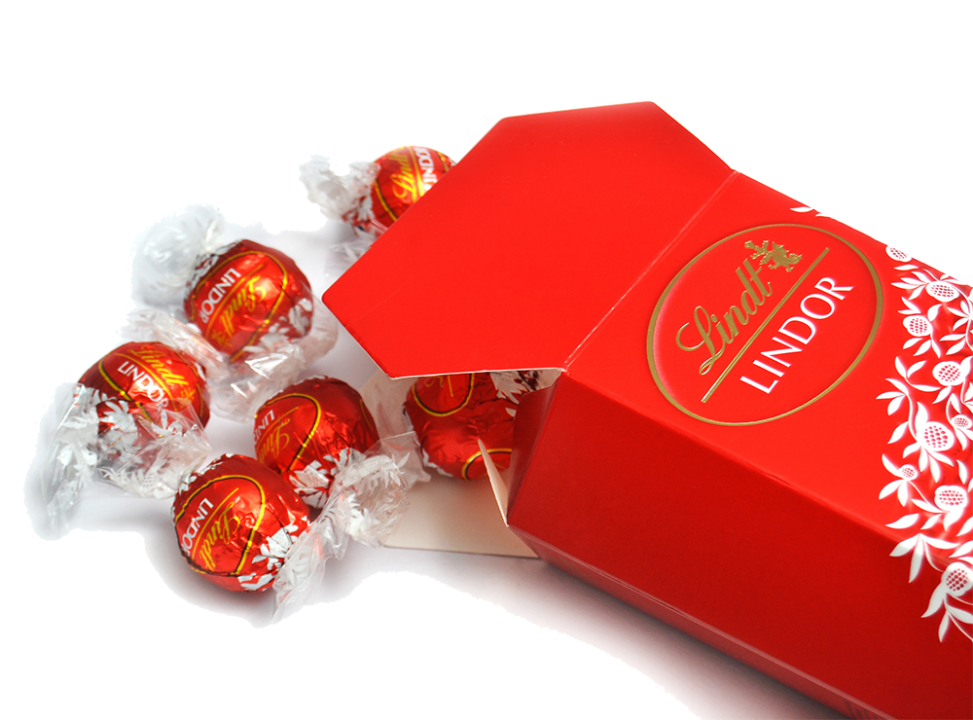
Ferrero Rocher, Lindor and even Bendicks Bittermints, staples of the early 2000s, have lost their cachet. In the elevated world of perfect presents for perfect hostesses, you can no longer buy the present as part of your weekly shop. Even the Waitrose top shelf won’t do: the Lindt Master Chocolatier Selection has a trace of 1970s Milk Tray about it, and Lily O’Brien’s Desserts Collection won’t go down well with people who say ‘pudding’ rather than ‘dessert’.
To be acceptable in today’s climate of exquisiteness and extreme generosity, edible gift items for the hostess need to be supra-supermarket. You need to go to a special, expensive, ideally non-chain delicatessen, which requires paying for 30 minutes’ parking on a residential side street. There, you gaze at the displays and make your choice. These shops know they can charge what they like because customers want to arrive at their friends’ houses feeling generous. They would rather pay £19.50 for a small box of Blood Orange Thins than a mere £5. It will enable the virtuous glow of enhanced arrival.

Olive oil is displayed among the gift ideas, attractively overpriced at £25 per bottle. It’s odd that a salad dressing should have become an acceptable present, with its slightly creepy overtones of ‘oiling up to the hostess’. But it seems to have taken over from wine as today’s bring-a-bottle of choice. It’s true, many of us now prefer not to bring wine, as we fear an embarrassing mismatch between the standard of wine we consider acceptable and the standard the host and hostess keep in their cellar. Again, the oil must not be supermarket Filippo Berio, but an exclusive brand from a non-obvious Mediterranean country, preferably in a black opaque bottle with a wax seal.
Bring back Matchmakers! On the rare occasions when people did bring gifts to my parents’ supper parties in the 1970s, it was mint- or orange-flavoured Matchmakers, or After Eights, or a box of Black Magic. There was far less stress. You didn’t have to display your originality, or your unflashy wealth and taste. And as Lady Charteris said, the people with the best taste brought nothing at all. Empty-handedness was a signal of elegant non-materialism.
You might think it would be a good idea to keep a stash of presents in the house ready for going out. But this would not be playing the game. To do it properly, you need to make a special excursion for each event, concentrating solely on the hostess in question.
You want your present to be noticed – just as you do when making a JustGiving donation and it asks you whether you want to be anonymous. No, you do not. When you arrive at a large party at the same time as another couple, and the door is opened by a helper, and you have to plonk your present on the already crowded hall shelf, there’s a danger no one will know which one was from you. So, in today’s mass-present–bringing culture, you need to scribble your name on the corner of the bag.
When it comes to finances, the whole thing makes no sense. Often, as a guest (if you’re driving), you’re paying more for the present you bring than the total cost of a glass of wine, a plate of roast lamb and vegetables, a glass of fizzy water, chocolate tart and a cup of peppermint tea you’ll get in exchange. Perhaps there should be an app in which you could tot up the cost of your ‘meal’, then give a present of about the same value from a list of gift possibilities.
But the whole thing evens out in the end. Generosity breeds generosity. The next morning, after giving a dinner or drinks party, today’s hosts and hostesses wake up to find the house awash with expensive delights. With men bringing bottles of wine and champagne on top of the presents from their wives, there’s usually a pleasing realisation that you’ve ‘broken even’ on the wine.
I asked Mary Pearson (born in 1945), the daughter of Lady Charteris, whether she brings presents to hostesses, and expects them. ‘People never brought presents in my mother’s day,’ she said. ‘I still struggle with it. Resentfully, sometimes. I don’t always take something. I try to avoid wine or flowers which I don’t hugely like receiving. Where’s the vase? Just as you’re welcoming people… Wine gathers dust and you can’t remember who it is from. Worst of all, the dreaded chocolates. Which I shouldn’t eat and then consume in one sitting. I’m so happy when people come with nothing.’



Comments