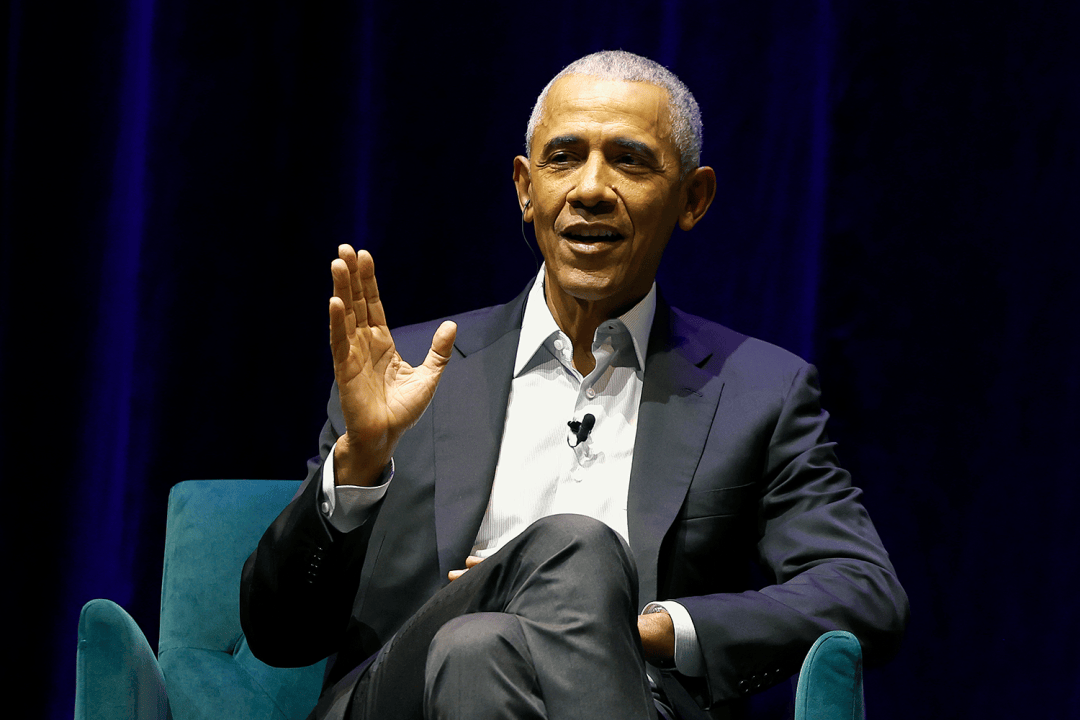
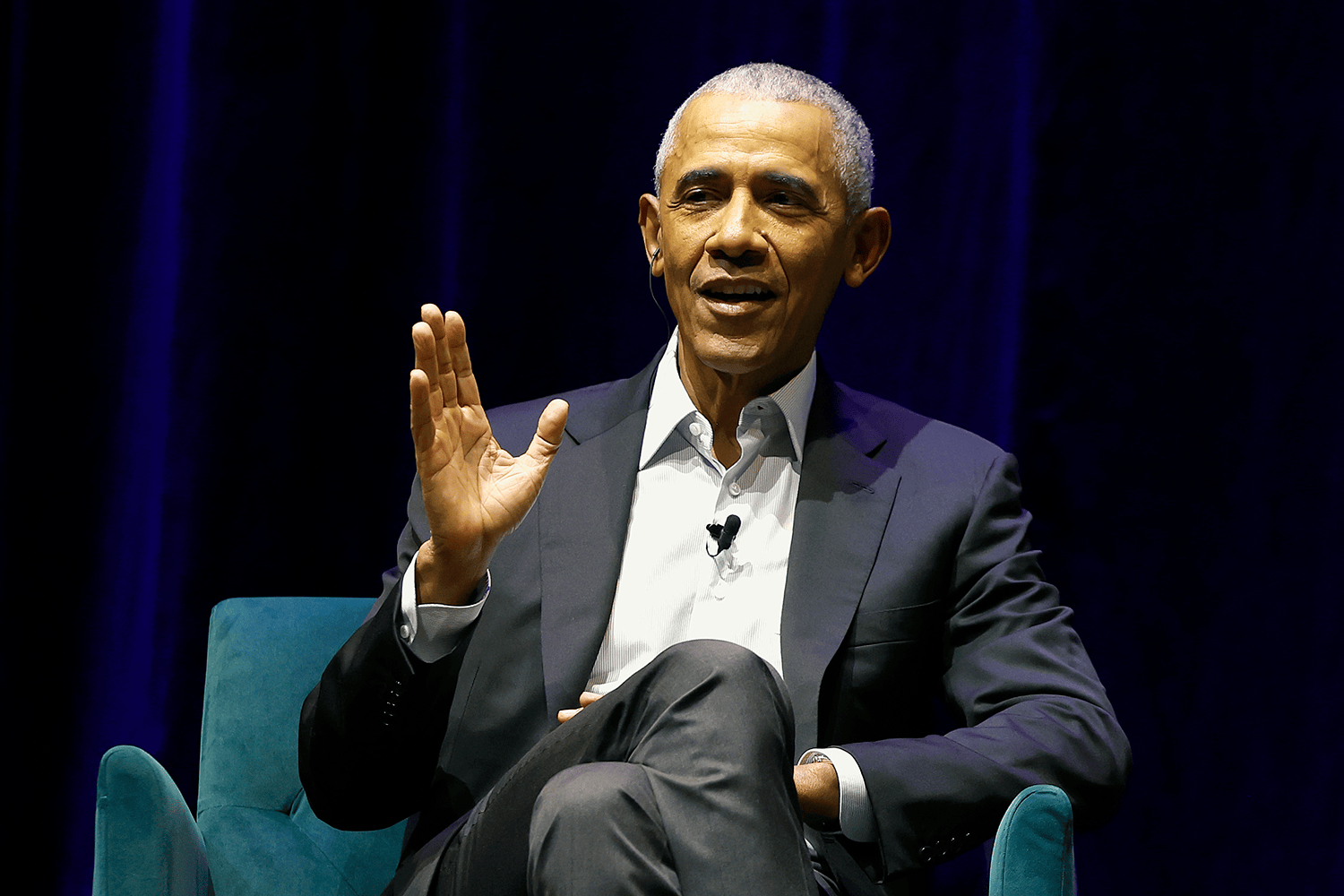
Barack Obama has launched a books podcast. Three years ago, this would have been an automatic cause for celebration in the book world. Now, however, the tide has turned. Publishers have started to realise that touting their authors on podcasts may actually do more harm than good; that having a writer discuss their new release for an hour may give the listener all they want and deter them from actually purchasing a copy.
The surest way the producer of a podcast can mitigate against the risk is to exclude books by living authors. Obama’s team mostly do just that. The former President has authors as guests, but the books they talk about are in most cases decades old.
Obama’s guest for the first episode was Tom Hanks, and the ‘great book’ they selected was Gilead (2004) by Marilynne Robinson – the only living author featured in this series. And what we got was a highbrow, consciously intellectual and quietly intense fireside chat by two men of a certain age convinced that rereading books of quality is the most valuable use of the time they have left.
One might compare their episode to Mortimer and Whitehouse: Gone Fishing or Sam & Ade Go Birding, only it’s more profound and definitely more American. The words ‘gratitude’, ‘presence’ and ‘folks’ appear a great deal. An aphorism from Hanks runs: ‘He’s an incredibly wealthy man… who can sit down and truly feel the comfort of his warm kitchen and the taste of his wife’s warm apple pie.’
Warm is the word for this series. There is something comforting about listening to two familiar voices turning gravely to the wisdom of age, dissecting fictional characters and motivations. There’s nothing forced about the transitions between literary analysis and personal anecdote. You genuinely feel that the book in question has shaped how each man thinks about parenthood and faith.
In another episode, Obama chatted to Jill Lepore about Robert Penn Warren’s All the King’s Men (1946), the novel inspired by Louisiana governor Huey Long. While the Hanks episode was hooked on the modern desire to find quietness in a world of noise, this one took political populism as its cue. Even here, though, you’ll be struck by the slowness of Obama’s speech. The entire series appears to be predicated on the need to return to a simpler, more leisurely yet meaningful way of life, with a mellow jazz soundtrack. Listening to it takes you more than halfway there.
Comedian and author Andrew Hunter Murray’s ten-part podcast series for Radio 4, The Hitler Diaries Scandal, was a bracing foray into fraud and deception – especially of the self – via a mad but true story spanning the mid 20th-century.
It concerned the serialisation of some highly personal diaries, purported to be Adolf Hitler’s, first by the German magazine Stern, and then by the Sunday Times, in 1983. The notebooks, authenticated by no less a figure than Hugh Trevor-Roper, transpired to be monumentally – ‘embarrassingly’ says Murray – fake.
Think of tea bags, Letraset and entries detailing the Führer’s digestive problems, and you get the idea
The story begins with the crash of a Junkers plane in eastern Germany in April 1945. Or, this is where Konrad Kujau, a ‘colourful rogue’ and petty criminal, claimed it begins. That plane was carrying iron boxes, and those boxes contained dozens of books. This tale was sucked up by Nazi memorabilia nut Gerd Heidemann. There followed intense but seriously flawed efforts to prove, without consulting any actual historians of Nazism, that the diaries were autograph. Think of tea bags, Letraset and entries detailing the Führer’s digestive problems (but not much else), and you get the idea.
Murray is a wonderful and entertaining host, who travels the breadth of Germany in order to understand how so ludicrous yet extortionate a hoax ever got off the ground. I particularly enjoyed his interview with Josef Henke, one of the men contacted to authenticate the ‘excellent’ handwriting, and the reminiscences of poor Trevor-Roper’s painful but gentlemanly attempts ‘to backpedal on a penny farthing’ when he realised the career-jeopardising error he had made.
I don’t know what surprised me more in the course of this brilliant podcast, the gullibility of clever people, or the brazenness of the forger, who even had the temerity to sign his confession in Hitler’s handwriting. Barack Obama would do well to consider Trevor-Roper’s The Last Days of Hitler for series two.





Comments