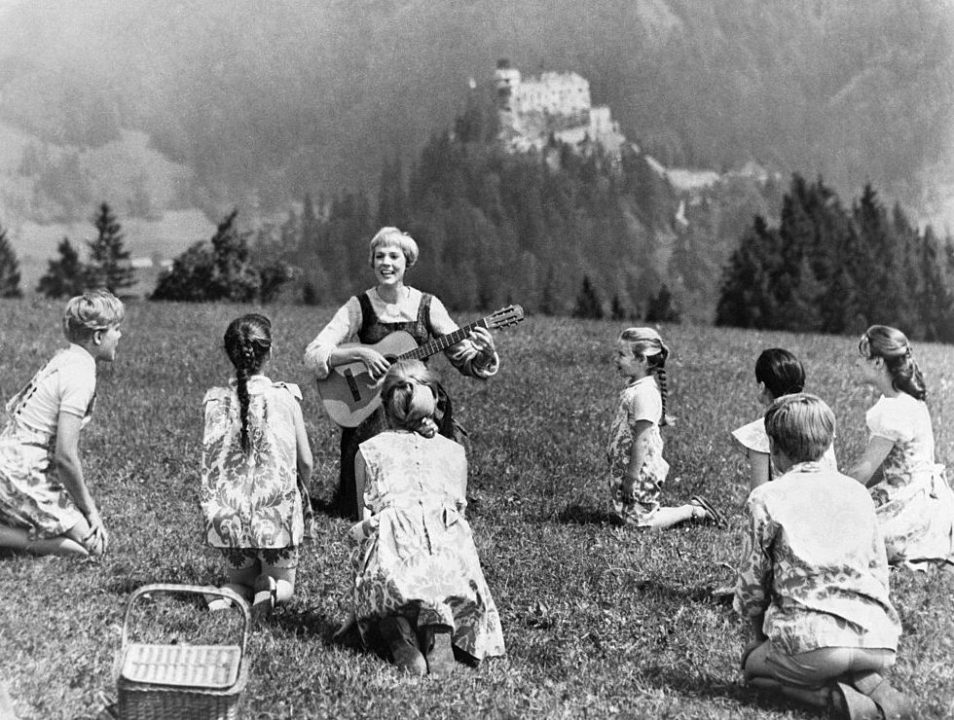
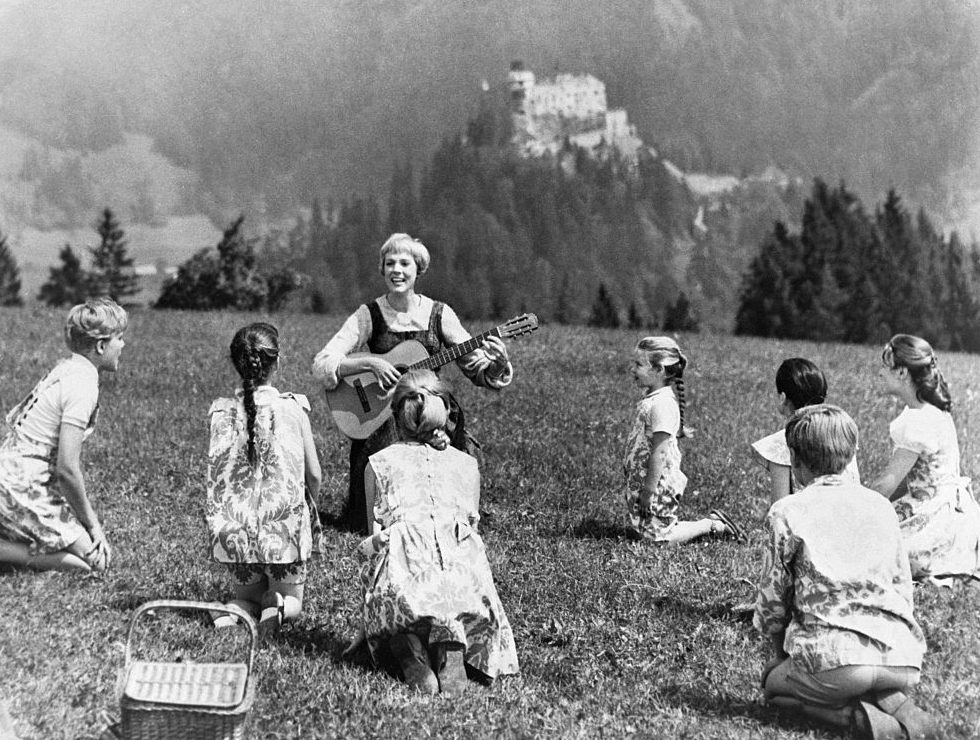
I am not sure why I was chosen to go to Salzburg to cover the opening of the Sound of Music museum. Before I was told that I was going, I’d not seen the film. Of course, I had a vague idea of what it entailed – Julie Andrews, Nazis, hills – since it’s one of those movies, like King Kong, Alien, or Deep Throat that is sufficiently embedded in the cultural subconscious that you feel like you’ve seen even when you haven’t (basically, I could hum a couple of the songs). But I also didn’t have a particular connection with the city. I’d been once before, for an evening, to see a Mozart concert with a Bavarian ex-girlfriend. On the way there, when I realised we were on the Autobahn, I asked her to turn off the composer’s music and play all 23 minutes of Kraftwerk’s ‘Autobahn’ instead. Incidentally, we broke up not long after that.
I did consider going on the trip without watching the film, planning Fear and Loathing in Salzburg, a Gonzo exploration of Austria’s fourth largest city, desperately trying to blag my way through press conferences and receptions, hopping from stein to stein. But I’m too much of a coward. So I watched The Sound of Music and fell as hopelessly in love with it as any other viewer who doesn’t possess a heart of stone. It’s The Great Escape for women, down to the choice of villain and the alacrity with which millions of families up and down the country pick it as their annual postprandial Christmas viewing. But the people who love it really love it. They walk down the aisle to Do-Re-Mi; they quote Sixteen Going on Seventeen when up in court; when they list their favourite things, there is no doubt which movie they put at the top.

It is to them that this new museum is dedicated. It was originally planned to open last year, to coincide with the film’s 60th anniversary. But the wrangling over rights with 20th Century Fox and then Disney have meant that it has been delayed. It occupies an old gatehouse in the Heilbrunn Palace – the palatial seat of some erstwhile 17th century bishop, round the corner form the house that serves as the home of the Von Trapps in the film. I would be lying if I said it was the most detailed museum I’ve ever visited. They have the whistles used by both Christopher Plummer in the film and Captain von Trapp in reality. There’s home movie from one of the kids, showing behind-the-scenes clips as Andrews and co climbing every mountain and fording every stream. But not much else in terms of movie paraphernalia, not much else.
To make up for this, one room is devoted to pickings from the horde of 3,000 objects belonging to one Dutch collector. From soundtracks in Yiddish to painted plates that look almost, but not entirely, completely unlike Andrews and Plummer, it was a testament to what one individual can achieve with deep pockets and a song in their heart. But that a wall was taken up displaying his copies of the film on everything from VHS to Blu-Ray, one got the sense that the curators had simply ransacked his cupboards for material. The rest of the museum was taken up charting first the development of the film from the original Rogers and Hammerstein stage musical, to telling the story of the real family Von Trapp – the sainted singing sons and daughters of Salzburg whose exploits inspired the whole shebang.
If you are a Sound of Music super fan, the museum will be interesting enough, but unlikely to tell you anything you don’t already know. If anything, it might ruin your childhood by revealing that the Von Trapps did not get married on the eve of the Anschluss, flee across the mountains to Switzerland – geographically impossible – and that ‘Edelweiss’ is not a traditional Austrian tune. Go and watch the end of the film again. All the extras nominally singing along were locals, most of whom couldn’t speak English. None of them knew the words, so watch them goldfish, opening and closing their mouths to mime along. As a metaphor for the relationship between Salzburg and the film, it’s strangely apt. This museum is a peace offering by a city that, for 60 years, has resented the film that made it famous.
It might sound odd to us, but nobody in Austria has seen the film. Ask cabbies about it and you get blank looks. It’s never on television. As one local dignitary explained, in the 60s, 70s, 80s, and 90s, Austrians were hardly keen to lionise a family fleeing an Anschluss with Nazi Germany that most wanted to forget that they had enthusiastically supported. In Salzburg itself, they have long been prouder of being the city that produced Mozart. Wandering around the cobbled streets, ducking between the beer halls, one is far more likely to see Wolfgang’s face staring back at you from a shop than Maria’s. But with around 350,000 people visiting the city each year because of the film – with around 70 per cent of visitors for the United States listing it as their major reason – it cannot be ignored.



Comments