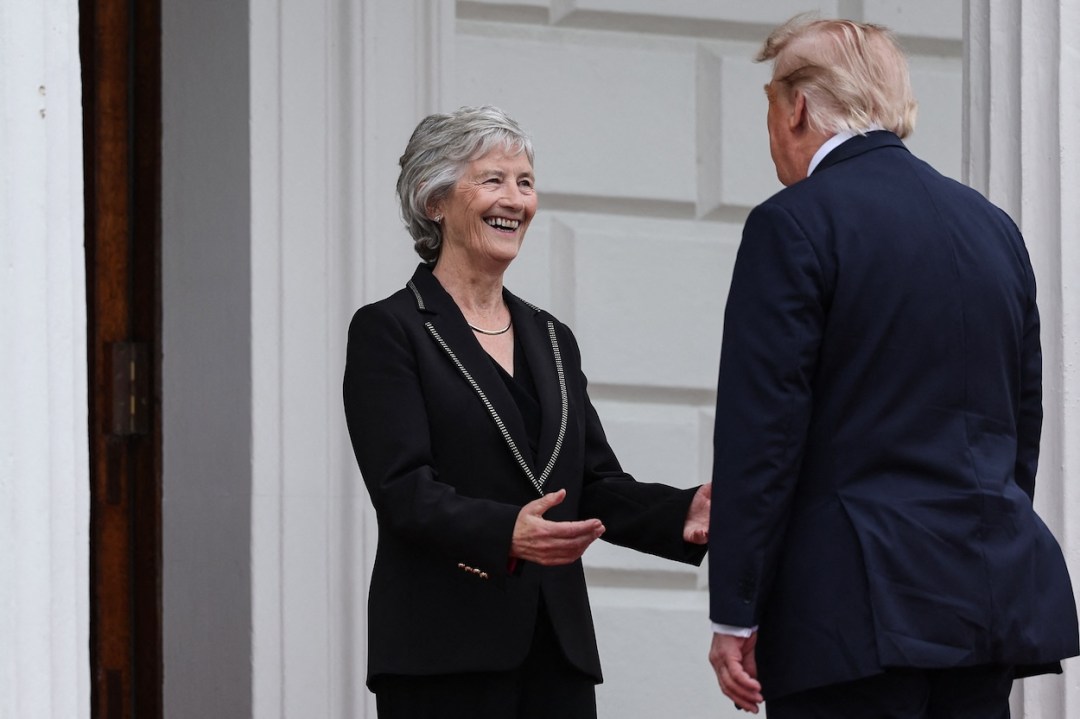
I realised I was sat next to the Irish President when she sent back her sandwich for being too spicy. I had just climbed Errigal, the tallest mountain in Donegal, on a blustery day, and had stopped at a cafe nearby in the Gaeltacht, the part of Donegal where the Irish language is predominant. It was clear that the small group next to us had done the same – wearing leggings, trainers and zip-up workout gear – and my boyfriend could understand their discussion about how windy the mountain had been. Then, as it became clear a chicken wrap was being sent back – ‘I’m so sorry’ in Gaeilge – I looked up and realised that the apologetically polite voice came from Catherine Connolly. Locals waited for her to finish with her friends before approaching, and it was apparent she only had one handler with her. I looked around at the relatively calm scene and couldn’t help but think it was all the more remarkable that one week later this unassuming head of the Irish state would be meeting the leader of the free world.
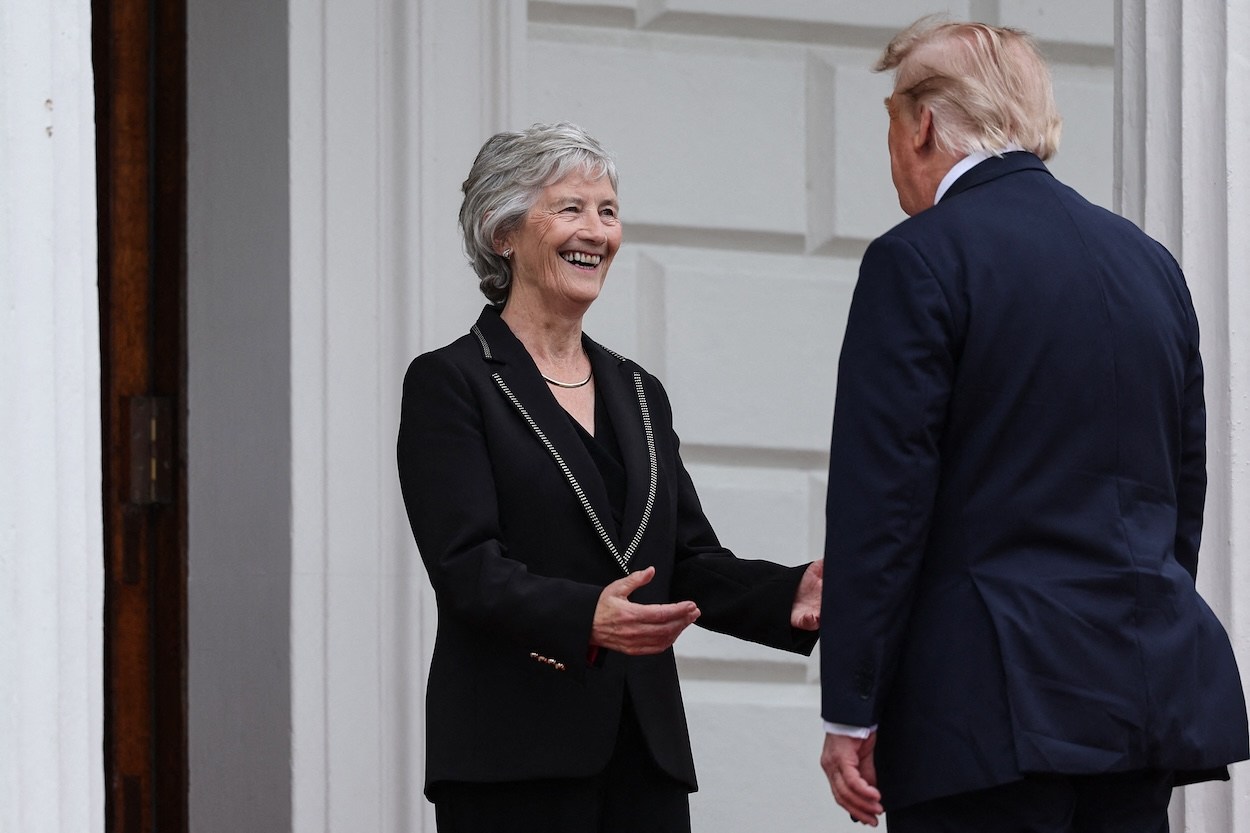
There will be many more aides present when President Connolly meets President Trump today. While this is not a state visit, and it is expected to be quick, it remains to be seen how awkward this encounter could be. Connolly, a former barrister, has called Trump a ‘bully’ and previously said that, with his election, ‘international law has gone out the window’. Trump meanwhile hasn’t really registered the Irish President at all. When her criticism was repeated to him earlier this year, he showed no real awareness of Connolly, misgendering her as he spoke. This morning, however, he said that a united Ireland would be ‘a great thing’.

Trump is in Ireland to attend the Irish Open taking place at his Doonbeg golf course, and he is expected to sandwich a meeting in with Catherine Connolly and the Taoiseach Micheal Martin as he travels from Dublin across the country to West Clare. Micheal Martin, in his second stint as taoiseach, has met Trump several times. While this will be the first official meeting between Connolly and Trump, Connolly was present the last time Trump visited Ireland – but as part of a ‘peace camp’ outside Shannon Airport, set up to protest his visit in 2019.
Her critics point to this as evidence of the embarrassment that could follow from a meeting between the two, while her supporters argue that the terms have changed, and that the resident of the Aras will approach the meeting with respect. The open question is whether she will now use this platform to raise the causes her supporters care most about, and this points to the crux of the issue for Ireland right now. This is not just a meeting of two ideological opposites, it comes at a time of strained US-Ireland relations.
Historically, Ireland has benefited from the outsized role its diaspora plays in US politics and the importance Washington has played as an arbiter over the Northern Ireland peace process – not to mention most US presidents’ celebrated ancestral links (see: the Barack Obama Plaza motorway service station in Tipperary).
Trump’s terms have been different. Despite present UK-US foreign policy tensions, he is far more of an Anglophile, and the President has at times implied he thinks Doonbeg is part of the UK. In 2024, he told Starmer how he had a ‘warm spot’ for the UK due to his golf courses there, going on to list them but including the Republic of Ireland’s Doonbeg.
Given one of Trump’s most common complaints about external allies is what he sees as their free-loading over defence and security, it remains to be seen what he thinks of Irish defence policy – the country lacks the radar capability to monitor its airspace and relies on relationships with both the UK and the EU for its defence. Just a few weeks ago, the Royal Navy deployed to assist the country when it hosted a conference of EU defence ministers. It would be surprising if the Royal Navy wasn’t playing a role again in defence of the island this weekend. (A Naval spokesperson tells The Spectator: ‘The UK and Ireland regularly cooperate on shared security challenges. We do not speculate on potential operational tasking of Royal Navy vessels.’)
At present, Dublin has expressed concern over the ramping up of trade and regulatory disputes between the US and EU, and is one of the strongest opponents of Israel’s actions in Gaza. Ireland was one of the 12 countries which backed UK Foreign Secretary Ed Miliband’s statement this week announcing new sanctions on Israeli settlers and accusing the Israeli government of ignoring the ‘ethnic cleansing’ of Palestinians.
For British readers, imagine Jeremy Corbyn had become prime minister and was due to meet Trump. Constitutionally, one major difference for Ireland is that the Irish presidency is a largely ceremonial role. The president is expected to remain neutral over matters of foreign affairs. During last year’s election campaign, critics of Catherine Connolly feared she would continue to erode the neutrality of the institution, something they saw as having started under the previous Irish president, Michael D. Higgins. So far, those fears have been allayed.
The President will spend his time in Dublin in Phoenix Park – a huge, enclosed park with deer, akin to London’s Richmond Park – on the western edge of the city, and which is home to the residencies of both the US ambassador and the Irish president. While the Irish government will be hoping to keep Trump away from protestors, it can’t prevent this meeting with one of Trump’s most high profile critics. It just has to hope she is as polite in private, as she is in public. I guess we’ll find out on Truth Social afterwards.






Comments